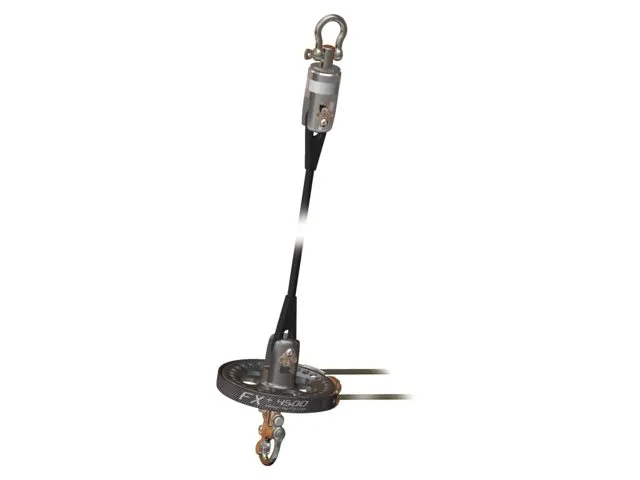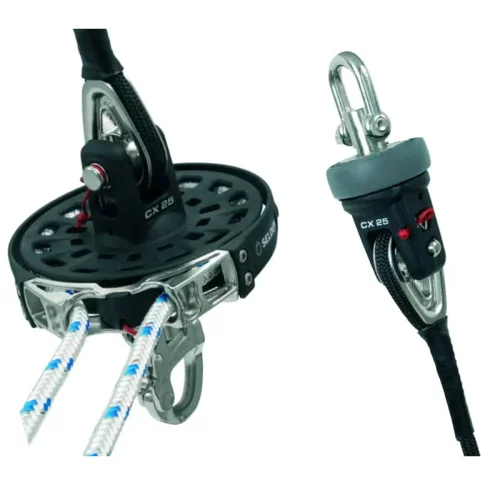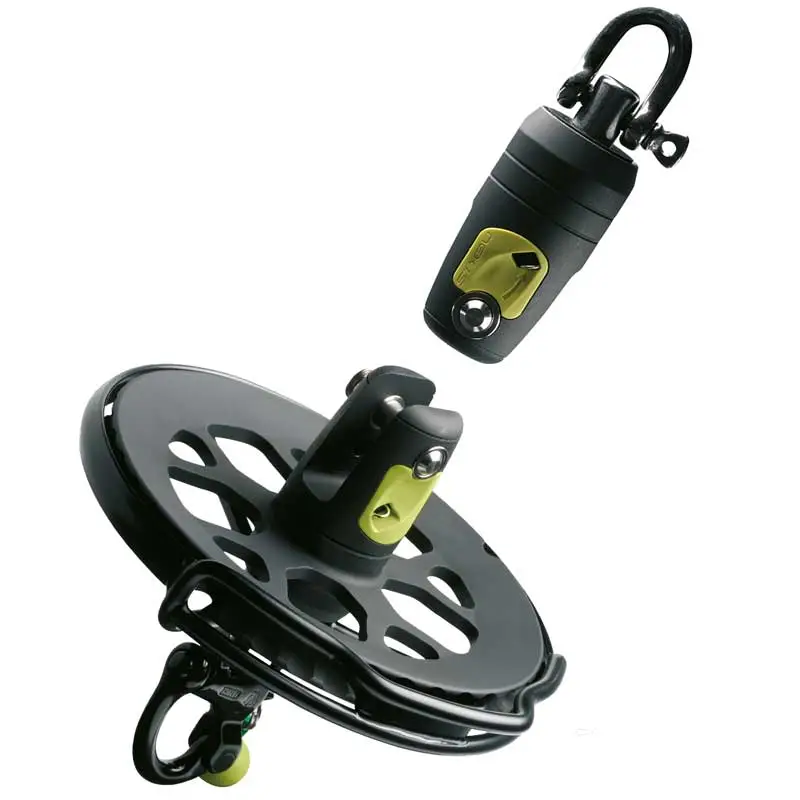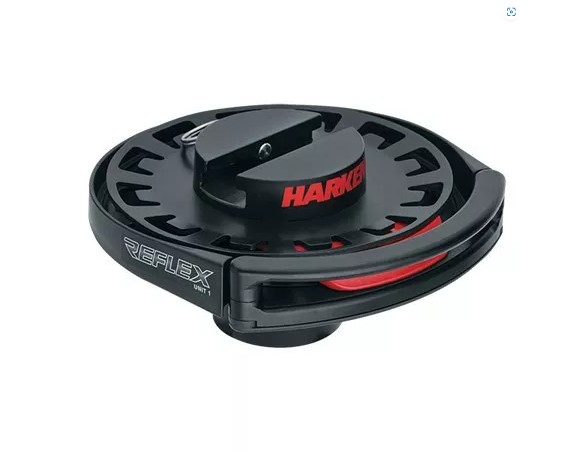


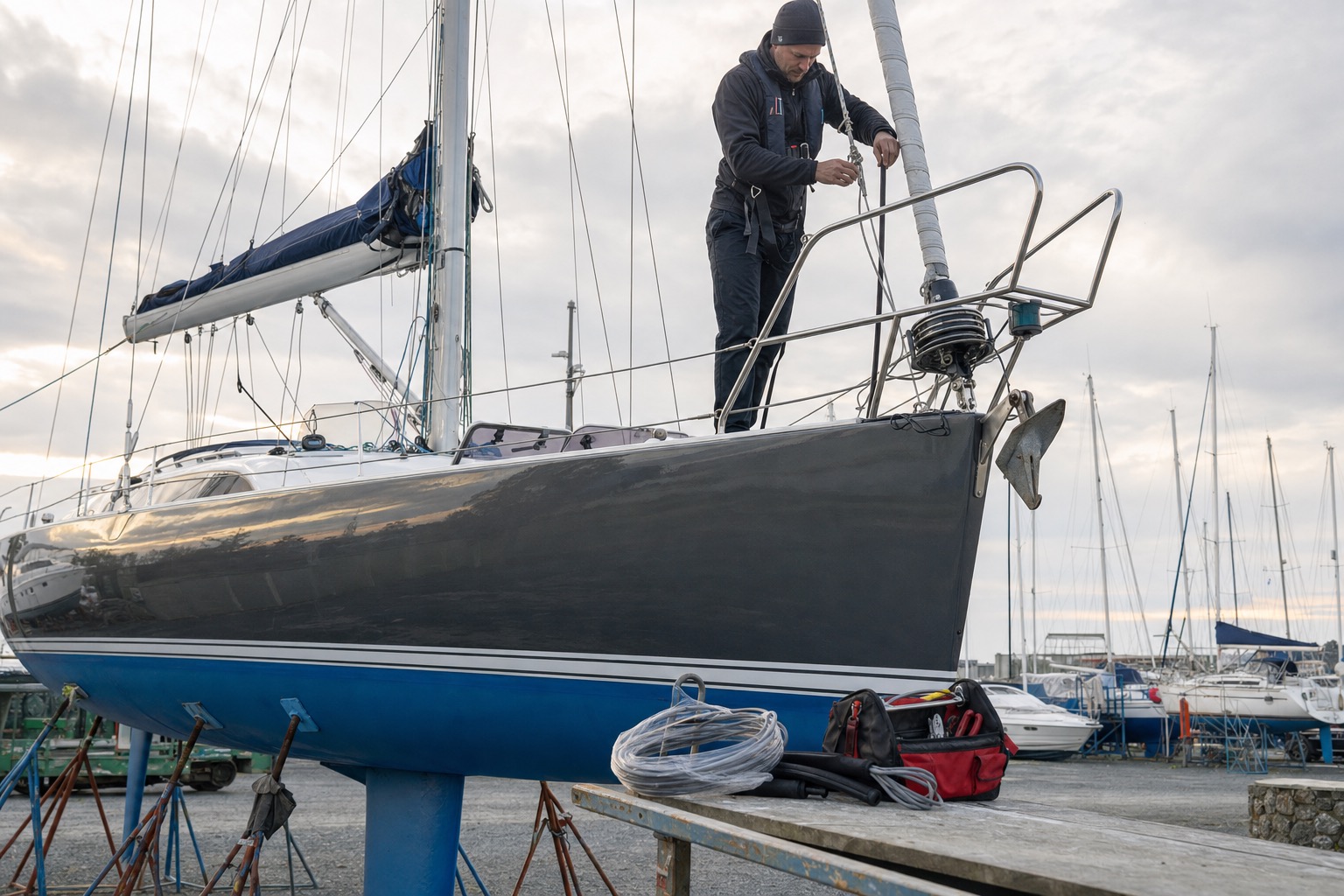
The furler is brand new, the sail was cut for it, and five minutes after the first hoist the Code 0 refuses to roll in cleanly. Nine times out of ten that has nothing to do with the drum or the swivel. It comes down to how the system was rigged before it ever left the dock.
Why Code 0 furling problems usually start on the dock, not on the water
A Code 0 furler works nothing like a genoa furler. On a genoa, the forestay carries the structural load and the furling drum just spins the sail around it. A Code 0 flies on its own independent luff, so the anti-torsion cable, the halyard tension and the furling line all have to work together before the sail ever gets loaded. Get one of those wrong and the drum spins without furling, the sail rolls up lopsided, or the line jams halfway through the furl. None of that shows up when you test the system tied to the dock. It shows up the first time you furl under real sheet load in 15 knots. At 123Furling we see the same five mistakes come back regardless of brand, whether it is a Facnor FX+, a Selden CX, a Profurl NEX or a Harken Reflex on the bow.
Mistake 1: Skipping the 2:1 halyard purchase
A Code 0 needs a dedicated halyard, not a spare spinnaker halyard rigged for the day. Selden's own fitting instructions for the CX and GX kits specify a 2:1 purchase on that halyard, both to reach the luff tension the anti-torsion cable needs and to keep the load off the halyard sheave and line stoppers. Skip the 2:1 and you get away with it in light air. Past 12 knots or so, the luff sags just enough that the halyard drifts around the head of the sail while you furl. That is halyard wrap: the furler stops turning, the sail is stuck half in and half out, and someone has to go forward and unwind it by hand.
The fix costs one block. Rig the 2:1 purchase, tension the halyard hard before you furl or unfurl, not after, and check it again once the new line has stretched in over a few sails. If you already have halyard wrap and cannot get the sail to release, ease the sheet completely first. Tension on the wrap is often the only thing holding it in place, and slacking the sheet lets it walk free. Do not winch harder on the furling line, that only tightens the wrap.
Mistake 2: Fitting a twin-line instead of a proper anti-torsion cable
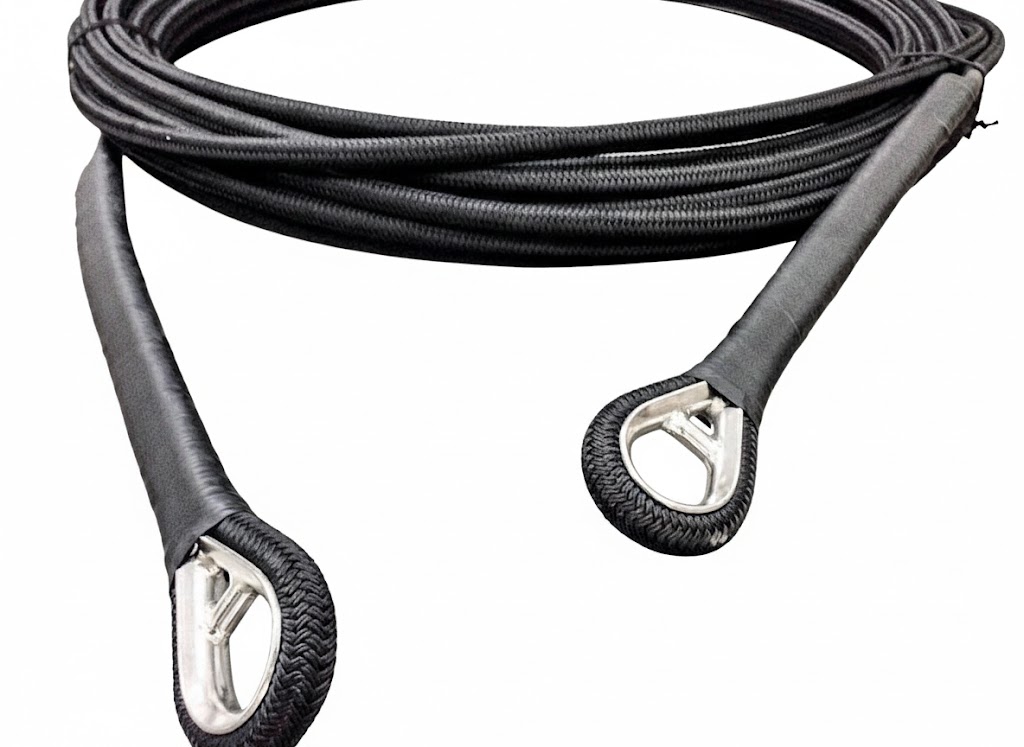
Before dedicated torsion ropes existed, sailmakers taped or stitched twin Dyneema lines into the luff of screechers and Code 0 sails to fake some torsional stiffness. It is a workaround, and threads on forums like Sailing Anarchy still turn up sailors running that setup on a modern furler. It does not transmit rotation evenly. The tack starts turning before the head does, and the sail rolls up looking like a corkscrew instead of a clean tube.
Every furler we carry, the Facnor FX+, the Selden CX, the Profurl NEX and the Harken Reflex, ships with a proper anti-torsion cable sized to that specific drum, so this mistake rarely happens on a new install. It shows up when a sailor reuses an older Code 0 sail with a taped-in twin line on a new drum, or has a sailmaker splice in a generic torque rope without checking it against the furler manufacturer's spec. A quick way to check what you actually have: look at the luff tape where it meets the drum. A proper anti-torsion cable terminates in a single thimble or splice fitting that bolts straight to the drum. Twin lines show up as two separate line ends taped side by side. If you see two ends, budget for a proper luff rope before the sail sees a real breeze. We wrote a full breakdown of when you actually need a dedicated anti-torsion line and how to size one, worth reading before you order a replacement sail.
Mistake 3: Letting the furling line go slack
A continuous furling line has two ends, and both need tension or the drum walks: it spins under sheet load with nothing pulling back the other way. The trick most riggers use, and one that rarely makes it into an owner's manual, is a snatch block on a short length of shock cord at the end of the line run, holding both parts of the loop taut at all times. Skip that and two things go wrong. The drum spins when you do not want it to, and the slack loop ends up trailing in the water or wrapped around a stanchion.
Cut the furling line to length only after you have rigged the shock cord tensioner, not before. An overlong loop is the single most common reason sailors end up re-leading the whole system a season later.
Mistake 4: Sheeting hard while you are still furling
This one is a timing mistake, not a rigging mistake. Real load on the sheet while you pull the furling line turns straight into torque at the tack. That torque wraps the furling line around the drum or the tack fitting, the furl stops halfway, and you end up standing on the foredeck trying to unwrap a line that has jammed solid. Ease the sheet all the way before you start furling, not halfway. On a loose-luffed Code 0 that means dropping sheet load close to zero, not just "manageable."
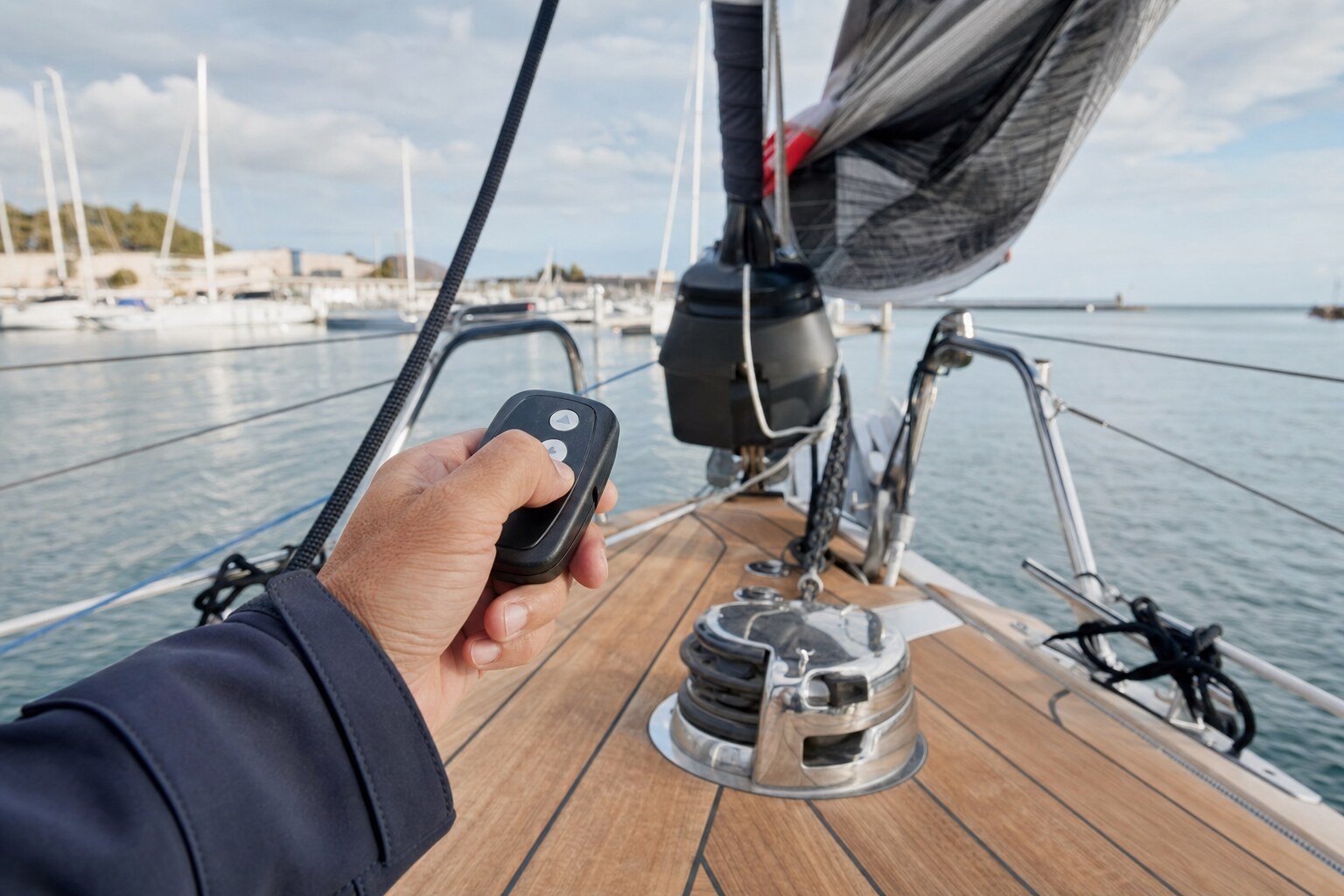
This is also the mistake that catches out singlehanded sailors the most, since easing the sheet and grinding the furling line from the cockpit at the same time is hard to do alone. Rig the furling line to a self-tailing winch or a jammer you can reach without leaving the helm, ease the sheet first, then furl.
Mistake 5: Leading the furling line at the wrong angle
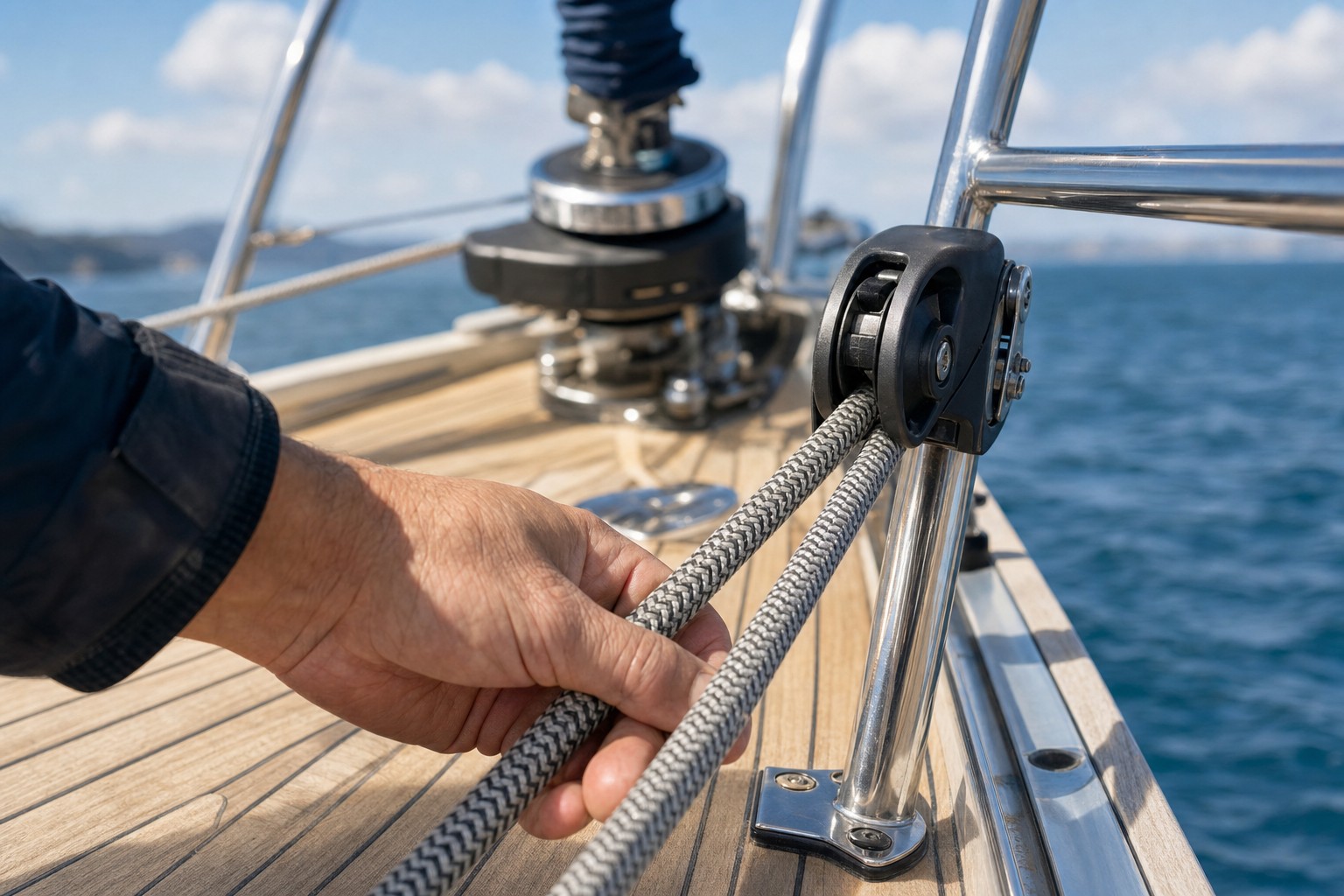
The furling line has to come off the drum at a shallow, fair angle. Lead it too steeply, straight up from a low block or a cleat mounted too close to the bow, and the line rides up on itself on the drum, overriding and jamming after a few wraps. Selden specifies double fairleads mounted on the stanchion bases for exactly this reason, and it is worth checking that spec against your own boat rather than reusing whatever fairlead position came with the old genoa furler. If the system furls and unfurls smoothly in the yard but jams under real sail load, check the lead angle first, not the drum.
Which mistake actually costs you money
Halyard wrap and a jammed furling line are inconvenient. A twin-line torsion setup or a sheet-load jam can cost you a sail. If you are installing a Facnor FX+, Selden CX, Profurl NEX or Harken Reflex this season, see our full side-by-side comparison of all four systems, then rig the halyard purchase and the anti-torsion cable first and test the furling line lead and tension in the yard before the sail ever sees real wind. On 123furling.com you can compare all four Code 0 systems side by side:
- Selden CX Code 0 system: from €776.60
- Facnor FX+ Code 0 furler: from €845
- Profurl NEX Code 0 system: from €930.08
- Harken Reflex Code 0 system: from €1,015
Need a replacement anti-torsion line for a sail that already has its own luff rope? Not sure which system fits your boat? Use our product advisor or email info@123furling.com.