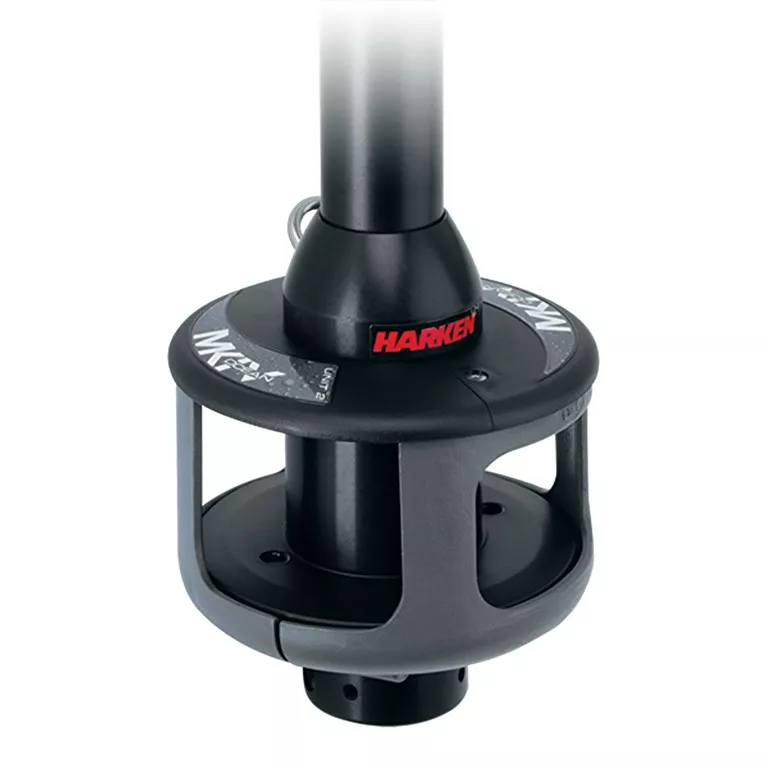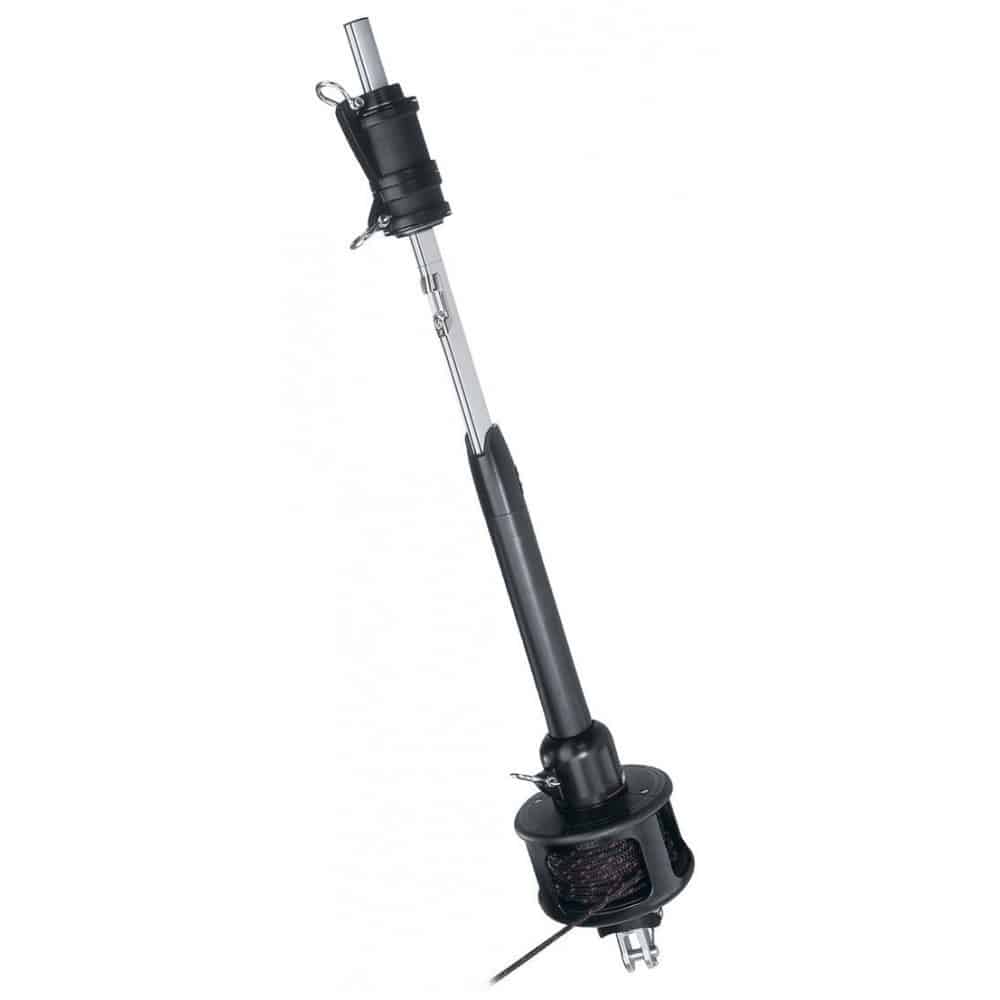


The Harken MKIV line comes in two versions and four unit sizes, and the difference between them is not obvious from the product pages. The MKIV Ocean runs €1,985; the standard MKIV System costs €2,700. That €715 gap deserves an explanation before you order.
What the €715 difference actually buys you
Both systems share the same core engineering: hardcoat-anodized aluminum foils, multiple rows of Torlon ball bearings in the swivel assembly, and a drum that comes off without special tools. Both are fully maintenance-free - the bearings need no grease or lubrication, not even after years of saltwater use.
The single meaningful difference is in the foil extrusion. The standard MKIV uses a double-groove profile: two parallel luff grooves running the full length of the foil. This lets you run two headsails simultaneously. While the working genoa flies in groove one, you hoist the replacement in groove two. When the new sail is up and sheeted, you release the first halyard. Racing crews do this to avoid going bare-headed at mark roundings.
The MKIV Ocean uses a single groove. One groove, one sail. If you sail with the same headsail from April to October and only swap sails in harbour, you will never miss the second groove. You would be spending €715 on a racing capability that serves offshore race teams and professional delivery crews, not weekenders or coastal cruisers.
Unit 0, 1, 2 or 3: matching the system to your forestay
Picking the right unit size matters more than choosing between Ocean and Standard. A unit too small for your forestay will bind under load and wear through its bearings ahead of schedule. Too large and you are adding unnecessary windage and weight aloft.
| Unit | Boat length | Wire forestay | Rod forestay |
|---|---|---|---|
| 0 | 22-30 ft (6.7-9.1 m) | 3/16"-1/4" (4.8-6 mm) | - |
| 1 | 28-36 ft (8.5-11 m) | 1/4"-5/16" (6-8 mm) | -8 to -12 (5.7-7.1 mm) |
| 2 | 35-46 ft (10.7-14 m) | 5/16"-7/16" (8-11 mm) | -12 to -17 (7.1-8.4 mm) |
| 3 | 45-60+ ft (13.7-18+ m) | 7/16"-9/16" (11-16 mm) | -17 to -22 (8.4-9.5 mm) |
A Bavaria 33 or Beneteau Oceanis 323 typically needs Unit 1. A Jeanneau Sun Odyssey 409 or Hanse 415 usually falls into Unit 2. The overlap zone is real: a 36-footer with a tall rig and a reinforced forestay may need to step up one size. When in doubt, measure the wire diameter with calipers rather than estimating from boat length alone. Our guide on choosing a genoa furler by boat size goes deeper into how rig specs affect the selection.
Worth noting: 123Furling lists the MKIV Ocean as a single product covering multiple unit configurations. Send us your forestay diameter and wire type and we will confirm exactly which unit applies to your boat.
Why Torlon bearings hold up where others wear out
Many furling systems use Delrin or nylon bearing races. These materials work well when new but absorb moisture over time, swelling slightly and adding friction. In salt conditions, that process accelerates. After a few seasons, the furling line starts pulling noticeably harder than it did in year one.
The MKIV uses Torlon bearings, a polyamide-imide composite. Torlon does not absorb water. It holds its shape across temperature extremes, handles sustained load without creeping, and resists UV and saltwater degradation. The practical result is a bearing system that performs in year eight much as it did in year one.
Long-distance cruisers who sail Harken MKIV systems regularly report going 10 to 15 years without replacing bearings. When you are three weeks from the nearest chandlery, that track record has real value. A system that becomes harder to furl as the seasons accumulate is a problem on coastal passages; offshore, it becomes a serious safety concern.
Three installation details that catch sailors off guard
First: the toggle assembly is not included with the furler. It must be ordered separately. Choose a jaw/jaw toggle (Harken 7311.20) or an eye/jaw reversible toggle (7411.20), sized to your chainplate clevis pin - either 1/2" (12.7 mm) or 5/8" (15.9 mm). Measure the pin before placing the order. Getting this wrong means a return trip.
Second: on most production boats, the headstay needs to be shortened slightly to fit the Harken toggle stack-up. Harken documents this clearly, but sailors typically discover it on installation day rather than before. If your headstay uses rod rigging with swaged terminal fittings that cannot be cut down, a stud/jaw toggle (7311.20 5/8) is often the only workable option. Have a rigger assess the headstay length and terminal type before committing to the order.
Third: check how much bow clearance you have around the anchor roller. On boats with a recessed anchor fitting that sits close to the headstay chainplate, the drum assembly can foul the deck fitting. Harken makes a Long Link Plate (7311.21) in 1/2" and 5/8" sizes that raises the unit when clearance is tight. A quick measurement at the bow before ordering saves time on installation day.
Which system makes sense for your sailing
At 123Furling, the MKIV Ocean outsells the standard MKIV roughly four to one among the cruising sailors we work with. For a family boat that leaves the same genoa up from spring to autumn, the Ocean does the job completely and costs €715 less. That is a quality furling line, a good lead block for the cockpit, and money left over.
The standard MKIV earns its price in two specific situations: offshore racing under a rating rule that rewards fast headsail swaps, and serious shorthanded blue-water sailing where you want a storm jib pre-rigged on the second groove and ready to hoist without lowering the genoa. Outside those two cases, the Ocean is the right call for most European cruisers.
Not sure which unit fits your rig? Use the 123Furling product advisor or send your forestay diameter and wire type to info@123furling.com. If you are still comparing brands, our four-brand comparison guide puts the MKIV alongside Seldén Furlex, Profurl and Facnor so you can see where Harken wins and where it does not.