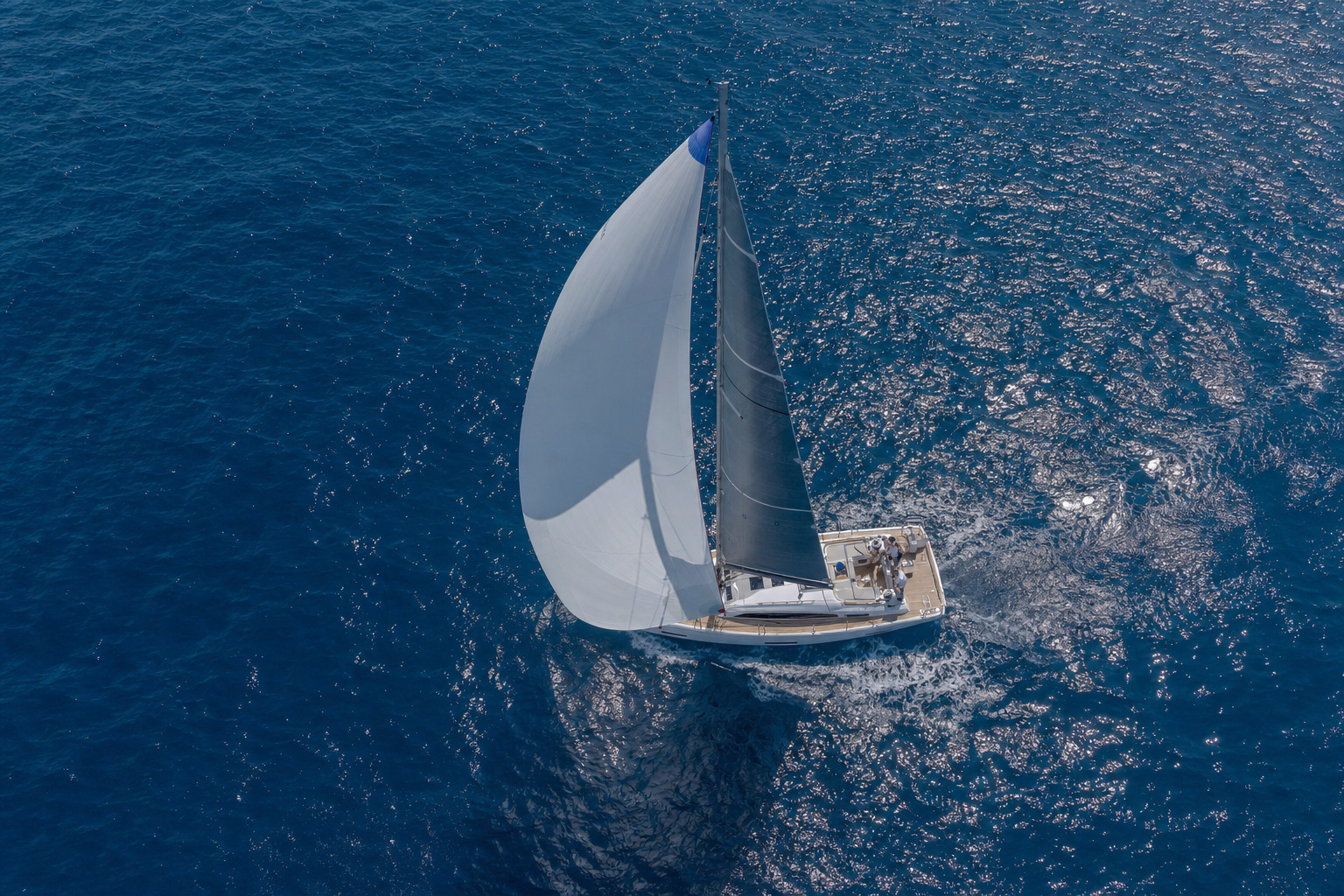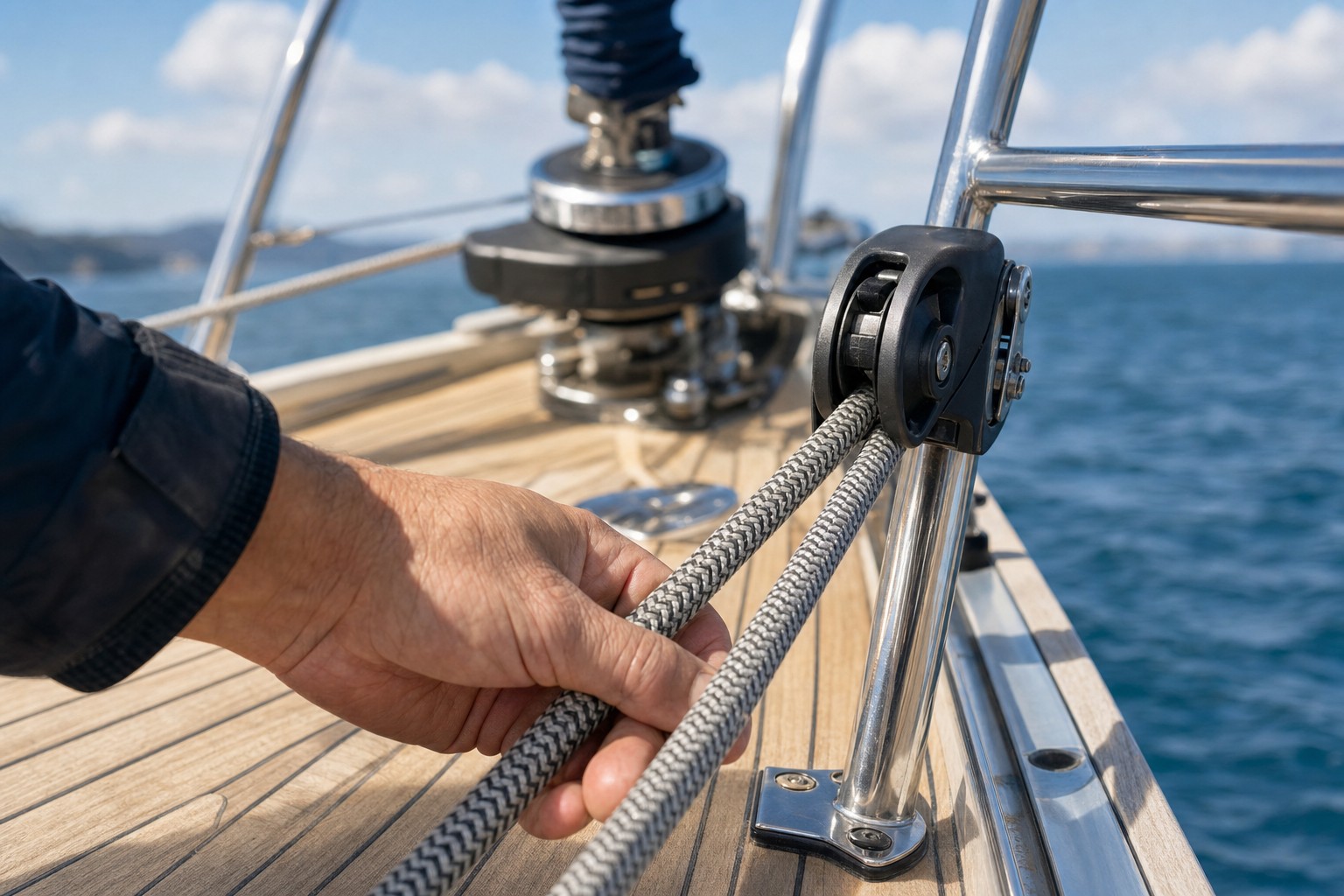


Most genoa furler upgrades come down to brand and size. But there's another choice that's often overlooked until it's too late: whether to go through-deck or stay with a standard on-deck installation. It's a decision that's worth getting right, because reversing it after the fact is expensive and rarely straightforward.
The short version: through-deck puts the drum below your deck (usually in the anchor locker), while on-deck mounts the drum at the base of the forestay above deck. That difference of a few centimetres in drum position results in a significant price difference and a few practical implications worth understanding before you order.
What "through-deck" actually means for your boat
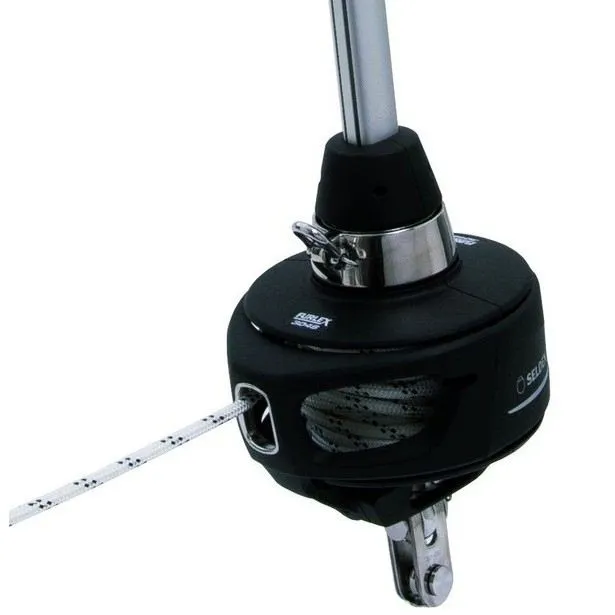
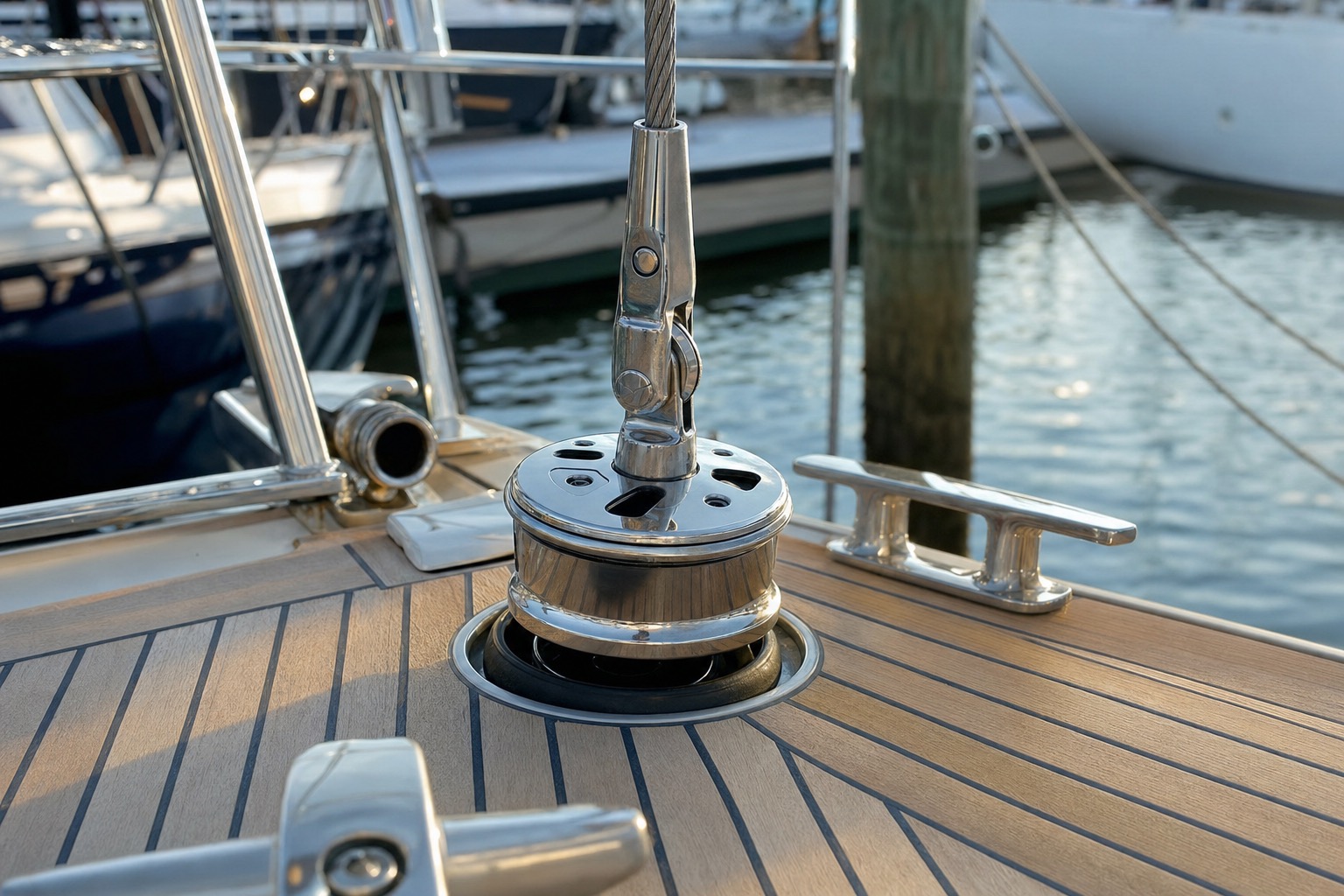
On a standard on-deck furler, the drum sits above the deck. The tack of your genoa attaches to the top of that drum, which raises the tack somewhere between 15 and 30 centimetres above deck level. On a through-deck system, the drum lives below deck - the furling line runs through a tube in the deck and winds around the drum in your anchor locker. The tack fitting sits at deck level, allowing your sail to be tacked directly there.
The practical result: with a through-deck installation, your genoa's luff is 15-30 cm longer than with a comparable on-deck system. On a 40-foot boat with a 12-metre luff, that's roughly 2-3% more sail area. Not dramatic, but measurable in light air and on the race course.
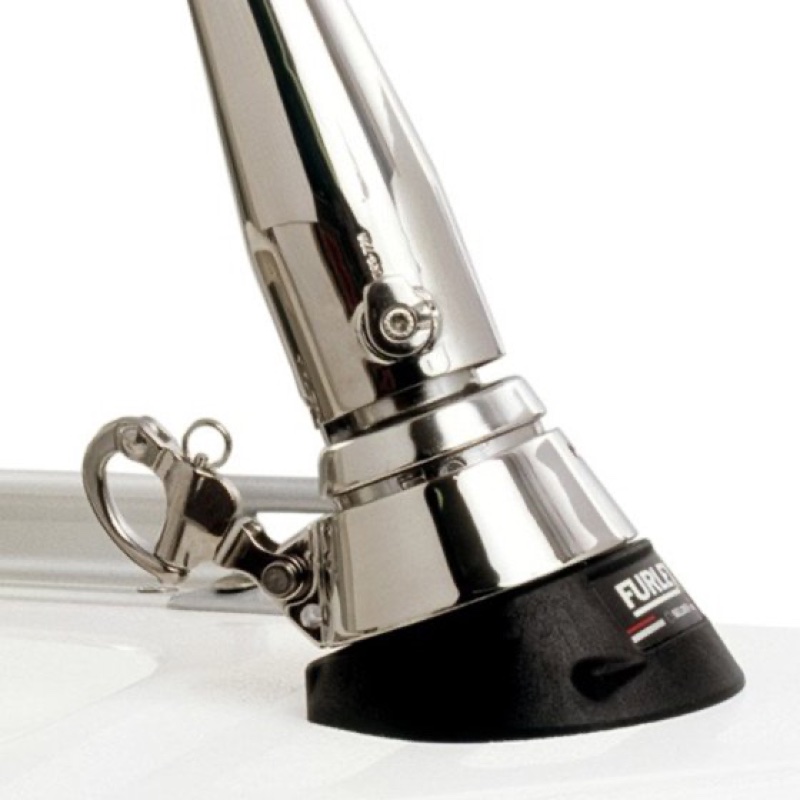
The Seldén Furlex Through Deck is the classic example of this setup. At 123Furling, we stock it at €2,843 - compared to the standard Seldén Furlex at €799. That's a difference of just over €2,000 for the drum position alone.
Does your boat have an anchor locker that works for this?
Through-deck installation is not possible on every boat. You need an anchor locker or chain locker with enough space for the drum, a clear path for the forestay, and access for maintenance. Modern production boats from builders like Bavaria, Jeanneau and Hanse have often been designed with through-deck furlers in mind - you'll see a pre-cut hole and a drainage tube already in place. Older boats frequently don't have this, and retrofitting requires drilling through the foredeck with structural implications.
The drum diameter on the Furlex TD is kept deliberately compact to fit in narrow anchor lockers. Still, if your anchor locker is less than about 350 mm deep, the TD installation may not fit. Check this before committing to the purchase.
Also worth knowing: through-deck installations require a small amount of water management. The forestay tube through the deck can let a trickle of water through during sailing. The Furlex TD handles this with a drainage system that routes water out of the anchor locker - a well-designed locker with proper drainage handles it fine.
The real cost of a through-deck installation
The product price difference is €2,044 (Furlex standard at €799 vs Furlex TD at €2,843). But that's not the whole story.
On-deck furlers are straightforward enough for an experienced DIYer to install over a weekend. Through-deck installations are harder - running the forestay through the deck tube, routing the furling line, ensuring proper sealing and drainage - most sailors prefer to have a rigger do this. Budget €400-800 for professional installation of a TD system, versus €0-200 for a standard on-deck system if you can handle it yourself.
- Standard Furlex on-deck: €799 + installation = around €1,000-1,200 installed
- Furlex Through Deck: €2,843 + installation = around €3,300-3,600 installed
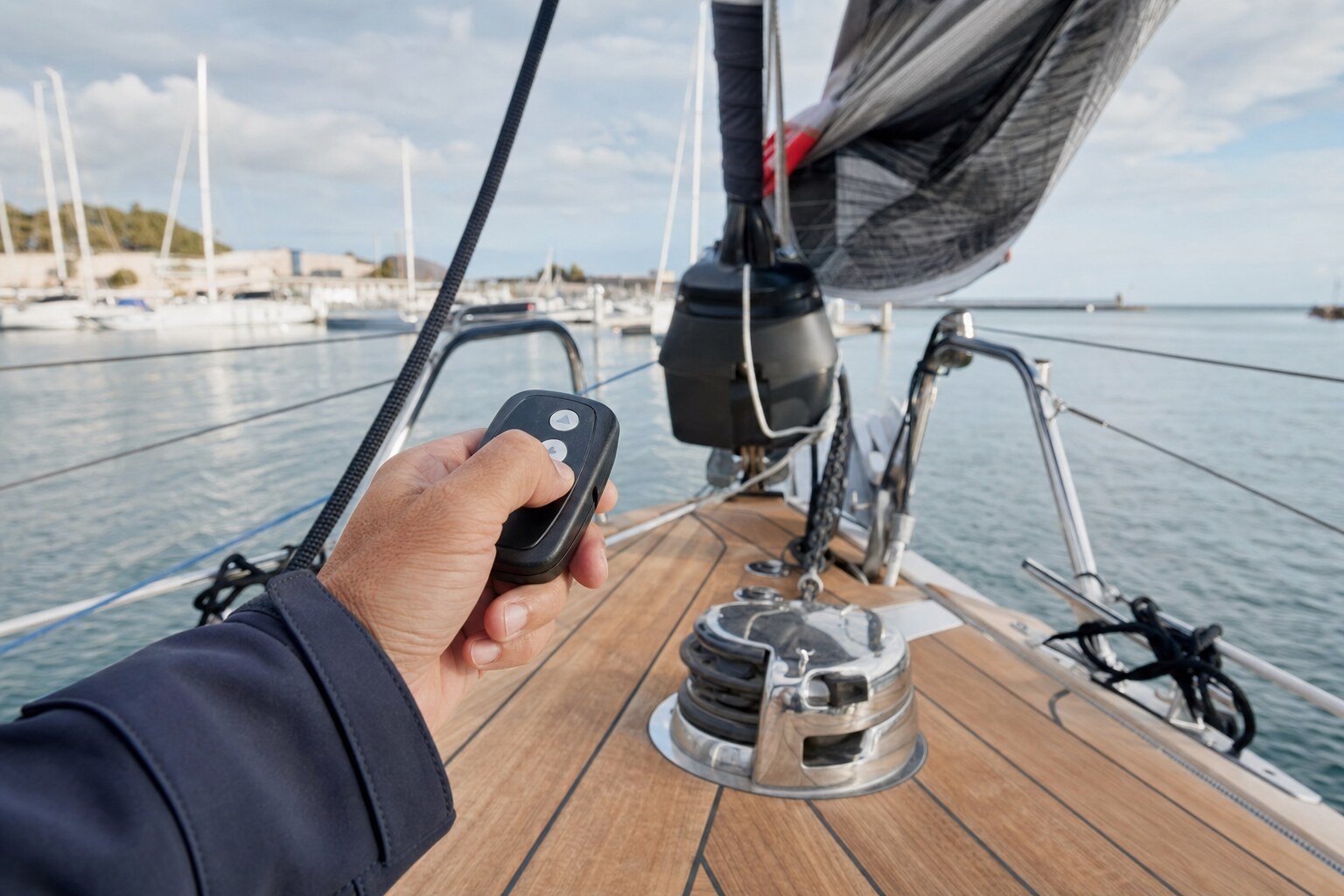
If you're also thinking about going electric, the Seldén Furlex Through Deck Electric at €4,099 combines both upgrades in one step.
Who should choose through-deck
There are two types of sailors who consistently choose through-deck at 123Furling:
The first is the performance-oriented cruiser - someone who competes in offshore regattas or races club events, and for whom sail area and pointing ability matter. If you're trying to get your boat's jib to perform like a racing yacht, through-deck makes sense. The extra luff length, combined with the sail tacking close to the deck, improves the shape and efficiency of the sail in light and medium airs.
The second is the sailor upgrading a boat that already has a through-deck provision. If your Bavaria 46 came with a through-deck hole prepared from the factory, using a standard on-deck system means plugging the hole and mounting above deck - both messy and a missed opportunity. In these cases, matching what the builder intended is almost always the right call.
A third, less obvious case: boats with a very long luff where maximising sail area matters disproportionately. On a 50-footer with a 16-metre forestay, 30 cm of extra luff is nearly 2% more sail - that's meaningful upwind in light air racing conditions.
When standard on-deck is the smarter choice
For most weekend cruisers and liveaboard sailors, the standard on-deck installation is the better value decision. On a 38-footer used for summer cruising and the occasional coastal passage, the difference of 20 cm of luff length is simply not going to change your sailing experience. You'll spend €2,000 more for a marginal and largely theoretical improvement.
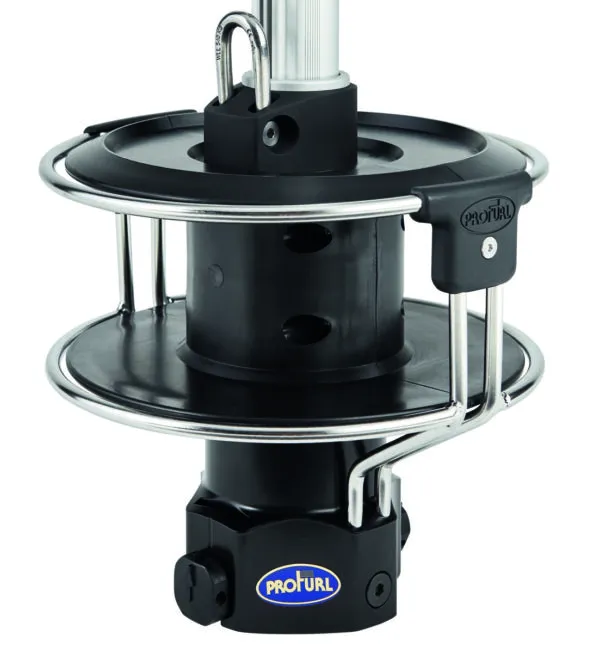
The Profurl C-System at €1,482 and the Harken MKIV Ocean System at €1,985 are both excellent on-deck options that sit between the entry-level Furlex and the through-deck premium. These are the systems 123Furling recommends for mid-range cruising boats where quality matters but performance racing isn't the goal.
If your boat has an existing through-deck hole but your budget doesn't stretch to €2,843, an on-deck system with a teak plug closing the hole is a clean and common solution that many yards use. It's not ideal aesthetically, but it works.
Before you order: measure your forestay first
Whether you go on-deck or through-deck, the measurement that matters most is your forestay diameter. The right furler model depends on matching the luff groove to the wire - a mismatch means the system won't work correctly. Our guide to forestay diameter and luff length explains how to measure this and which Furlex size you need. For a quick overview of which system fits boats of different lengths, see our genoa furler by boat size guide.
For most European sailing yachts between 9 and 14 metres, a standard on-deck system like the Furlex or Profurl C-System will handle the loads and last 20+ years with proper maintenance. Through-deck is worth the premium on the right boat with the right use case - but it's not an automatic upgrade.
Unsure which setup fits your specific boat? Use the product advisor or send your details (boat type, LOA, forestay diameter, luff length) to info@123furling.com.