

Most sailors know a code zero needs a different furler than a genoa. Fewer know that the anti-torsion cable inside that furler makes the difference between a clean furl and a 100 m² mess in 20 knots of breeze. Here's what the cable actually does, which systems include one, and when you can skip it.
What happens when you furl a code zero without torsion control
A genoa wraps around a forestay. The stay keeps everything aligned; the furling drum pulls the sail in from below. A code zero flies free on an independent furler, which means the top swivel and the bottom drum have to work together. Pull the furling line and both ends should start rolling at the same time.
Without an anti-torsion cable, here's what happens: the drum spins at the bottom, the sail starts to roll. But the swivel at the top is free to rotate. In 10 knots, the luff tension alone transmits enough torsion upward and the sail eventually rolls up. In 20+ knots with a full-sized code zero, the bottom furls fast while the top gets pulled but doesn't spin yet. You end up with the bottom third tight and rolled, the top two-thirds still flagging and loading up. Sailors on cruising forums describe this as "the middle won't cooperate" - it's the most common reason for calling the whole code zero experiment a failure.
The anti-torsion cable prevents this. It runs from the drum, through the luff of the furler, to the swivel at the top. When the drum rotates, the cable transmits that rotation immediately to the top swivel. Both ends roll simultaneously. The sail furls evenly from top to bottom.
Which systems include the anti-torsion cable and which don't
Not all code zero furlers handle this the same way. Here's how the four main systems at 123Furling differ:
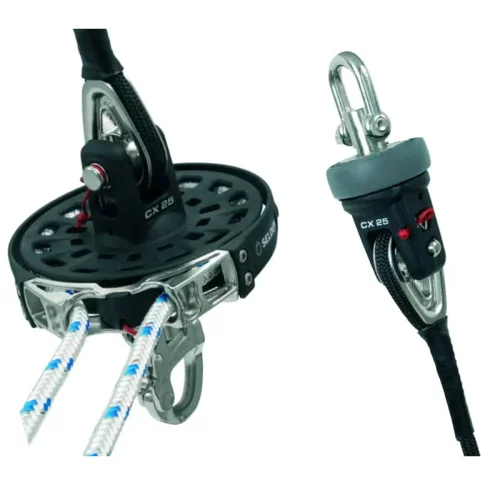
Seldén CX - The Seldén CX is sold without anti-torsion cable as standard. Seldén sells AT-cables separately, matched to each CX model. The CX15 (up to 80 m² sail area) uses a 6 mm cable; the CX25 (up to 115 m²) takes an 8 mm cable. For boats under 40 feet with sails below 60 m², some sailors skip the cable and rely on halyard tension alone - it works in moderate conditions. For offshore sailing or larger sails, you want the cable.
Seldén GX - The Seldén GX is Seldén's top-down system for asymmetric spinnakers and gennakers, and it comes with the anti-torsion cable included in the kit. The GX16 covers sails up to 50 m², the GX35 handles up to 120 m². If you want a system ready to go out of the box, the GX has an advantage over the CX for this reason.
Facnor FX+ - The Facnor FX+ system uses a compact, low-friction design with the "in/out" furling drum. The anti-torsion mechanism is integrated into how the FX+ works: the cable connects from the drum to the top swivel. Four models cover sail areas from 30 to 140 m², suitable for boats from 8 to 16 metres.
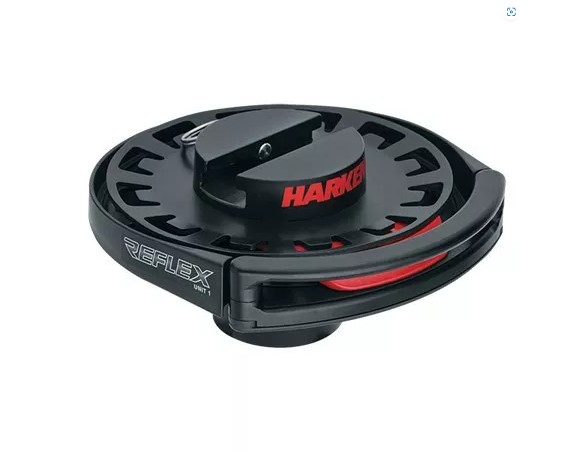
Harken Reflex - The Harken Reflex is the most flexible of the four. Harken offers it in two configurations: with a torsion cable (standard) and cable-less. The cable-less version works through Harken's patented reflexive drive unit, which is engineered to work with code zero sails built with reinforced luff construction. If your code zero was made for cable-less use, the Reflex runs without it cleanly. If not, you need the cable version. Three units cover boats from 6.7 to 16.5 metres.
Profurl NEX - The Profurl NEX V2 covers the widest range: 35 to 350 m² in seven models, suitable for boats up to 80+ feet. The NEX works with an anti-torsion rope running through the luff. The V2R version adds FurlAssist for larger sails or shorthanded crews who need more mechanical advantage when furling in a breeze.
When you can sail without an anti-torsion line
There are situations where skipping the cable is reasonable:
- Your code zero was specifically designed for cable-less use - ask your sailmaker whether reinforced unidirectional luff fibers were built into the construction
- Sail area under 50 m² and a system designed for lower loads
- Day sailing in protected waters with enough crew aboard to handle the sail manually if furling gets awkward
- A bottom-up configuration where the luff sleeve already has torsion cable sewn in directly
When you should not skip it:
- Shorthanded sailing, racing, or offshore passages where you need the sail down reliably
- Sail area above 80 m²
- Regular sailing in 15+ knots of wind
- Any setup where you can't drop the sail by hand if the furler doesn't cooperate
Sizing the anti-torsion line correctly
An anti-torsion cable is not a universal part. It needs to match three things: the luff length of your code zero, the internal diameter of your furler's luff tube, and whether your system is top-down or bottom-up.
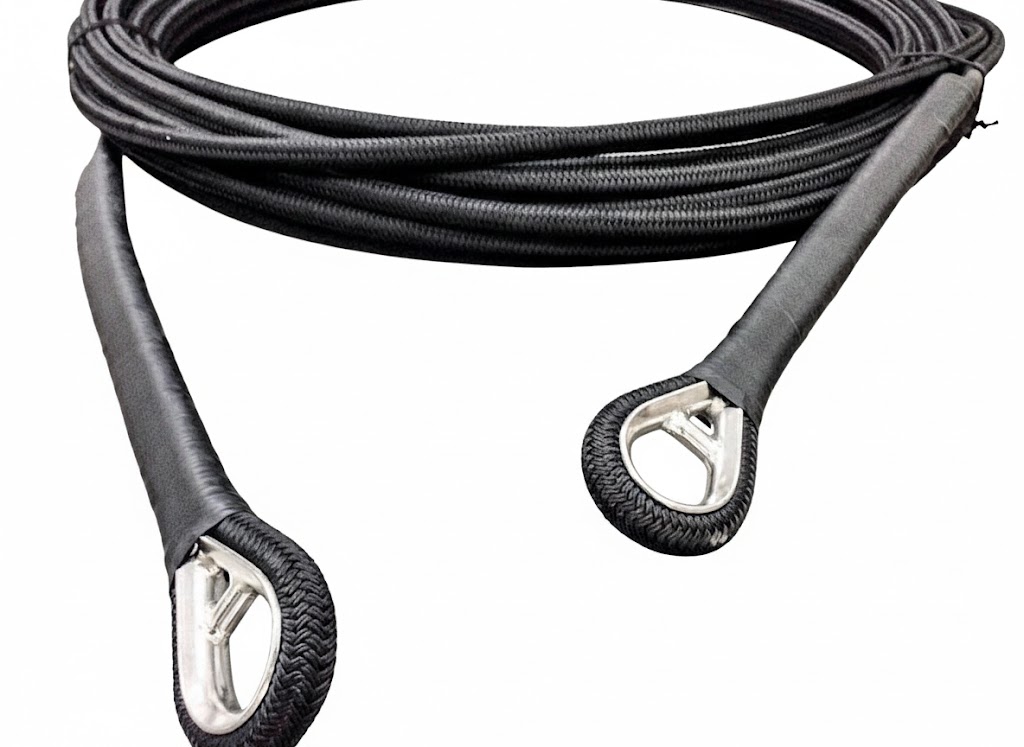
The anti-torsion line from 123Furling is custom-made per order with stainless steel thimbles at both ends, sized for the mounting points of your specific furler. Before ordering, measure your sail's luff length and note your furler model. The cable must match the luff length exactly - too short and the top swivel doesn't engage fully; too long and the cable has slack that delays torsion transfer.
At 123Furling, the team regularly sees code zero furlers that "suddenly started furling badly" - and in almost every case, the anti-torsion cable has lost its stiffness after 3-5 seasons. The core fatigues from repeated torsion cycles. Early sign: the bottom furls fine but the top starts catching up late. Later stage: the sail won't furl properly at all above 15 knots.
The quick field test for a tired anti-torsion cable
In flat water, 10-12 knots of breeze, pull your furling line at normal speed. Count how many drum turns before the top of the sail starts rolling. On a healthy system, the top starts moving within 2-3 drum turns. If you're at 6-8 turns before the top engages, your cable is losing its torsional stiffness and needs replacing before the next offshore season.
The cost of a replacement cable (around EUR 120) is a fraction of a sail repair after a seam blew from a code zero that wouldn't furl in 25 knots. If you're heading offshore this season, check it now.
Compare the main code zero furler systems in our brand comparison guide. If you're still deciding which system fits your boat, the product advisor on 123furling.com walks you through boat size, sail area and budget to find the right match. Or send your setup details to info@123furling.com and we'll come back with a specific recommendation.