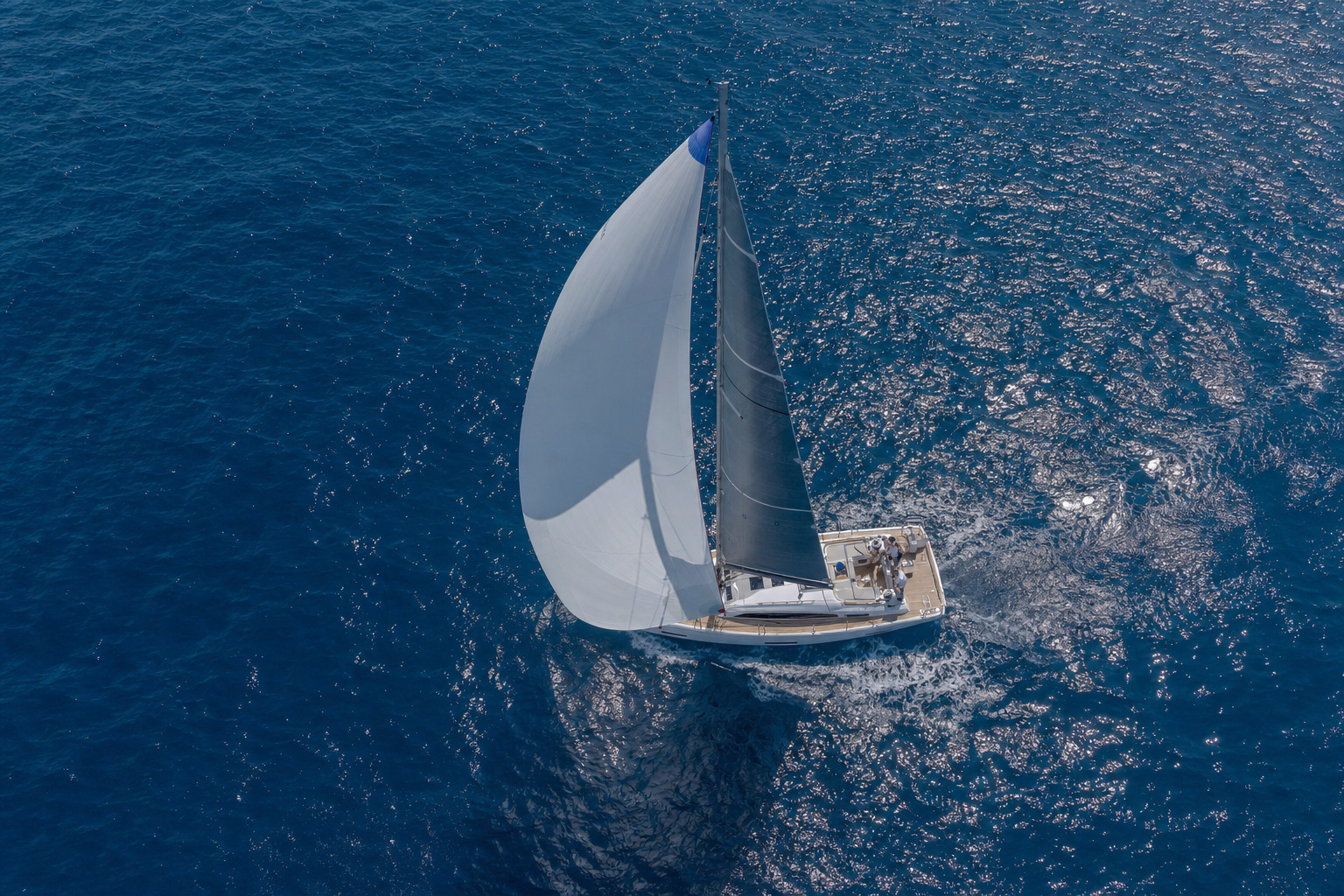


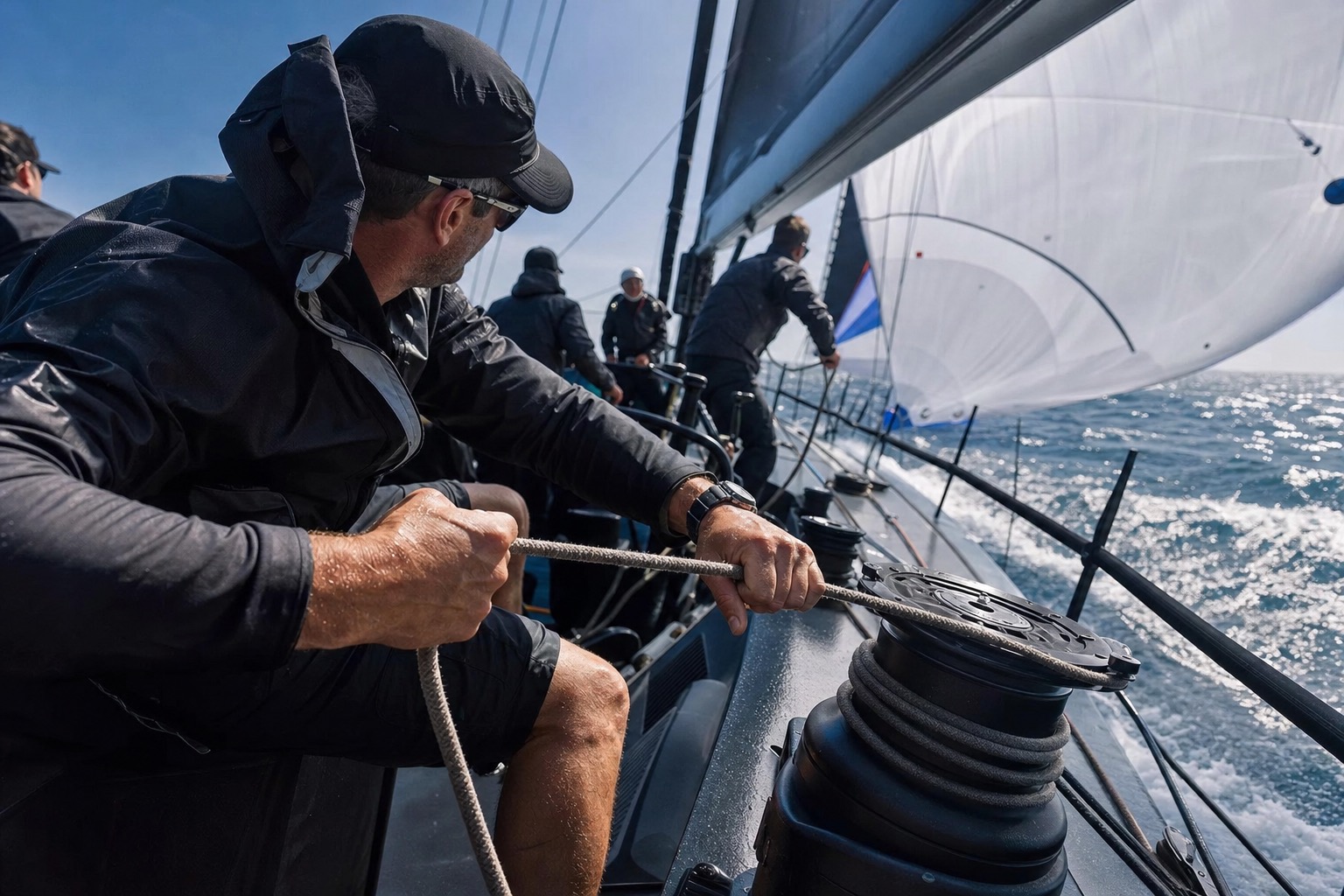
Walk down the dock at any serious regatta and you will notice something: the boats fighting for the top of the fleet rarely have a genoa furler. Bare headstay, hanked-on jibs, a foredeck crew ready to change sails in fifteen seconds. That is not an accident. A furler adds weight aloft, drag through the slot, and a drum that disturbs airflow off the tack. On a boat trying to shave tenths of a second off a tack, that trade-off is not worth it.
So why does "enrollador genova regata" show up as a search term at all? Because most sailors racing are not on grand-prix boats. They are on cruiser-racers doing Wednesday night club racing, doublehanded offshore events, or IRC boats where a foredeck crew of one has to manage the headsail, the spinnaker and the trim at the same time. For that group, the question is not furler or no furler. It is which furler costs the least in weight and drag while still letting you reef in a blow without a crew change.
Where a furler still earns its place: club racing and shorthanded crews
If you are racing shorthanded, sailing IRC or ORC with a rating that already accounts for a furled genoa, or running Wednesday night beer-can races where changing headsails mid-race is not realistic, a furler is not a compromise. It is what lets you reef from 130% down to 100% at the top mark without sending someone forward in 22 knots. The question then becomes which system adds the least penalty.
At 123Furling we see this distinction get missed constantly: sailors assume any Code 0 or genoa furler is "the racing option" because it looks modern, when in fact the spec sheet tells a very different story about weight and drag depending on the model.
What actually costs you speed: drum size, housing weight, and torsion cable choice
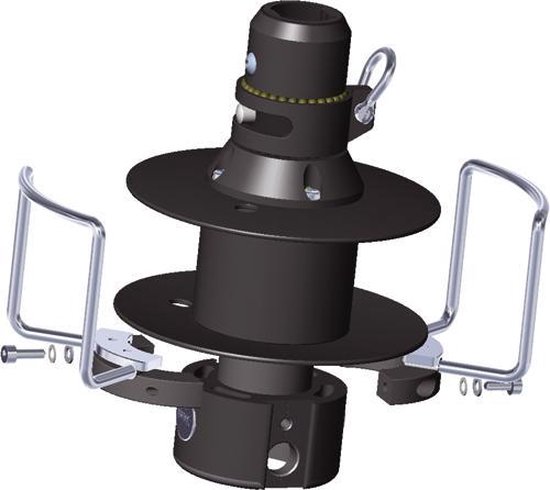
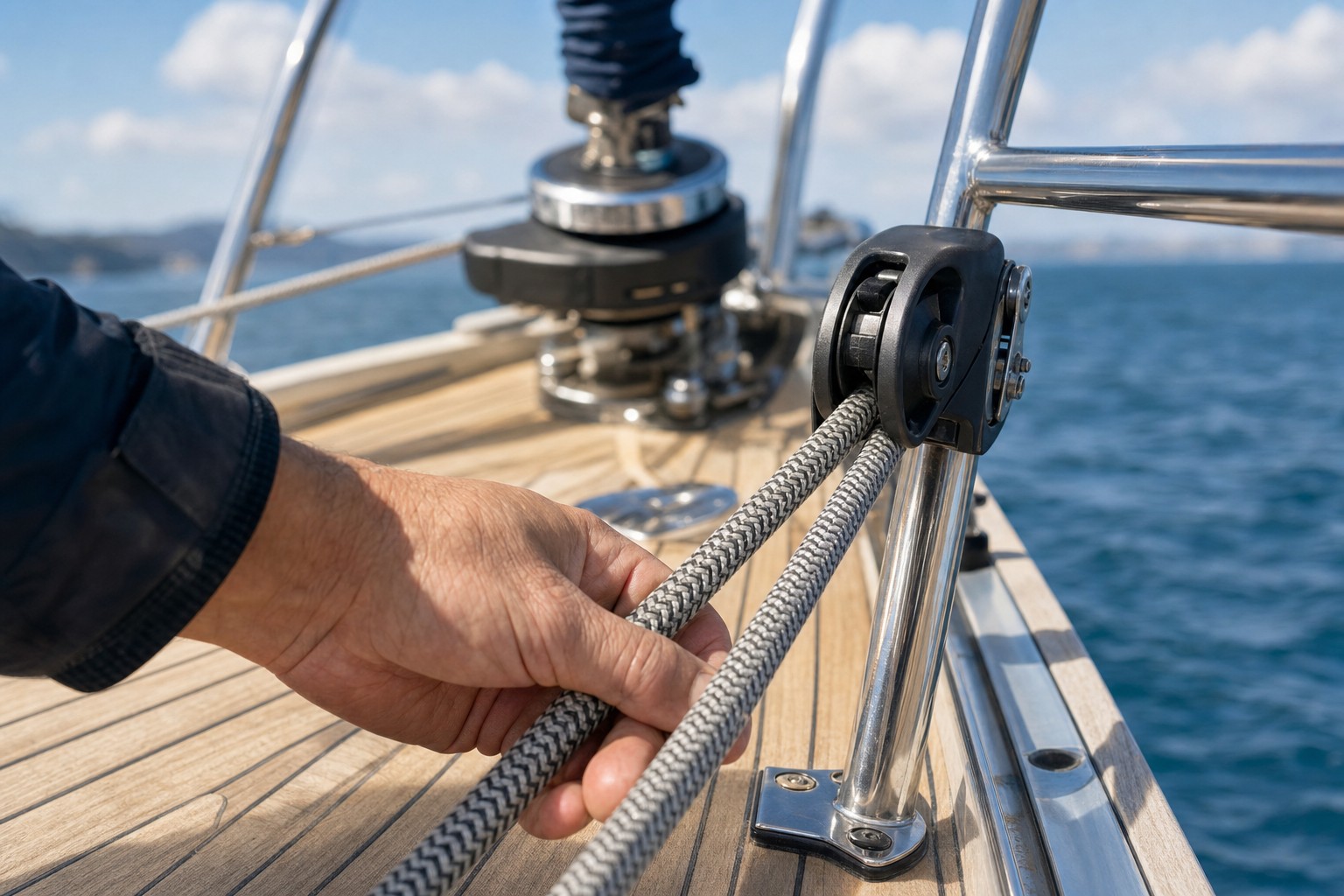
Three things determine how much a furler drags on your rig. First, drum diameter: a bigger drum gives more torque and faster furling, but it also adds windage low on the boat and weight forward of the mast step. Second, the housing material: polycarbonate and aluminium are standard, but carbon housings shave real weight off the swivel and drum assembly, which matters most at the top of the sail where weight aloft has the biggest effect on righting moment. Third, whether the system needs a separate anti-torsion cable at all, since that cable adds its own weight and, on a tight luff, its own drag through the furling drum.
None of this is on the manufacturer spec sheets in a way that lets you compare across brands. Facnor lists SWL and max sail area. Harken lists MWL and unit size. Neither tells you how the housing weight or torsion cable choice compares to the other brand's equivalent unit, which is exactly the comparison a racing sailor actually needs.
The Facnor FX+ and its ratchet option, built for quick reefing under load
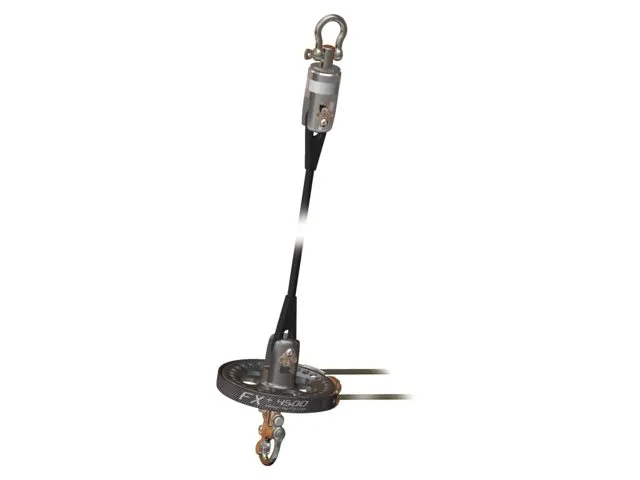
The Facnor FX+ is worth a closer look here. Its housing is carbon, not the polycarbonate you get on most cruising units, which keeps weight down exactly where it matters. The monoblock construction (drum and swivel machined from one piece) also removes the small amount of flex you get in a two-piece assembly, which translates to a tighter, more predictable furl under load. What makes it genuinely useful for racing is the optional Start and Go ratchet: the drum locks automatically mid-furl so a trimmer can release the furling line without the sail unrolling again. On a boat with two people managing headsail and spinnaker at the same mark rounding, that is the difference between a clean reef and a flogging sail while someone scrambles to re-tension.
The FX+900 covers boats from 6 to 10.5 metres at up to 30m², and the FX+1500 goes up to 60m² for boats to 12 metres, which covers most club-racing cruiser-racers. Priced from €845, it sits well below the electric Code 0 systems while still cutting real weight compared to a standard cruising furler.
Harken Reflex cable-less: skipping the torsion cable when the sail allows it
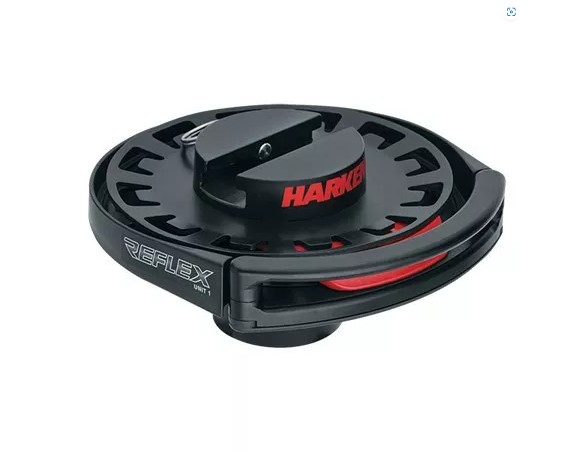
The Harken Reflex takes a different route to the same goal. If your Code 0 or genoa already has load-carrying luff fibres built into the sail (most modern laminate Code 0s do), the Reflex cable-less configuration lets you skip the anti-torsion cable entirely. That removes one more source of weight and drag from the system, and it is the reason we point racing-oriented customers toward Reflex before Facnor FX+ when the sail wardrobe already supports it. Unit 1 covers boats from 6.7 to 10 metres up to 60m², and the Torlon ball bearings need essentially no maintenance between regattas, which matters when you are stripping and re-rigging a boat every weekend through the season.
If you want the full breakdown of how Reflex, Facnor FX+, Seldén CX and Profurl NEX compare across price, sail area and construction, we cover that in our Code 0 furler comparison.
Facnor LS is a fine furler, just not for this job
It is worth naming the system to avoid, not because it is bad, but because it is built for a different job. The Facnor LS is Facnor's cruising line: reinforced connection components, superior protection for metal parts, genuinely maintenance-free operation with nothing more than a fresh water rinse. That is exactly what a cruising sailor wants and exactly what a racing sailor does not need to pay for. The LS trades every one of those durability features for weight it does not shed, because it is not built to. If your search brought you here looking for a racing setup, the LS is the wrong 934 euros to spend. Save it for a boat that lives on a mooring nine months a year.
One trick from the racing fleet: skip top-down at the mark
A detail that never shows up in manufacturer literature but comes up constantly on racing forums: several owners running top-down furlers for asymmetric spinnakers on the racecourse disable the top-down function and furl bottom-up instead, purely because it is faster and the resulting roll sits tighter against the headstay. Top-down furling is genuinely useful for shorthanded cruising, where a controlled, hands-off furl matters more than raw speed. On the racecourse, the extra seconds it costs at a mark rounding usually are not worth the convenience. If you are running a Spinex or similar top-down system and racing regularly, it is worth practising both methods before you decide which one earns a place in your mark-rounding routine.
The same logic applies to anti-torsion cable tension: keeping light, even tension on the furling line as the sail rolls out, and on the sheet as it rolls back in, prevents the wraps on the drum that cost you a clean reef exactly when you need one. It sounds basic, but it is the single most common reason a furler jams mid-race, and it costs nothing to fix.
Not sure whether a Facnor FX+, Harken Reflex or something else fits your boat and your racing programme? Use our product advisor or send us a mail at info@123furling.com and we will walk through your rating, sail wardrobe and crew size with you.