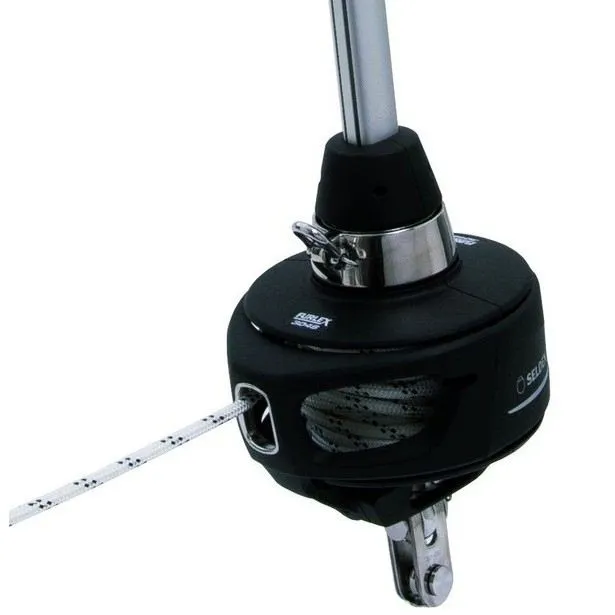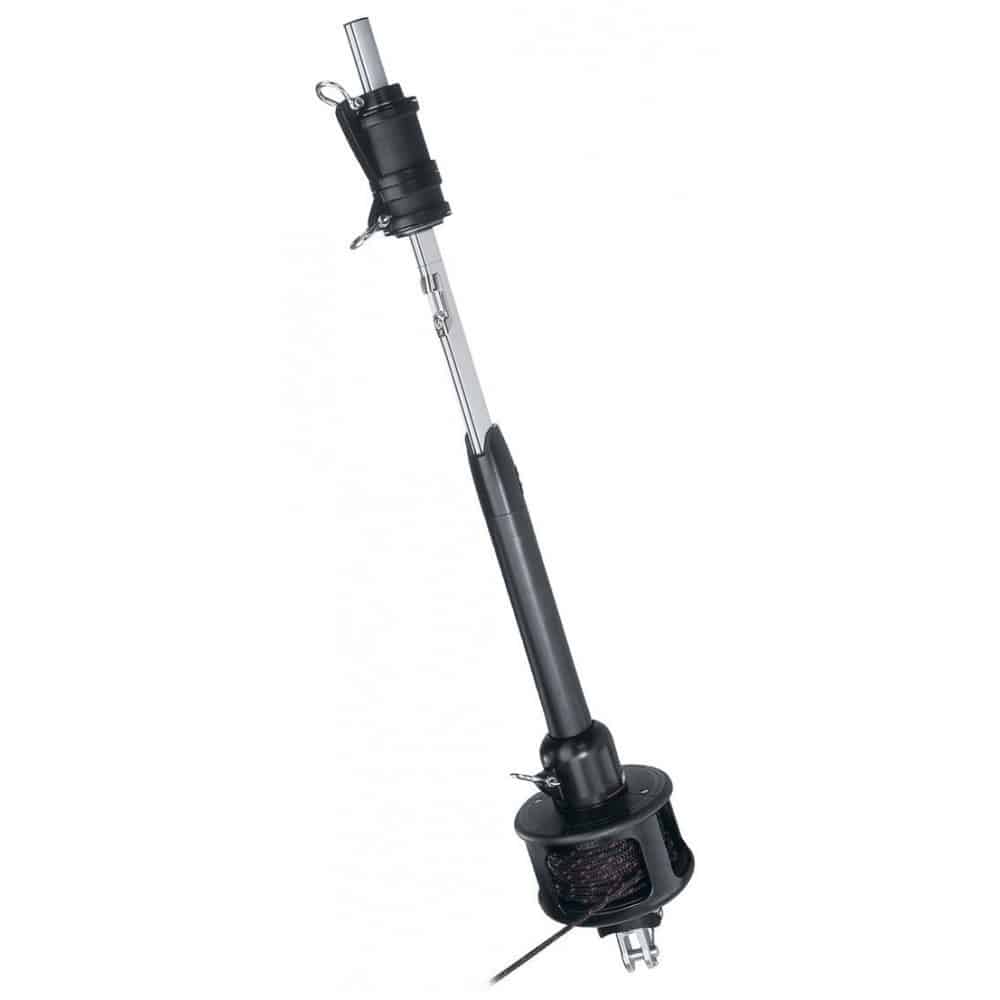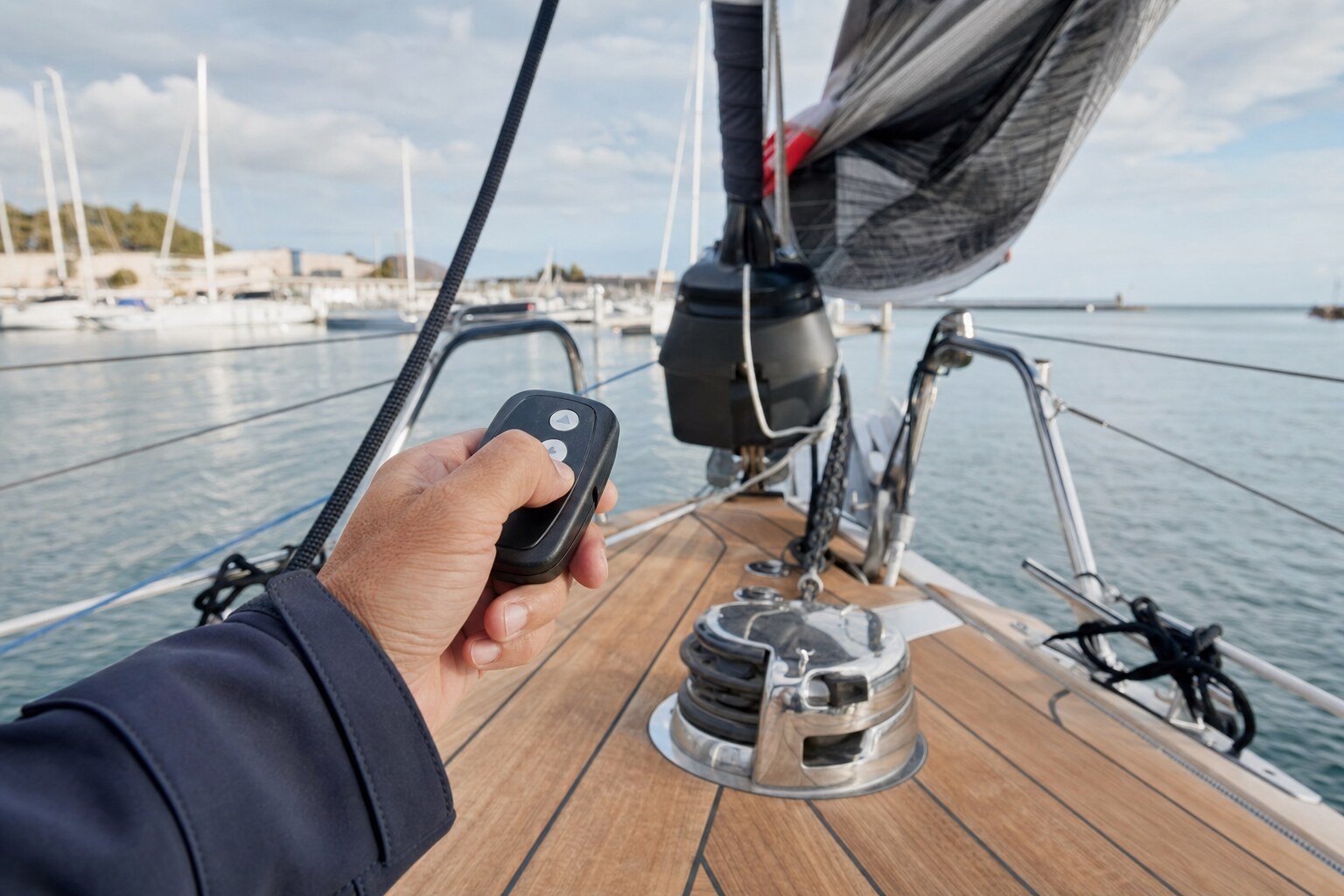


An owner emailed us last month with a straightforward question: he had a ten-year-old manual Seldén Furlex on his Bavaria 42, both knees were starting to complain about winching in a genoa in a blow, and he wanted to know if he really had to rip out the whole system to go electric. The answer, for most boats built after the late 1990s, is no. The three big headsail furler brands, Seldén, Facnor and Harken, all sell motor kits that bolt onto or swap into your existing manual unit. The question is not whether it is possible. It is whether your specific model qualifies, and whether the price tag matches what you will actually use it for.
What actually changes on the mast, and what stays
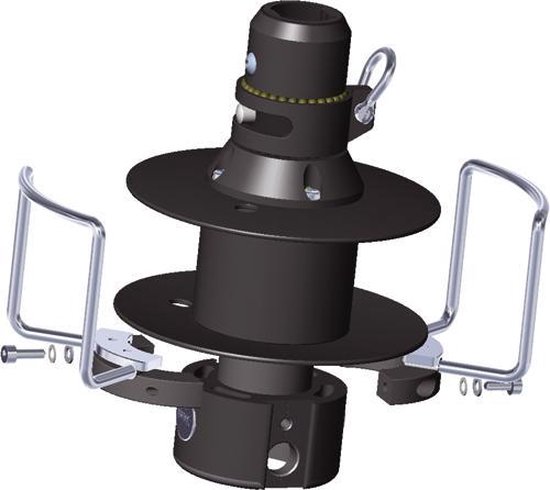
On every brand we looked at, the foil, the sail luff length and the forestay itself stay exactly as they are. What gets replaced is the bottom end: the manual drum, the line guard and, depending on the kit, the swivel and a short section near the tack. The furling line disappears entirely, replaced by a motor unit that pulls the sail in or out at the press of a button. That is the good news: no new sail, no re-cut luff, no different forestay diameter.
The bad news is that "bolt-on" undersells the job. The forestay has to come down, or at least go slack enough to pull the drum off the bottom fitting, which on most boats means unloading the rig and sending someone up the mast or dropping it altogether. At 123Furling we tell owners the same thing every time: budget for a rigger's day rate on top of the kit price, not instead of it.
Seldén Furlex: which manual models qualify, and what the kits cost
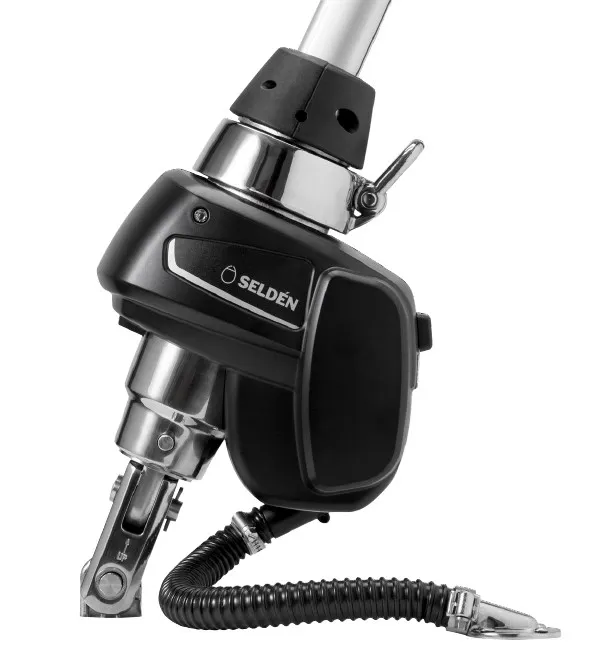
Seldén has been building electric Furlex for over 25 years, and the retrofit path is the cleanest of the three brands because the company still supports it directly. If you own a manual Seldén Furlex 200S, 300S or 400S built between 1997 and 2015, or a current 204S, 304S or 404S, Seldén sells a dedicated electric retrofit pack. The furling line, drum and line guard assembly are replaced with the Furlex Electric motor unit, and Seldén is explicit that no sail conversion is needed because the luff length does not change.
Kit pricing from UK Seldén dealers runs roughly 2,700 to 2,900 euros for the 200-to-200E and 300-to-304E conversions, and around 7,300 euros for the larger 400-to-400E kit. On top of that you need a control pack and a Power Supply Unit start pack, which adds roughly 1,150 euros more. That is before rigger labour. If you are already comparing the finished electric units, our Furlex 204E vs 304E breakdown covers what the factory-built versions cost new, which is worth checking against the retrofit total before you commit. On some boats a new Seldén Furlex Electric unit ends up close enough in price to the retrofit that starting fresh makes more sense once you include a rigger's time.
Facnor LS to EC or EF+: the simplest swap if the dimensions match
Facnor's approach is different. Instead of a branded "electric edition" of each model, they sell motor drive units, the EC range for boats from 29 feet and the EF+ range for 45 feet and up, that bolt onto an existing manual Facnor LS system (roughly the LS 165 to LS 330 sizes) when the dimensions line up. In a lot of configurations you do not need to touch the foil sections or the swivel at all, which is the main reason this is usually the cheapest of the three retrofit paths in labour hours.
- EC39: for an 8mm forestay, 400W, 40 rpm
- EC47: for a 12mm forestay, 800W, 55 rpm
- EC70: 24V only, for a 22mm forestay, 1500W, 60 rpm, Facnor's range for boats over 60 feet
The EF+ range for bigger cruisers comes in 550 and 600 sizes, both rated for 12.7-22mm stays at 800-1200W depending on whether you wire 12V or 24V. If your Facnor manual unit is more than about fifteen years old, get the exact drum diameter checked before ordering. Older LS units sometimes need a spacer or an updated swivel even when Facnor calls the kit a "direct fit".
Harken MKIV: when the 2E fits and when you need the 3E
Harken does not sell a separate manual-to-electric conversion kit in the same packaged sense as Seldén; instead, the electric drive bolts onto the same foil and drum architecture as the manual Harken MKIV. In practice that means an existing manual MKIV foil can usually accept the electric drive without a full unit swap. Harken sizes the drive by boat length rather than forestay diameter: the 2E suits boats from roughly 35 to 43 feet, and the 3E is rated up to about 60 feet. If your boat sits right at the 43-44 foot boundary, that is a conversation to have with a rigger before you order, not after, since the 2E motor will simply run out of torque under load rather than fail gracefully. For a side-by-side on the manual foils themselves, our MKIV vs MKIV Ocean comparison is worth reading first if you are not sure which manual unit you actually have on the boat.
The wiring is the real work, not the motor
Every rigger we have spoken to says the same thing: the mechanical swap at the bow is the easy half. Running properly sized cable from the battery bank to the bow, through a marine-rated circuit breaker and often a DC/DC converter to keep the cable gauge manageable, is where retrofits go wrong. These motors pull around 20 amps for the 30 to 45 seconds it takes to furl or unfurl a genoa, and the total energy per operation is trivial, comparable to one incandescent bulb running for twenty minutes, but that current still needs a properly rated circuit, a correctly sized fuse or breaker, and watertight connections at the bow where salt spray is constant. Undersized cable or a badly sealed connector is the single biggest cause of electric furler failures we hear about through support, not the motor itself.
If your mast comes down for the winter anyway, that is the cheapest time to do the swap: no rigger fee for unloading the forestay, and you can run the new cabling through the mast base at the same time as any other winter jobs. Doing it with the rig standing is possible on most boats, but budget extra for the additional rigging work.
Under 35 feet, the retrofit rarely pays for itself
Entry-level retrofit kits plus installation typically land somewhere between 3,000 and 5,500 euros once you include the rigger's day and the electrical work, and that is before a control pack on Seldén units or an autopilot interface if you want one. On a boat under 35 feet with a genoa small enough for one healthy adult to winch in without drama, that money buys very little you will actually notice, and at 123Furling we usually steer those owners toward a better winch or a smaller headsail before they spend on a motor. Where it earns its keep is short-handed cruising crews, older sailors who have decided winching a genoa in 25 knots is not fun anymore, and any boat over 40 feet where the manual effort at the drum genuinely gets hard on a bad day.
Not sure whether your current manual unit even qualifies for a kit from its own manufacturer? Send us the model number and forestay diameter through the product advisor or email info@123furling.com, and we will tell you straight whether a retrofit makes sense or whether a new electric unit is the better buy.