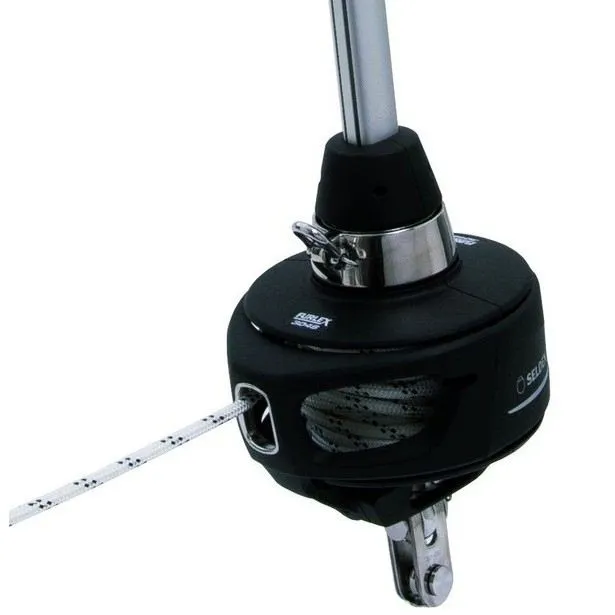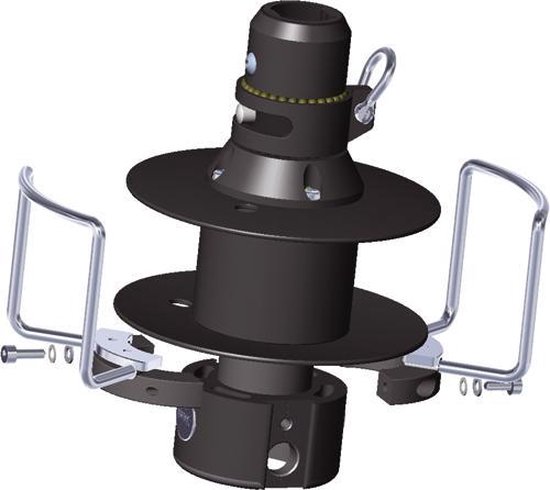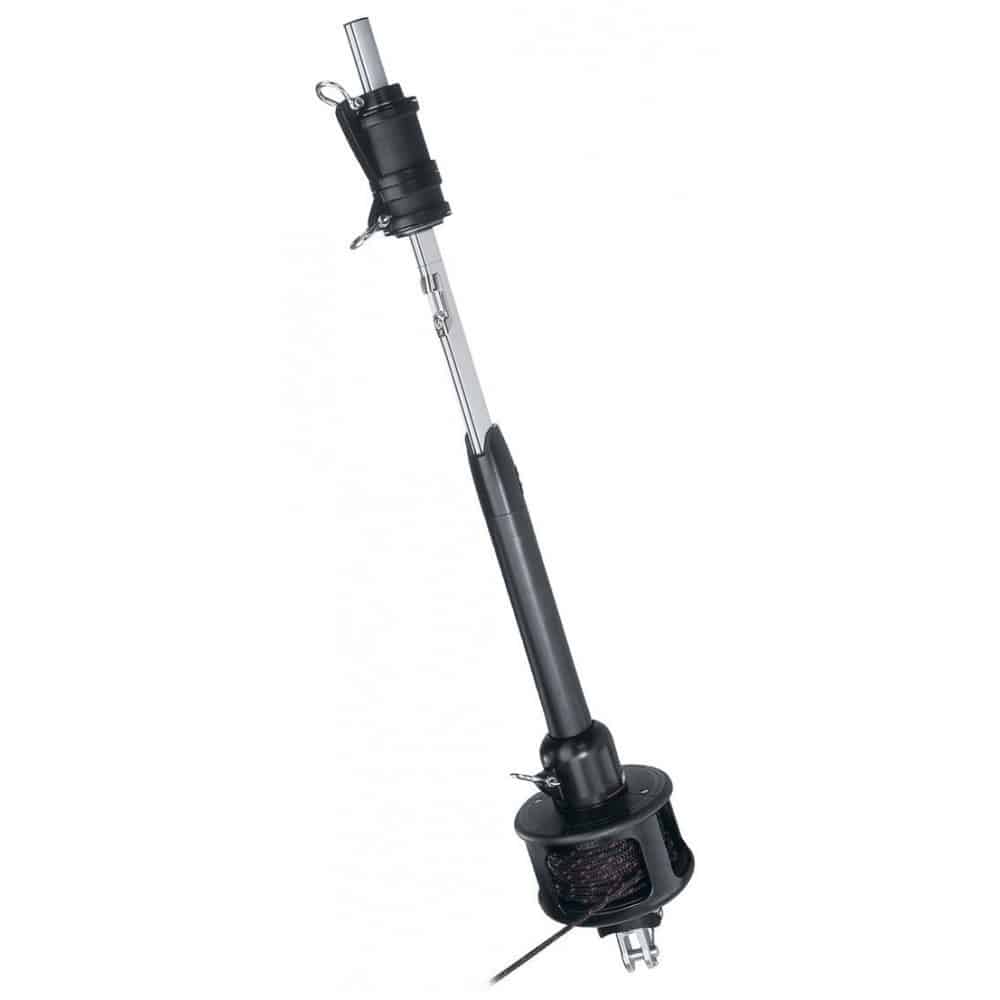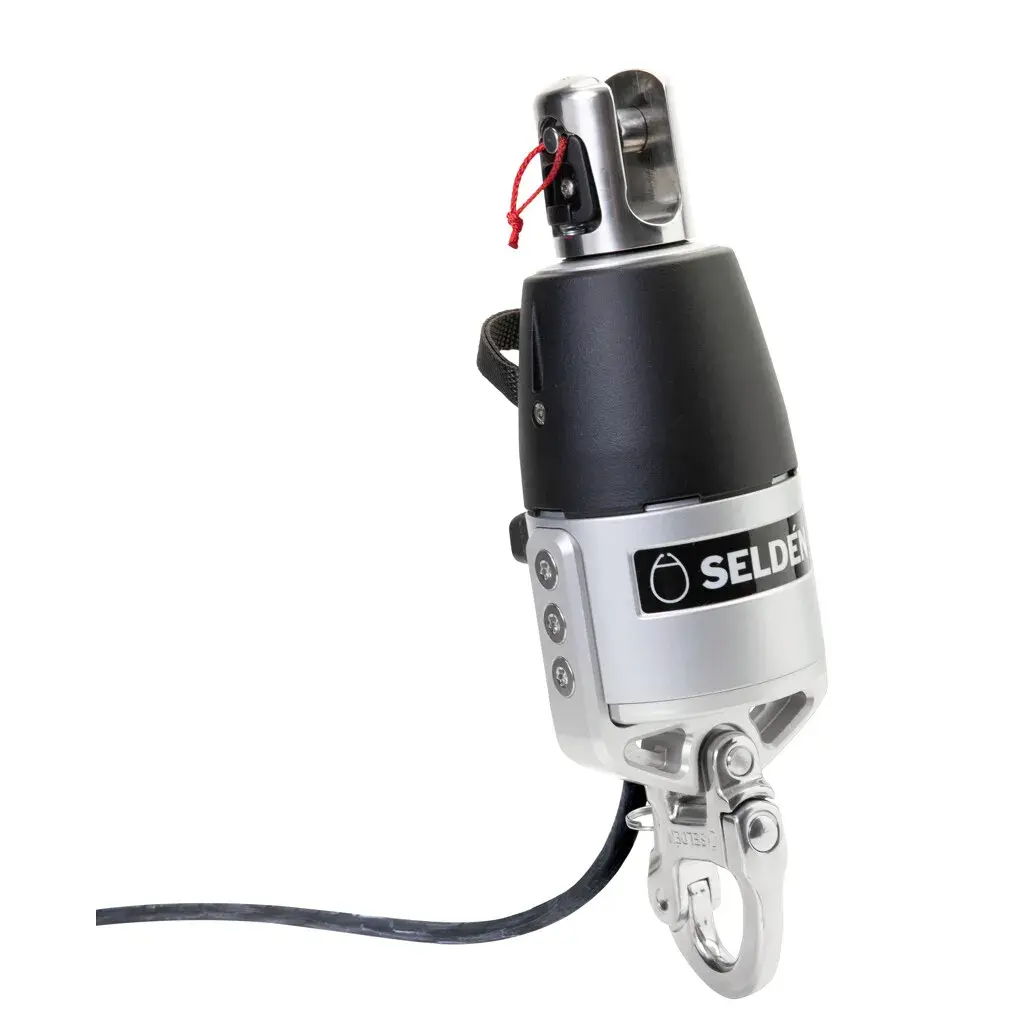


Ask four furling manufacturers what an "electric furler" is and you get four different answers, because Seldén, Profurl, Harken and Facnor are not all selling the same kind of product. Two of them build a complete electric unit from the ground up. The other two build a manual furler and then sell you a motor to bolt onto it. That distinction changes what you are actually buying, what fits on your boat, and how much you end up spending once the rigger has been paid.
The genoa furler that goes electric: Seldén, Facnor and Harken
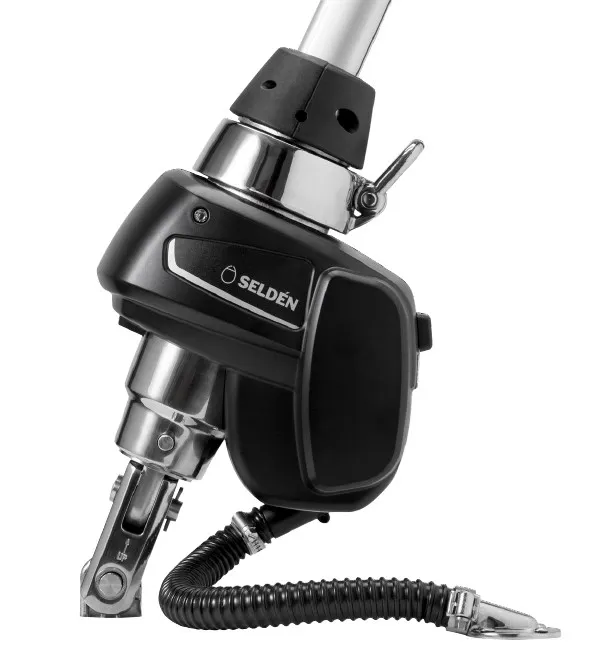
For headsail (genoa) furling, three of the four brands treat electric as an add-on to an existing manual architecture rather than a separate product line. Seldén's Furlex Electric and Furlex Through Deck Electric are factory-built units, but Seldén also sells a retrofit pack that motorizes an existing manual Seldén Furlex 200S, 300S or 400S. Facnor does not sell an "electric Facnor" as its own model name at all: it sells EC and EF+ drive units that bolt onto an existing Facnor LS system, sized by forestay diameter (the EC39 for 8mm stays, the EC47 for 12mm, the EC70 for 22mm stays on boats over 60 feet). Harken follows the same pattern with its 2E and 3E drives, which mount onto the same foil and drum as the manual Harken MKIV, sized by boat length rather than stay diameter (2E for roughly 35 to 43 feet, 3E up to about 60 feet).
We covered the actual retrofit costs for all three in detail in our guide to converting a manual furler to electric, including where the wiring, not the motor, tends to blow the budget. The short version: budget 3,000 to 5,500 euros once a rigger and the electrical work are included, on top of whichever manual unit you already own.
One question first-time buyers forget to ask: does the electric drive keep a manual override for when the motor or the battery fails mid-passage? Most genoa retrofit kits, including Harken's 2E/3E and Facnor's EC/EF+, are designed to keep a manual back-up route to the drum. Confirm the exact override method with your dealer before ordering, since it varies by kit and by how the swivel is configured, and it is not something you want to discover for the first time in a blow.
Code 0 and gennaker furling: where Seldén and Profurl actually compete
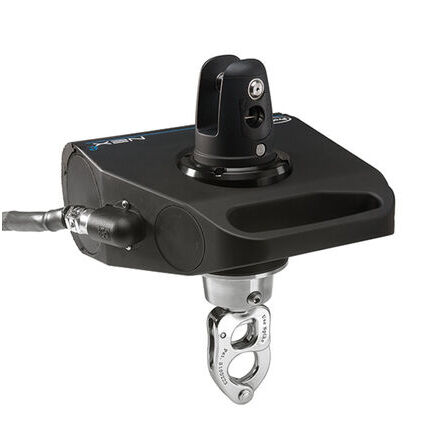
Flip to flying sails and the picture changes completely. Seldén's CXe Code 0 and CXe Gennaker units and Profurl's NEXe are the two lines built as electric from day one, not as kits added afterward. Both are sold as complete units with their own swivel, drum and motor housing sized for asymmetric sails, not adapted from a manual sibling.
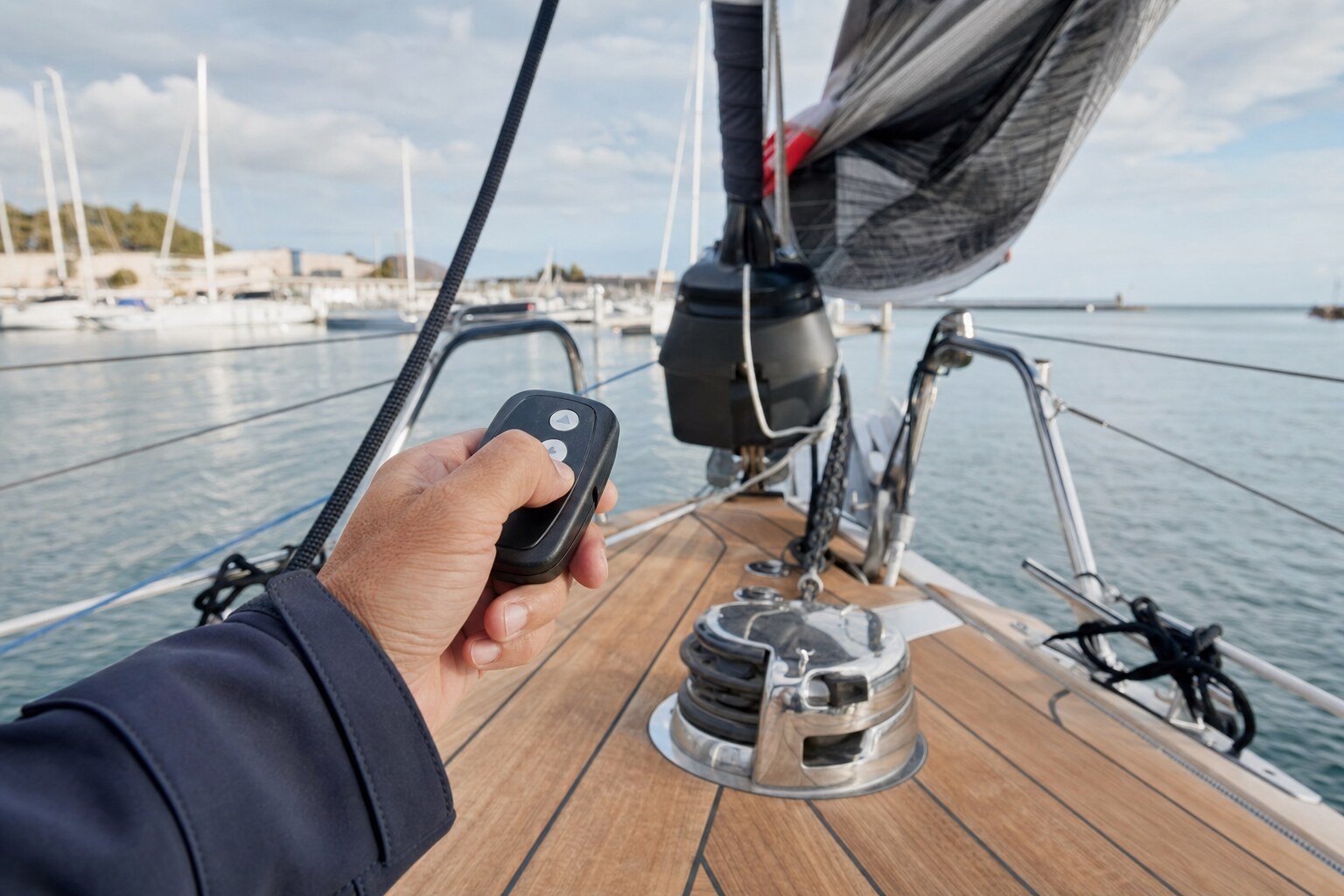
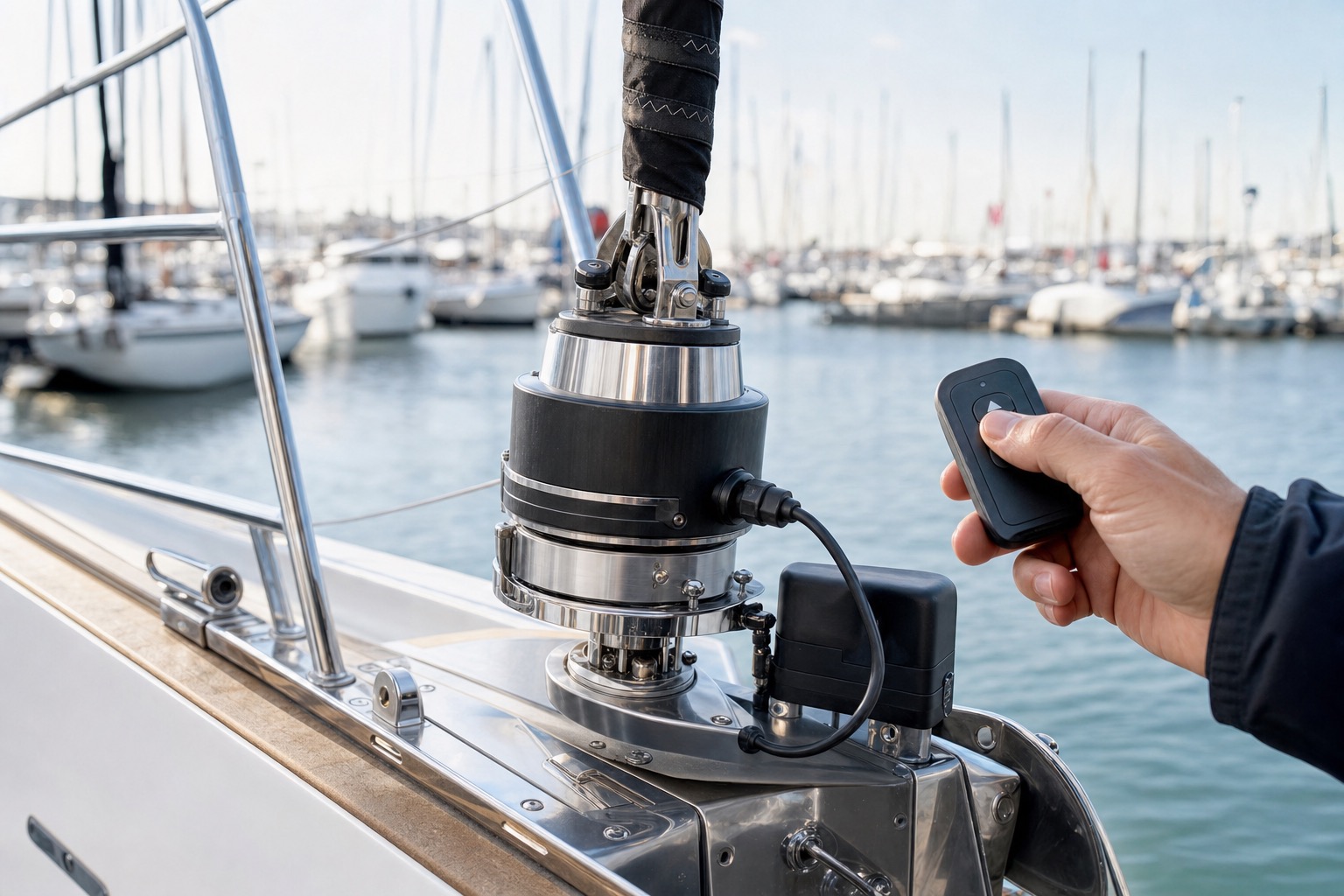
The NEXe range comes in two sizes, the 4.0 and 8.0, rated for sails up to roughly 250 and 400 square metres, and Profurl states under 40 seconds to fully furl a downwind sail with the standard 800W motor. It also ships with a remote control that lets you stop the furl instantly rather than relying on a foot switch at the mast base, which matters more than it sounds on a boat that is already overpowered in a gust. Seldén's CXe range covers the same use case with on-deck and through-deck versions for both Code 0 and gennaker/asymmetric setups, and unlike the Furlex Electric line, there is no manual CXe you retrofit into. You buy it electric or you do not buy it.
Facnor does build a comparable product, the FXe, as a purpose-built electric flying sail furler, though it is not one we currently stock. Harken is the odd one out here: its electric drives are built for the MKIV headsail architecture, and we have not found a factory electric option for the Reflex Code 0 or gennaker line the way Seldén and Profurl offer one. If a Harken flying sail furler needs to go electric, you are looking at aftermarket solutions rather than a branded factory unit.
What the finished units actually cost
Comparing list prices only makes sense within the same category, since a genoa furler and a Code 0 furler are not solving the same problem. On the genoa side, Seldén's Furlex Electric runs from roughly €3,440 for the standard version to €4,099 for the through-deck model. On the flying sail side, Seldén's CXe units sit between €3,902 for Code 0 (on-deck or through-deck) and €4,819 for the larger gennaker versions, while Profurl's NEXe Electric Code 0 system lists at €5,217. At 123Furling we get asked at least once a week whether the NEXe premium over the CXe is worth it, and the honest answer depends on whether the remote-stop feature and the larger 8.0 size for bigger asymmetrics matter for your specific sail plan, not on which brand name is on the housing.
Matching the system to what you actually sail
The first question is not which brand, it is which sail. If you are motorizing a genoa or jib you already reef in heavy air, you want the Furlex Electric, EC/EF+ or 2E/3E category, not a CXe or NEXe. If the pain point is a Code 0 or asymmetric that takes two people to wrestle down before it depowers the boat, you want CXe or NEXe territory, and Facnor's FXe if you can source it locally.
Power draw is the detail people underestimate. A genoa retrofit kit at 400 to 800W on a 12V system draws somewhere around 20 to 30 amps for the 30 to 45 seconds it takes to furl. The larger flying-sail units run the same 800W to 1,200W motors on boats that are more often wired for 24V specifically because that halves the amperage for the same power. If your boat is still on a 12V house bank and you are eyeing a CXe or NEXe, get your electrician to confirm the cable run to the bow before you order, because an undersized run is the single most common reason these systems disappoint owners in year one.
Profurl has also equipped the NEXe with a self-locking mechanism, specifically so the sail cannot start unrolling on its own if a line jumps or a fitting fails, which matters more on an asymmetric that can very quickly overpower a boat if it unfurls unexpectedly at the dock or on a mooring.
Buying electric also means asking what happens if the motor stops. Not every system on this list offers the same manual backup, we cover exactly what CXe, Furlex Electric and NEXe owners can and cannot do by hand in our guide to electric furler power failure.
Not sure which category your boat actually needs, or whether your existing forestay and swivel will accept an electric drive at all? Send us your boat length, sail type and current setup through the product advisor, or email info@123furling.com and the 123Furling team will tell you plainly which of these four is worth your money.