

Ask an owner of a manual furler what maintenance looks like and they will tell you: rinse it, grease the swivel, check the line for chafe. Ask an owner of an electric furler the same question and most of them shrug. There is a motor in there somewhere. It either works or it does not.
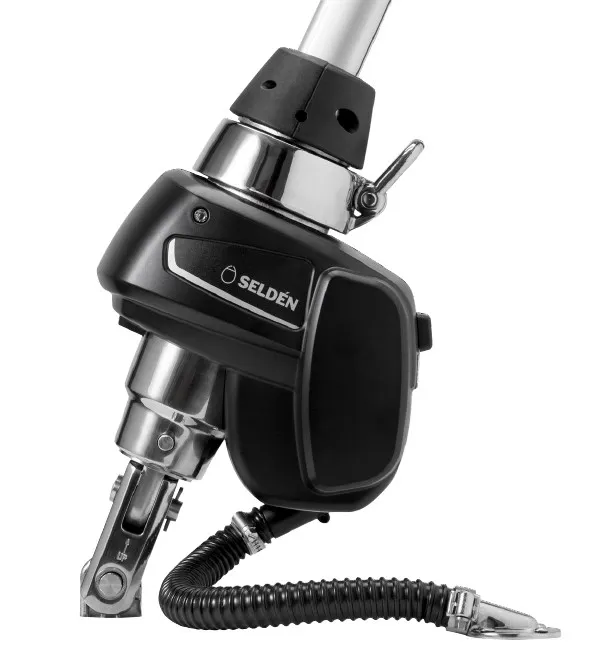
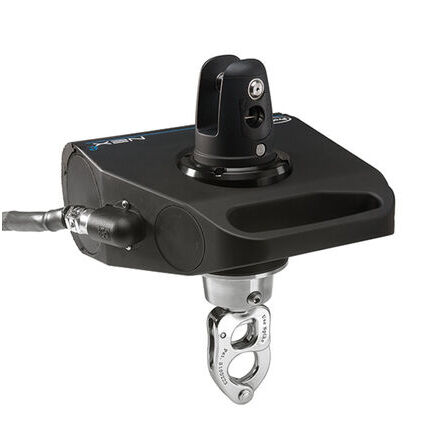
That shrug is the problem. A Seldén Furlex Electric or a Profurl NEXe has everything a manual furler has, plus a gearbox, a 42V drive system, and a deck connector that a manual system never needed. None of that gets checked by rinsing the drum with a hose.
What actually breaks on an electric furler that a manual one never does
The failure pattern is different, not worse. On a manual furler, you feel a problem before it becomes one: the halyard wraps, the sheet is still cleated, there is an overlap in the drum, and your hand on the furling line tells you instantly. Owners on the YBW forum have pointed out exactly this: with a manual system, "you can feel these problems and sort them out pretty easily." An electric drive does not give you that feedback. It keeps winding.
That is exactly what happened to one owner who skipped fitting a halyard restrainer at the masthead: the motor "merrily wound the rope around the sail and caused some damage" because nothing stopped the halyard from riding down with the sail. On a manual furler you would have stopped cranking the second it felt wrong. On an electric one, the motor does not know it is wrong.
The same forum has owners reporting an electric furler that never actually broke outright, but tripped the breaker in strong wind or jammed a sheet, "always at the wrongest moment." That is not a maintenance item you fix once. It is a reason to check your breaker rating and battery voltage before you leave the dock in anything over 20 knots, not after the motor stalls halfway through a reef.
The gearbox service Seldén wants every five years, and why most owners skip it
Buried in Seldén's Furlex Electric supplementary manual is a number most owners never see: the motor and reduction gearbox should go back to an authorized Seldén dealer for service at a maximum of five-year intervals. On the newer 404E, that gearbox runs a 42V brushless motor through a steel and bronze worm gear at a 122:1 ratio (40:1 in emergency mode), and the whole assembly sits packed in oil inside a hermetically sealed housing. That is not something you service with a grease gun on deck.
In practice, almost nobody does this on schedule. A thread on Cruisers Forum about servicing a Seldén electric in-mast gearbox includes an owner who admitted theirs had not been touched since new, seventeen years earlier. It still worked. But Seldén's own warranty on the Furlex Electric only runs two years, and a gearbox that has never been reopened, cleaned or re-greased is exactly the kind of thing that fails quietly until it does not, usually as a stiff, slow furl that gets worse over a season rather than a sudden stop.
Harken MKIV 2E owners have reported the same slow decline: a unit only three years old and lightly used started sticking, then stalling, worked with the manual winch handle a while, then failed outright. Nothing catastrophic, just years of oil breaking down and seals hardening with nobody checking.
If you are comparing what an electric furler actually costs to own, this five-year service is the line item that does not show up in the sales brochure. We cover the purchase and conversion costs in more detail in Converting a Manual Furler to Electric: What It Actually Costs, but budget for a dealer service on top of that every five years if you actually want the unit to outlast its warranty.
The 20-minute season-end routine that keeps you off that service bill
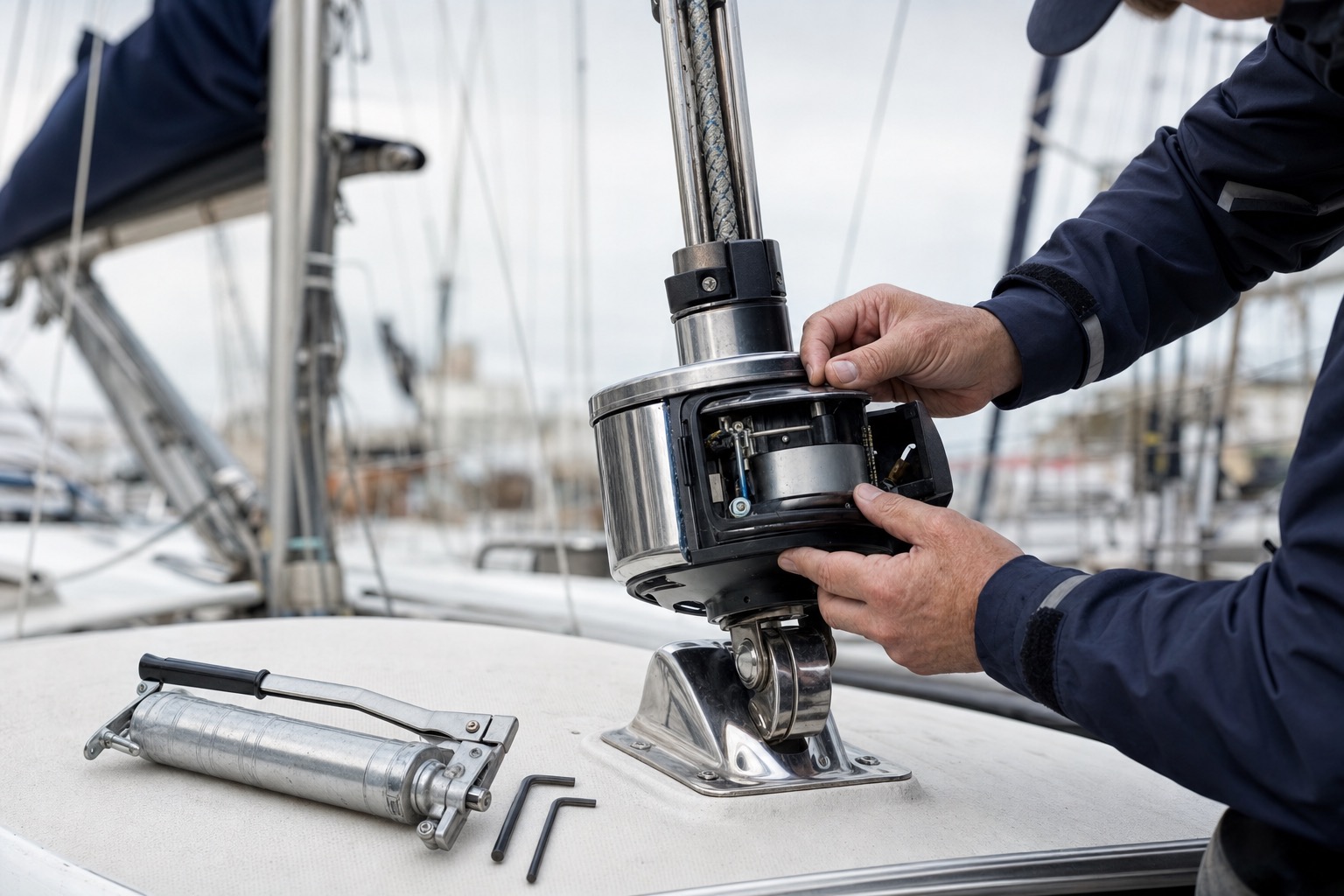
You cannot open the gearbox yourself and you should not try. But the parts of an electric furler you can maintain are the same ones a manual Furlex needs: the halyard swivel and the lower bearing assembly. Rinse the whole unit with fresh water at the end of the season, let it dry completely, then work a water-resistant, marine-grade grease into the swivel and lower bearing. To reach the lower bearing you will need to pull the drum off, which on a Furlex Electric means disconnecting the motor housing first, not just unscrewing a line clamp like on a manual unit.
At 123Furling we tell owners of the Seldén Furlex Electric to do this every season even if the boat never leaves the marina, because the bearing does not know the motor is doing the work now instead of your arm. Skip it for two or three seasons and the extra load an electric drive puts on a dry bearing shows up as the same stiff, uneven furl that makes owners think the gearbox has failed, when it is actually just the bearing.
The deck connector and battery side nobody checks
Everything above also applies to a manual system, just without the gearbox. What is genuinely new on an electric furler is the electrical side, and it is the part owners forget because it is not moving. Seldén's CXe range runs on a SEL-Bus system with a power supply unit that steps 12V or 24V house power up to 42V for the drive motor. That PSU, its wiring, and the deck-level connector where the furler plugs into the boat's electrics are all exposed to the same salt air as everything else on deck, but they do not get rinsed the way a drum does, and a wet, corroded pin in that connector reads to the motor exactly like a dead battery.
Before winter lay-up, disconnect the deck plug, dry it fully, and coat the pins with a dielectric or anti-corrosion connector gel rather than just leaving it capped. It is five minutes of work that most winterizing checklists skip entirely because they were written for manual furlers. Our general winterizing guide covers the swivel, foil and line care that every furler needs; the connector and PSU are the extra steps that only apply once there is a motor involved.
Your emergency backup only helps if you have actually tested it
Every electric Furlex ships with a manual override, and it is a genuinely clever piece of engineering: instead of a crank handle turning a socket directly, you fit a line driver with an endless loop onto a half-inch socket on the starboard side of the drive unit, then haul on the line to rotate the furler by hand. You can lead that line back to the cockpit, put two people on it, or run it to a winch. It works with the motor completely dead.
The catch is that Seldén's own installation instructions have riggers test the emergency drive during commissioning and then remove it again, and that is exactly where it tends to disappear: into a locker, then off the boat entirely at the next refit. If you own an electric furler, the one thing worth doing this weekend is confirming the emergency line driver is still aboard and that you actually know which socket it fits, not finding out mid-Channel crossing with a dead 42V motor and a full genoa.
Which boats are actually worth this overhead
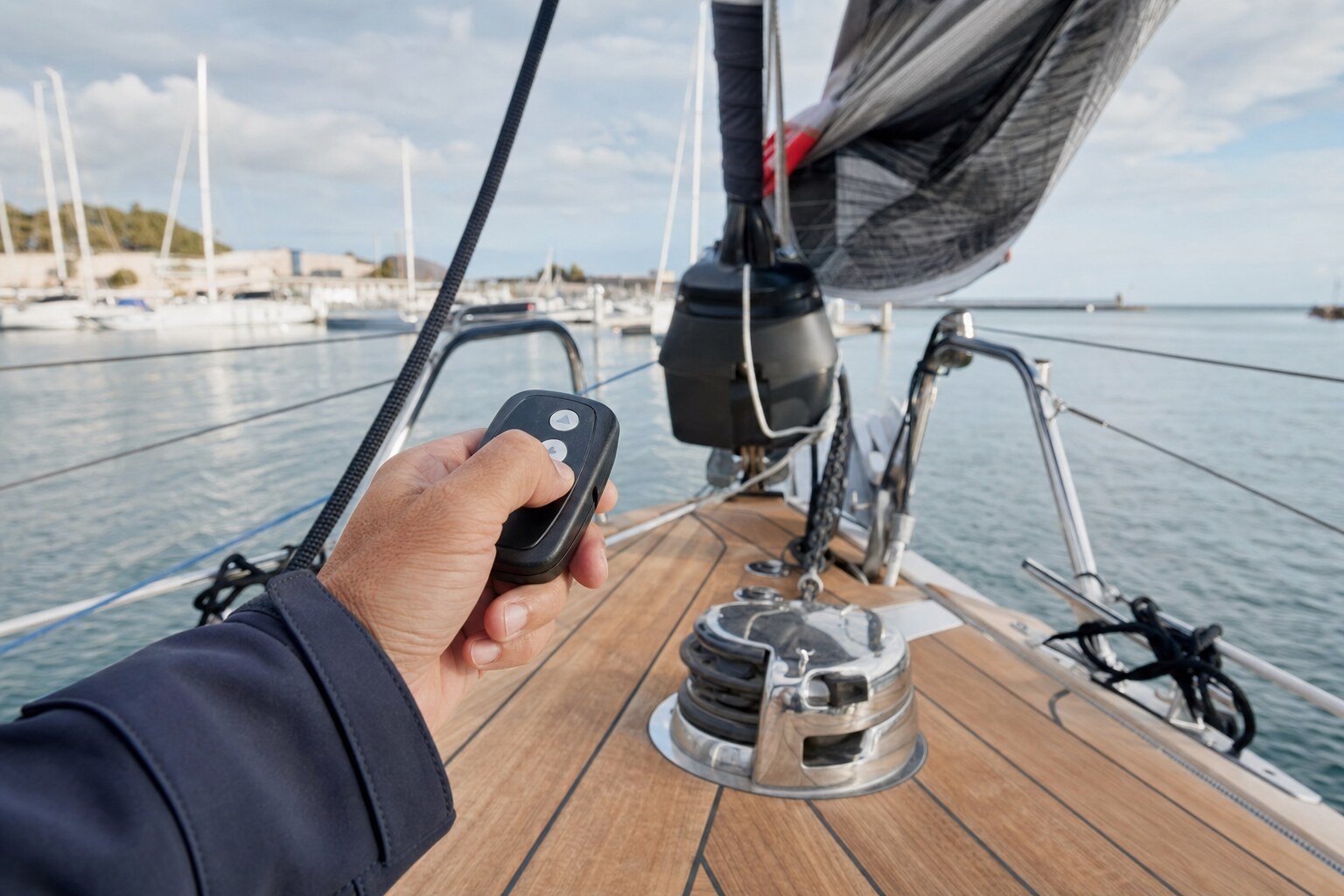
None of this is an argument against electric furling. A Profurl NEXe with a wireless remote that stops furling instantly is a real safety upgrade on a short-handed 45 to 60-foot boat working a big Code 0, and Seldén's CXe range solves a genuine problem on boats where a gennaker is too much sail to hand-crank in a building breeze. On boats under 35 to 38 feet, though, we usually see the opposite: owners who converted to electric mainly for convenience end up doing more maintenance for a furler they could have wound by hand in ten seconds anyway. On 123furling.com you can filter our electric range by boat length and Code 0 area before you commit to five years of dealer servicing. We compare which brands actually build a proper electric drive, and which just bolt a winch motor onto a manual unit, in Seldén, Profurl, Harken or Facnor: Which Brand Actually Sells an Electric Furler?
If you are not sure whether your boat and sailing style justify the extra service schedule, run it past our product advisor or send the specifics to info@123furling.com. It is a five-minute question that saves a five-year surprise.