


Browse the genoa furler section on 123furling.com and you'll find two Profurl systems sitting side by side: the C-System and the R-System. Profurl labels one "cruising" and the other "racing", but that tells you almost nothing about what you're actually buying. Both use the same sealed ball bearing swivel and drum, both carry a 10-year warranty, and both are sized the same way: forestay diameter first, then luff length. The differences that matter sit in the hardware package built around that core mechanism, and they change what the furler actually does for you under sail, not just how it looks on the bow.
The foil itself: round silver vs elliptical black
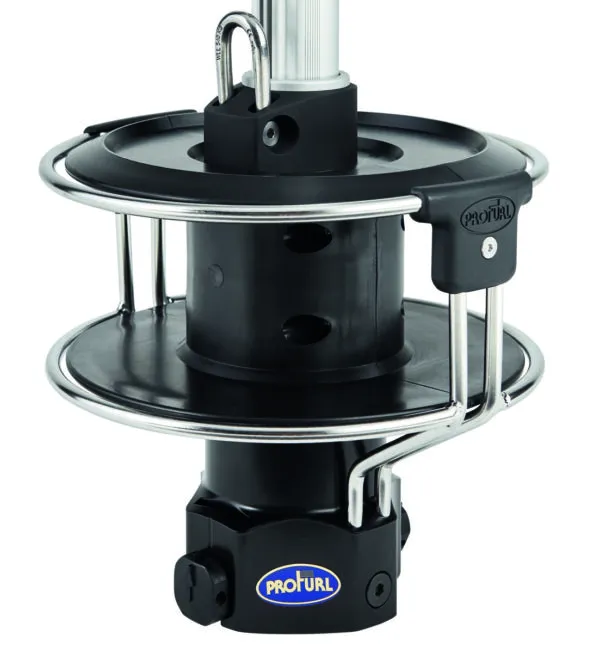
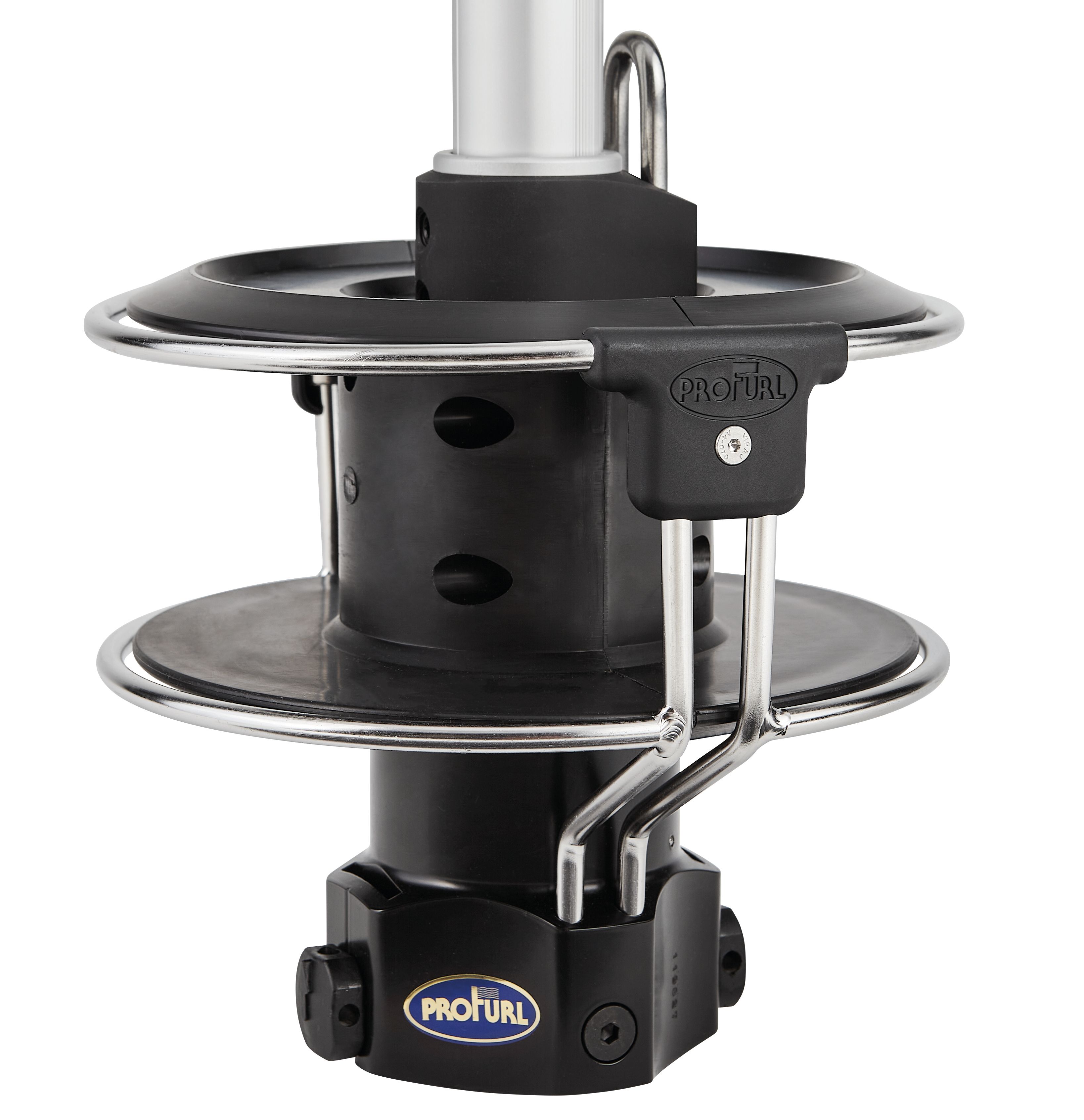
The C-System runs on Profurl's standard round, silver anodized extrusion, the same "easy furling" profile that's been on cruising boats for decades. The R-System swaps it for a black anodized elliptical aerofoil. That's not just a styling choice to match a black mast: the elliptical shape sheds less drag when the genoa is furled down to a small working size, which is exactly when a round foil starts acting like a flagpole in the airflow. If you race under IRC or ORC and furl down for a blow mid-leg, that drag difference shows up in VMG. If you cruise and furl maybe twice a season for weather, it won't matter enough to justify the price gap on its own.
Long link plates or short: the detail that decides your deck clearance
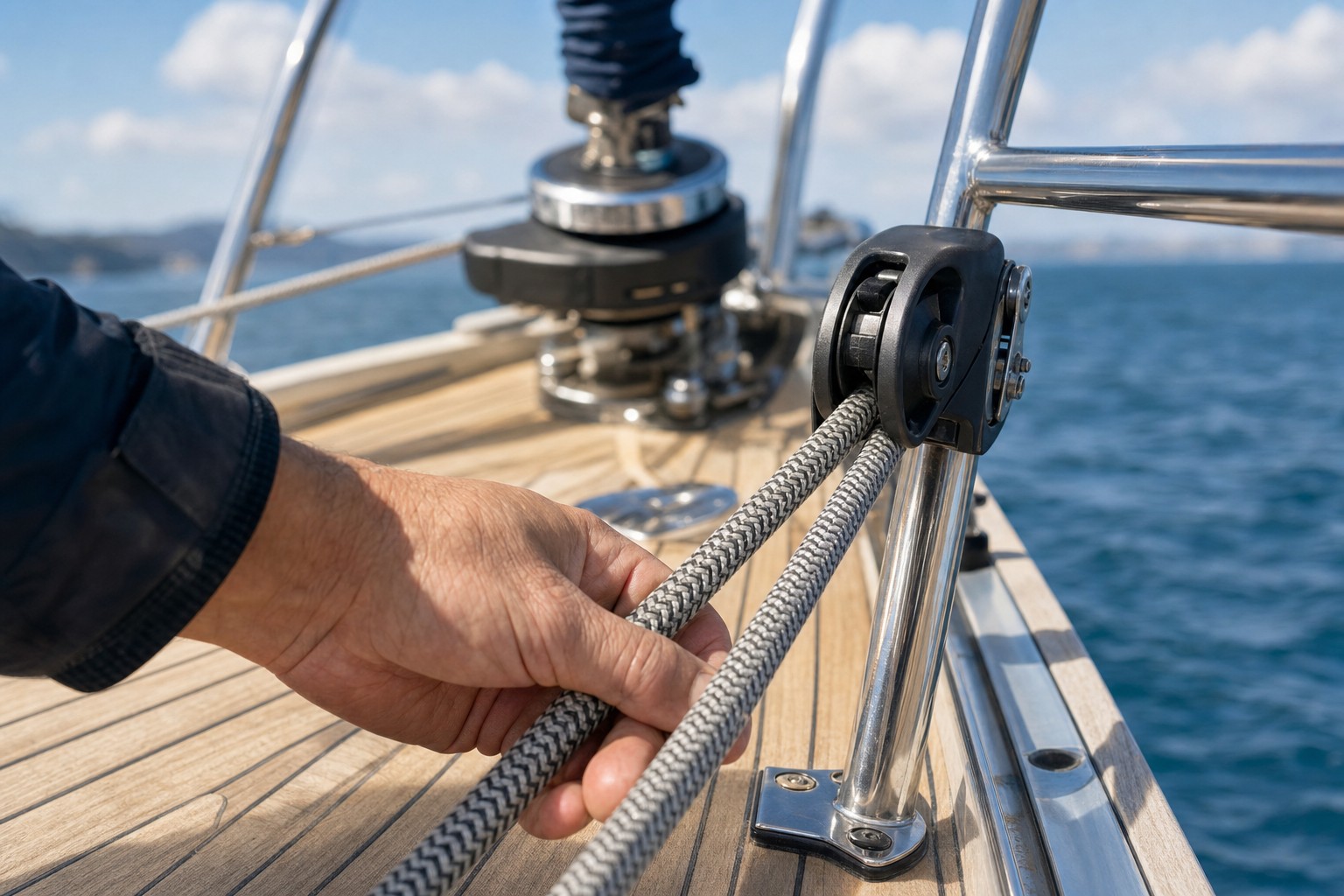
Here's the one most buyers miss. The C-System ships with long link plates as standard, which hold the drum higher above the deck, clear of a pulpit, anchor roller or bow fitting that would otherwise foul the furling line. The R-System ships with short link plates instead, sitting the drum lower and tighter to the deck for a cleaner, lower-profile foredeck under race conditions. If your boat has a tall bow fitting or an anchor roller sitting proud of the deck, ordering an R-System with short plates can mean the drum fouls on gear that a C-System would have cleared. Measure your deck hardware before you order either one; this is exactly the kind of detail a spec sheet won't flag for you, and it's the first thing we check when a customer at 123Furling asks us to confirm fit for their boat.
Opening pre-feeder and quick-release shackles: a racing feature cruisers rarely use
The R-System adds an opening pre-feeder as standard, so you can drop the genoa without pulling the luff tape back out of the foil groove, and quick-release snap shackles on both the head and tack swivels. Together, those two features mean a genoa comes off and a new sail goes back up in a sail change without touching a single pin with a tool, which is the whole point if you're doing a buoy race or an offshore leg with a sail-change schedule. On a cruising boat that hoists the same genoa for a season at a time, that speed advantage never gets used, and it's the main reason the C-System stays cheaper rather than any difference in core reliability.
The wrap stop that comes standard on one and not the other
The R-System also includes Profurl's wrap stop as standard equipment, a fitting that physically blocks the halyard from winding around the forestay above the swivel. We've written separately about why halyard wrap happens and how to stop it, and a wrap stop is one of the more effective fixes short of changing your halyard lead angle. The C-System doesn't ship with one. If halyard wrap has been a recurring problem on your boat, that's a real point in the R-System's favor even if you never touch a racecourse, and worth raising with your rigger before you default to the cheaper option.
Sealed bearings, salt water, and what the brochure doesn't tell you
Both systems use the same 100 C6 carbon steel ball bearings, packed in grease and sealed with double-lip seals rather than switching to stainless. That's fine as long as the seals stay intact, but owners of older Profurl units have reported a specific failure mode: once a seal lets water past, it corrodes not just the bearing but the anodized aluminum surface the seal rides against. At that point, replacing bearings and seals doesn't fix the leak, because the new seal can't grip a pitted surface any better than the old one. The practical fix is cheap and boring: rinse the drum and swivel with fresh water after saltwater passages, and turn the drum by hand occasionally over winter lay-up so grease doesn't settle and seals don't take a permanent set in one position. We cover brand-specific care in more depth in our guide to genoa furler maintenance across Furlex, Harken, Profurl and Facnor, and the Profurl section there applies equally to C-System and R-System, since the bearing and seal design is shared between them.
What it actually costs, and which one to put on your boat
On 123furling.com, the C-System starts from €1,482 and the R-System starts from €1,911, both priced by the cascade selection Profurl uses on every model: pick your forestay diameter first, then the furler length your luff needs. We've covered that sizing logic in detail in our guide to genoa furler sizing by forestay diameter and luff length, which applies to both systems identically. The roughly €400 to €450 gap at a given size buys you the aerofoil, the short link plates, the pre-feeder, the quick-release shackles and the wrap stop, not a sturdier core mechanism.
So the actual decision isn't cruising versus racing as marketing labels, it's whether you'll use any of those four features. If you do buoy racing, short-handed offshore legs with sail changes, or your boat already fights halyard wrap, the R-System earns its price. If you hoist one genoa for the season and furl it in a blow a handful of times a year, the C-System's long link plates and lower price are the better match, and the sealed bearing core performs identically either way. At 123Furling we see plenty of race-cruisers try to split the difference by buying the R-System for its looks and never using the pre-feeder; nothing wrong with that choice, just know you're paying for hardware you won't exercise.
Not sure which forestay diameter your boat actually needs, or whether your bow fitting clears short link plates? Send your boat's details through the product advisor or email info@123furling.com, and we'll tell you plainly which of the two fits.