

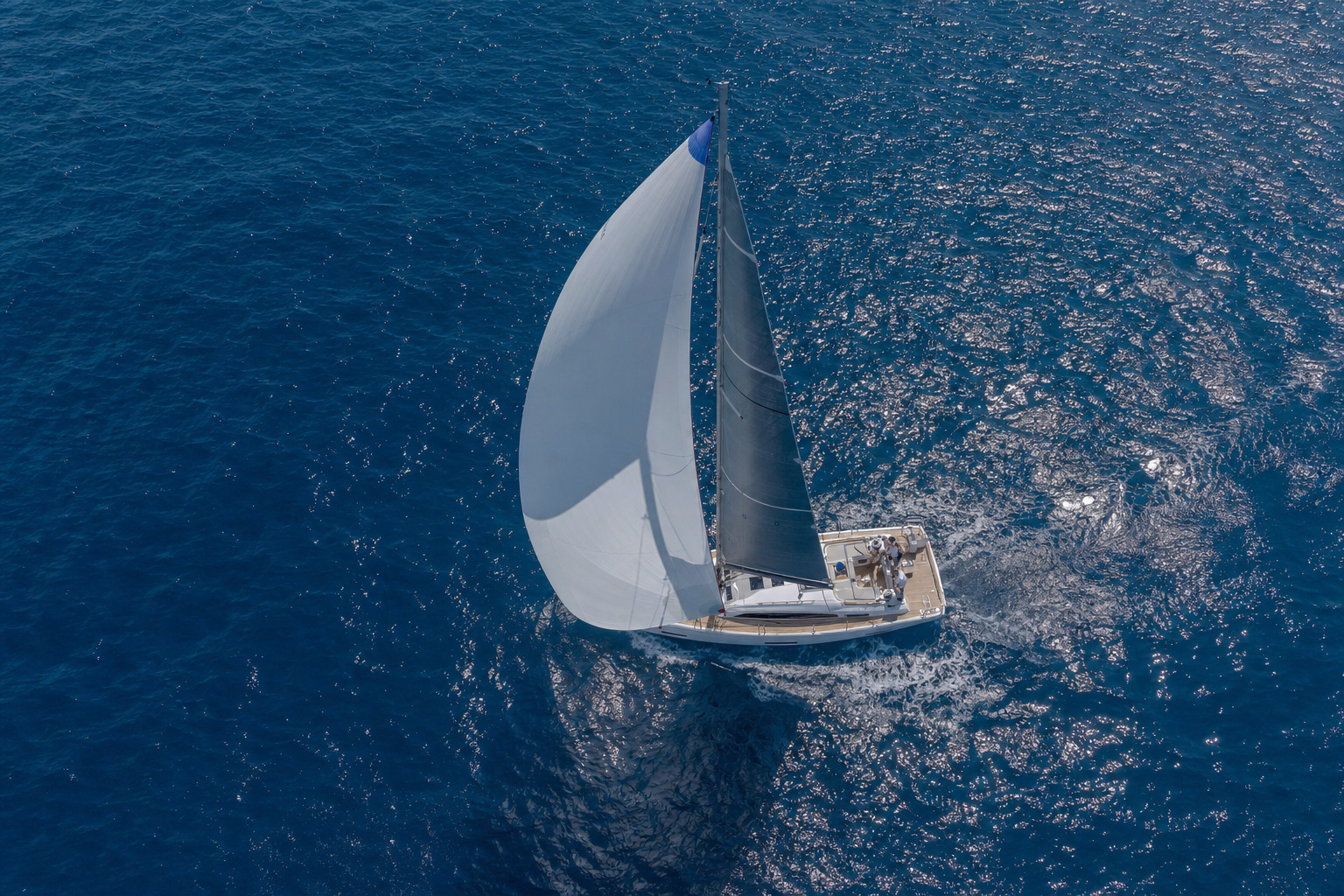
Ask ten cruisers whether an asymmetric should live in a sock or on a top-down furler and you will get ten different answers, most of them based on what they already own. The question that actually settles it is not "how much do you want to spend" or "how big is the boat." It is how the sail itself is cut. A flat, high-clewed Code 0 with an anti-torsion luff rolls up on a furler without drama. A full-cut cruising asymmetric with a round mid-girth fights the same furler every time, no matter how good the hardware is.
Why a Code 0 furls clean and a deep asymmetric doesn't
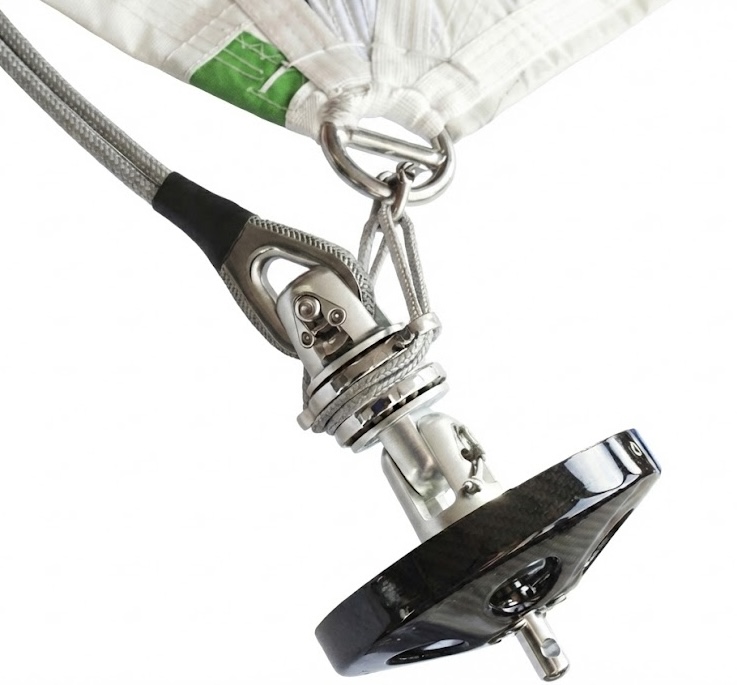
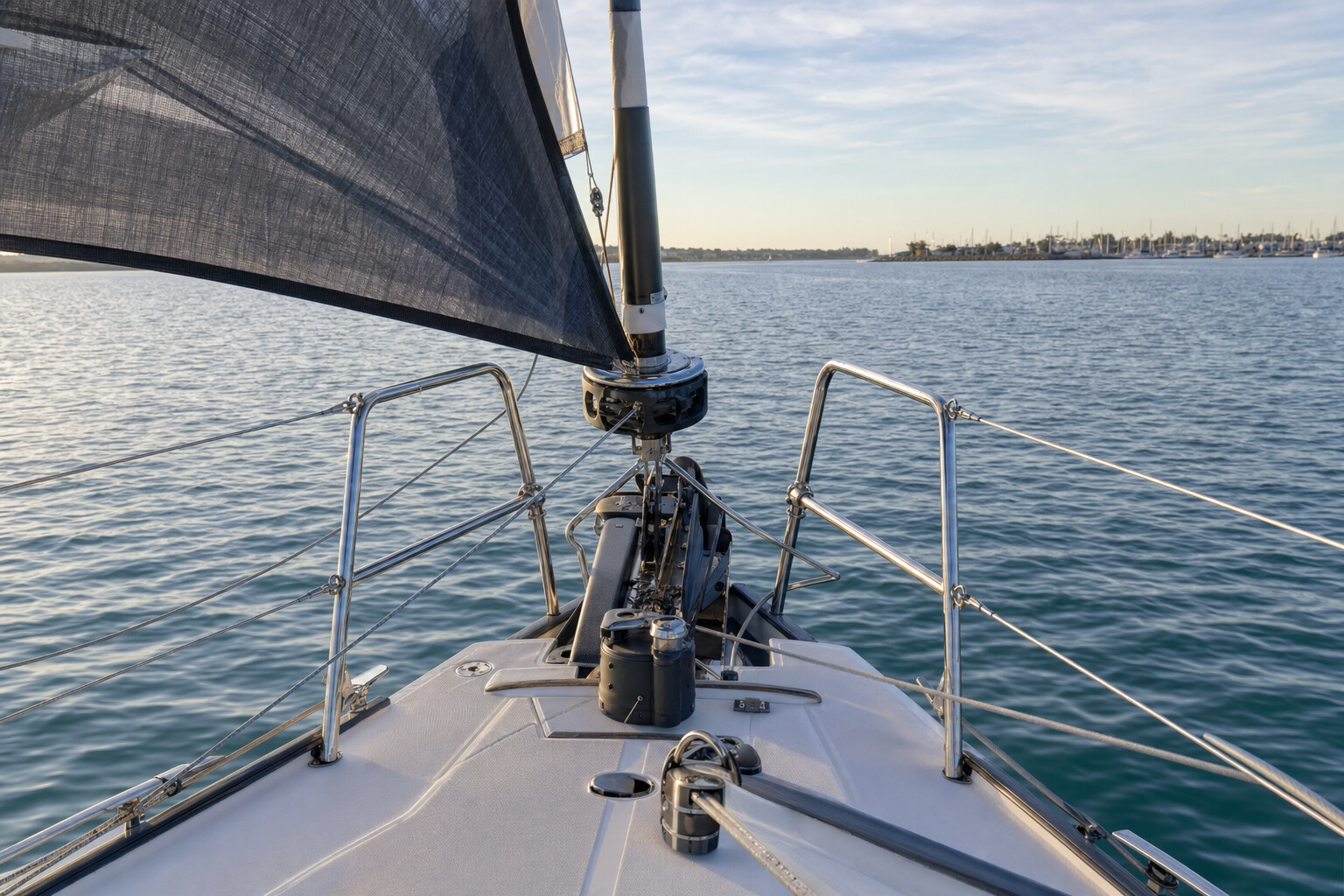
A top-down furler works by spinning the anti-torsion cable at the swivel, and that twist has to travel down the luff faster than the sail can resist it. On a Code 0, the luff is close to straight, the leech is relatively short, and the clew sits high. There is not much sail fighting the rotation, so the twist reaches the foot in a few seconds and the whole sail rolls into a tight, even sausage.
A cruising asymmetric or a deep gennaker is cut the opposite way: longer luff relative to the leech, a fuller mid-girth, and a low, baggy clew. When you start furling, the head and mid-panel twist up fine, but the belly of the sail still has wind in it and resists. The cable stores up twist in the middle section before it reaches the bottom, and that stored twist comes back out as "back twist" the next time you try to unroll it. The practical result, reported over and over on forums like Cruisers Forum and SailNet, is an hourglass shape in the furled sail that will not release cleanly and sometimes has to be dropped on deck and re-laid before you can use it again.
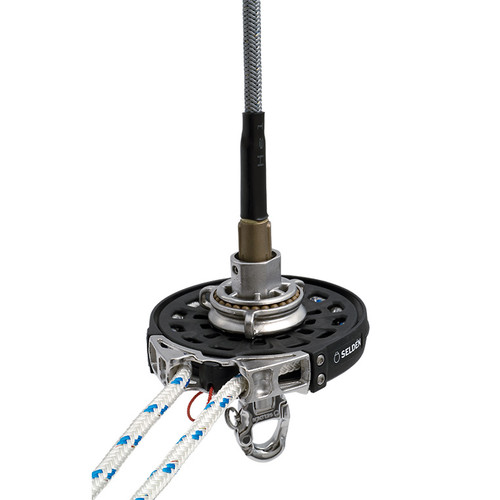
This is not a hardware defect. Seldén, Facnor, Harken and Profurl all build their top-down systems around the same anti-torsion cable principle, and all four work well on a sail that is cut for it. The failure mode shows up specifically on sails that were never designed with a furler in mind, usually an older asymmetric or a sail borrowed from a boat that used to fly it loose off a pole.
What a sock actually saves you, and what it costs you
A snuffer sock is mechanically simple: a sleeve of fabric with a control line that you pull up to smother the sail and down to release it. There is no drum, no swivel, no anti-torsion cable, and nothing that can hourglass. For a deep-cut cruising chute, a sock is usually the better buy, not the cheaper compromise. It handles a round, full sail without caring about its shape, and it weighs a fraction of a furler set.
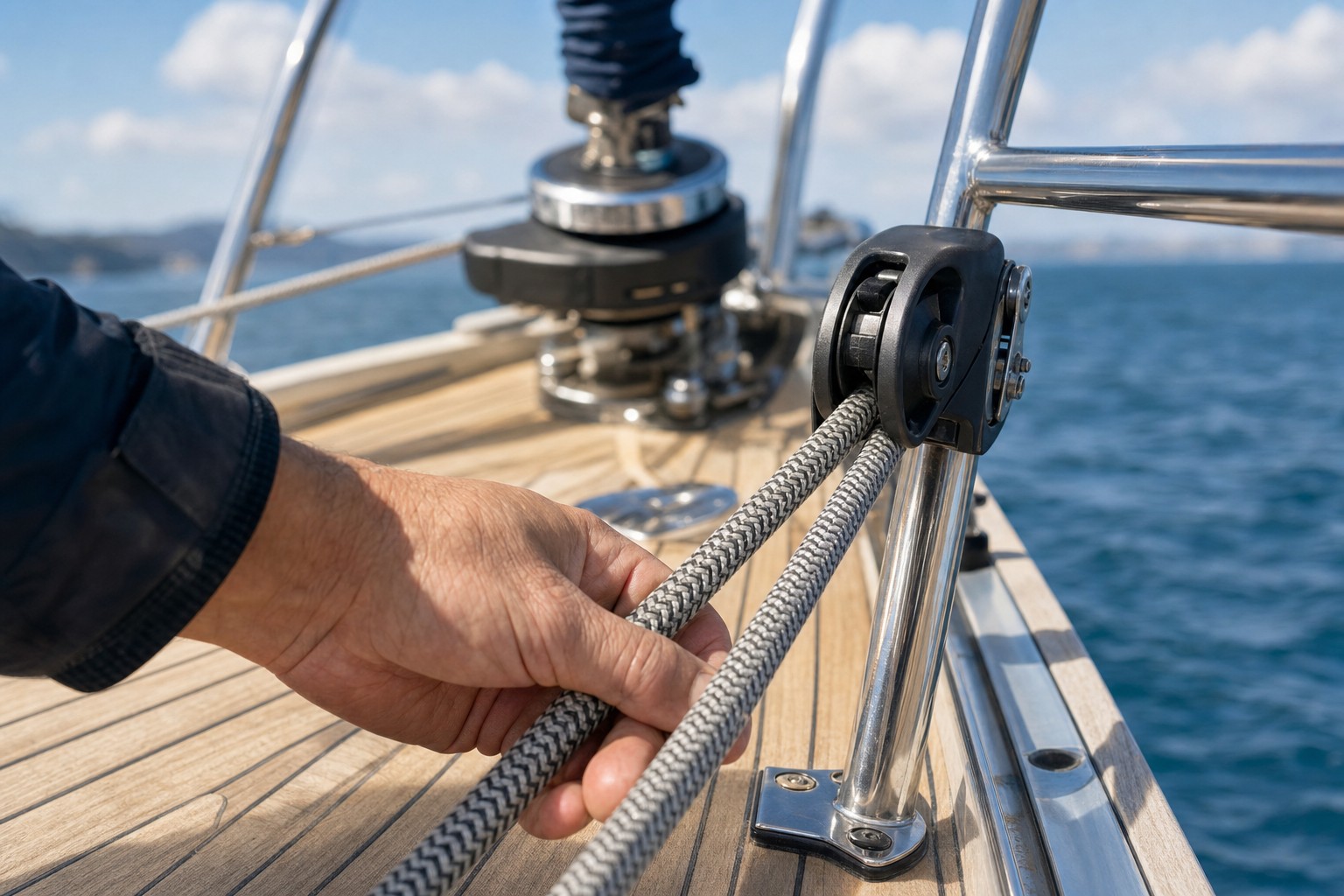
The sock's real cost shows up in use, not on the price tag. Hoisting and dousing both require someone forward, pulling a line that has real load in it once the sail fills. Short-handed crews sailing from the cockpit often find that harder than it sounds on a bouncing bow in a building breeze. It also packs less neatly for repeated day-sailing, since you are flaking and re-stuffing a loose sail into a bag rather than leaving it rolled on the headfoil.
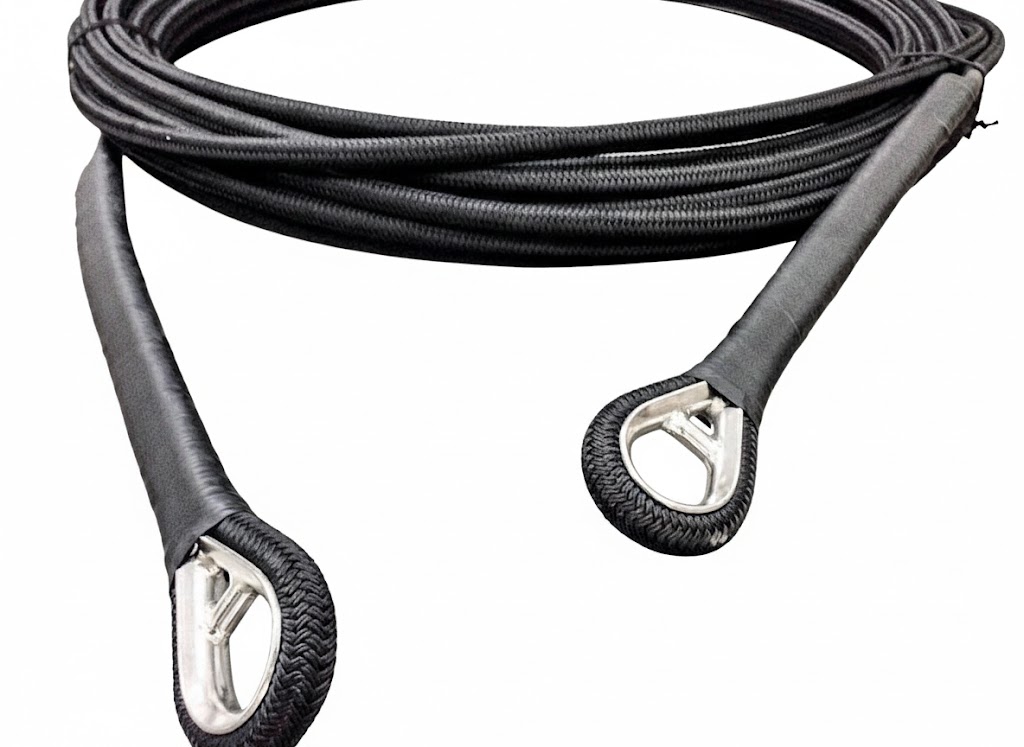
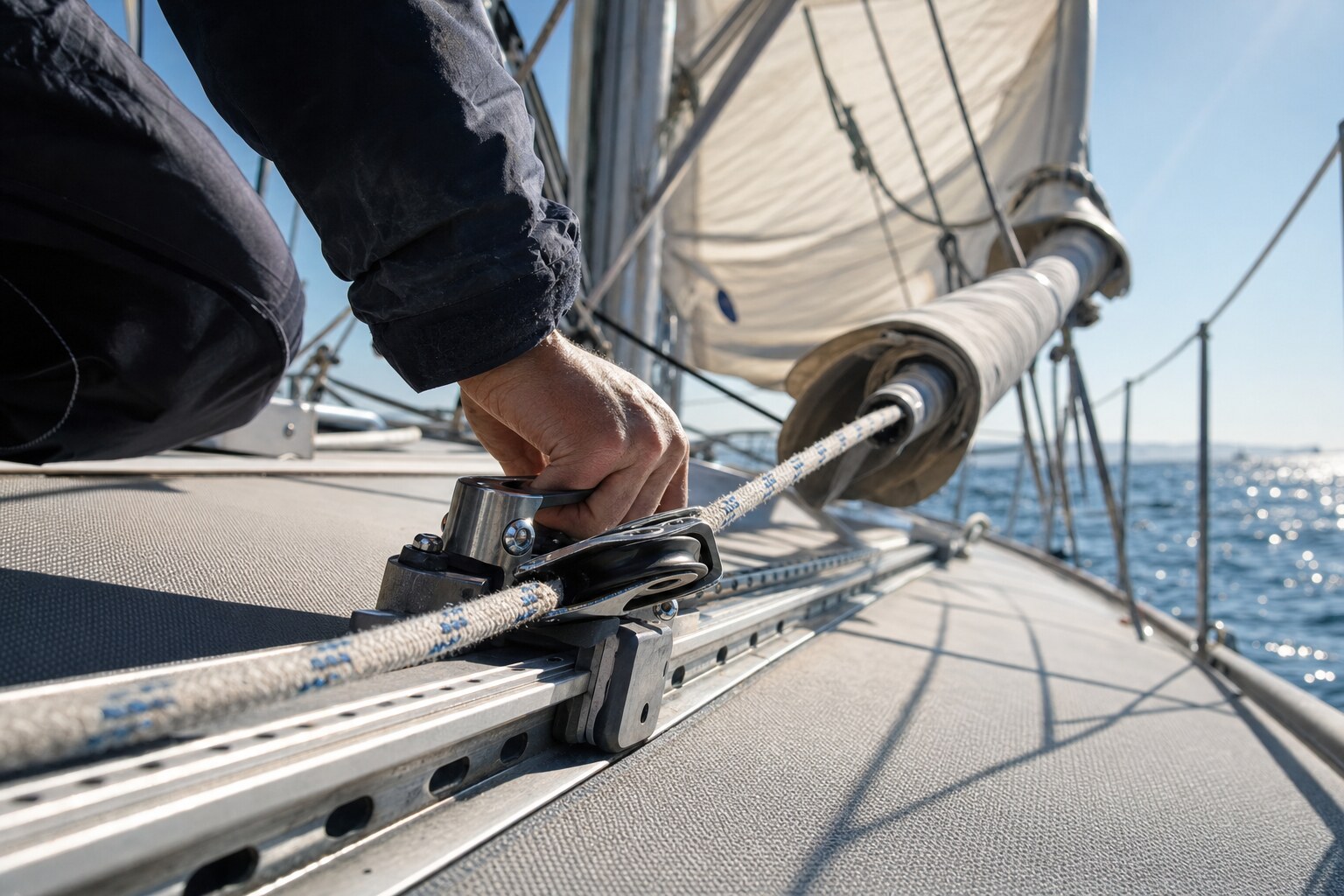
A complete top-down furler set, drum, swivel, anti-torsion cable and the lead blocks, generally runs more than a sock once you account for the cable. On 123furling.com, a Seldén GX furling system starts at €987, and a Facnor Fast FX+ asymmetric top-down furler is priced at €1,559. Add a correctly sized anti-torsion line for your luff length and you are looking at a meaningfully bigger outlay than a sock of the same sail area. That extra cost buys you cockpit-only handling: furl from the cockpit, ease the sheet, done. No one has to go forward in a blow.
When the furler is worth the money anyway
If the sail in question is actually a Code 0, built flat with a straight luff and a high clew specifically so it can be rolled, the furler is the right tool and a sock is a step backward. You lose nothing in furling quality and gain the ability to roll it away in seconds when a squall line shows up on the horizon, which matters a lot more offshore than in the anchorage. This is the setup we see work best at 123Furling for boats that use their reaching sail upwind of a beam reach in 8 to 20 knots: a Seldén CX, Profurl NEX or Harken Reflex Code 0 system paired with a properly tensioned anti-torsion cable sized to the luff length, not guessed at.
It is also worth it on a true reaching asymmetric that was cut with top-down furling in mind from the start, which is a different sail from a deep running chute even though both get called "asymmetric" casually. Sailmakers who know a boat is furling the sail will flatten the mid-girth and raise the clew specifically to avoid the hourglass problem, so the sail and the furler are matched before it ever leaves the loft. If you are buying new, telling your sailmaker you are furling top-down changes the cut they give you. If you already own a deep-cut sail and are only now adding a furler, check the mid-girth to leech ratio before you order the hardware, not after.
The boats where a sock still wins, even with money to spare
Short-handed cruisers who run deep and broad more than they reach, think Atlantic circuit, downwind passages, trade-wind sailing, are usually better served by a sock regardless of budget. The sail that performs best running deep is the fuller, rounder cut that fights a top-down furler, so forcing that sail onto a furler buys you a worse sail and a furling headache at the same time. We see this pattern most on boats in the 30 to 38-foot range doing coastal and Atlantic cruising with a couple aboard: the sock gets used more because it is predictable every single time, while a mismatched furler setup gets avoided after the second bad experience and the sail stays in the locker.
There is a middle path some 123Furling customers take: a Code 0 on a dedicated top-down furler for reaching, and a separate deep asymmetric in a sock for running. It is two sails and two systems, which is not cheap, but it matches the hardware to the sail shape in both cases rather than compromising on one sail trying to do both jobs. If you are only going to own one downwind sail, decide first whether you reach or run more on your usual routes, and let that decide the sail cut, which then decides the furler question for you.
Not sure which configuration fits your rig and your sailing pattern? Our product advisor walks through boat length, forestay setup and sailing style to point you at a system, or you can read how a top-down furler compares to a bottom-up system before you commit to either. For a side-by-side on the top-down hardware itself, the Seldén GX, Profurl Spinex, Harken Reflex and Facnor FX+ comparison covers how the four brands actually differ once you've settled on furling over a sock.