

Facnor doesn't make one furling system. They make four, and each one solves a different problem on a different kind of boat. If you've been searching for "Facnor roller furler" and ended up with a list of models you can't distinguish from each other, this is for you.
Based on the range we carry at 123Furling and what sailors across Europe tell us, here's how the four systems actually differ - and which one belongs on your boat.
Why Facnor keeps showing up on European boats
Facnor is a French manufacturer, based near Brest, with over 25 years building furling systems for offshore racing and ocean cruising. The brand is well established on Benéteau, Jeanneau and Hanse boats that leave the factory with a furler already fitted, which means there are thousands of Facnor systems sailing around the Channel and the Med right now.
The honest reason sailors choose Facnor over Harken or Profurl is pricing. Facnor typically runs about 20-25% cheaper than the equivalent Harken or Profurl model. That's not a quality compromise - Facnor uses the same stainless steel and marine-grade aluminium. It's a French manufacturer selling direct in Europe, without the same distribution markup.
The LS system: Facnor's most-fitted genoa furler
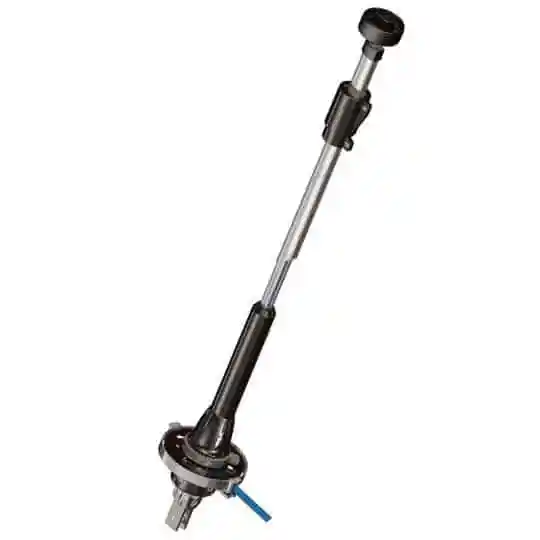
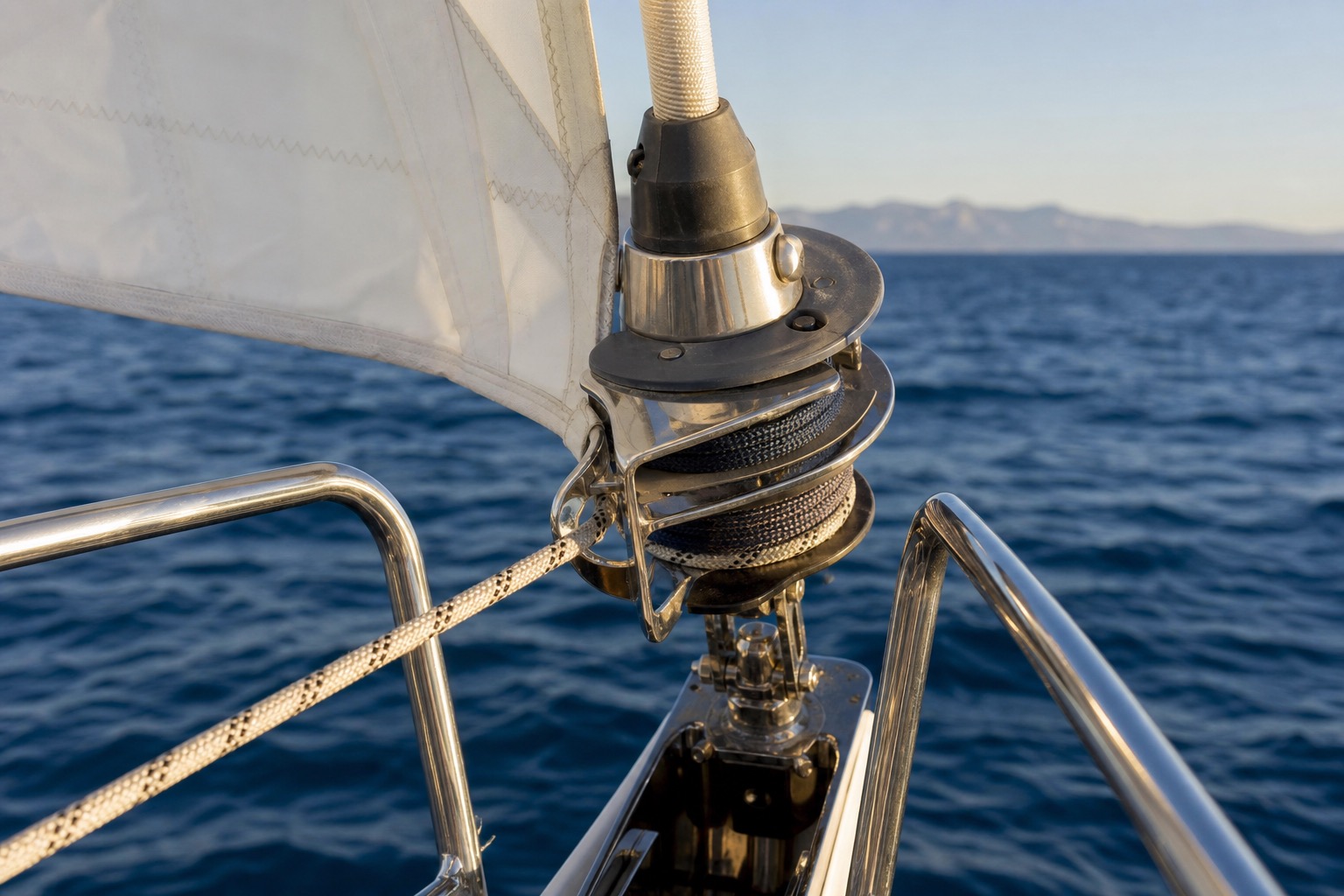
The Facnor LS System is a conventional extrusion-over-forestay furler - drum at the bottom, swivel at the top, jib or genoa on the foil. It fits boats from 5.5 to 18 metres and includes an optional turnbuckle for a complete installation.
What makes it different from a Seldén Furlex or Harken MKIV is the telescopic bottom section. The lower foil extrusion slides over the one connected to the drum, so you adjust it to length without cutting anything. Every other mainstream furler requires you to cut the aluminium foil to fit your luff length. With the LS, you slide and lock. That's a significant advantage if you're fitting it yourself - no hacksaw, no miter box, no risk of an off-angle cut.
Installation typically takes about two hours solo, without unstepping the mast. Users consistently report eight or more years of trouble-free operation with nothing more than a freshwater rinse after use.
The weak spot in the LS you need to know about
The Facnor LS has one documented failure pattern: top swivel bearing wear. After several seasons of use, the bearing that lets the swivel rotate independently of the foil can develop play. When it goes, the swivel stops turning smoothly. The symptoms are progressive: furling gradually gets harder in one direction, then both. If you leave it, the halyard starts to wrap around the foil during furling, which accelerates the wear dramatically.
The fix is straightforward: replace the swivel bearing before it causes halyard problems. At 123Furling, we see this most often on boats that sail frequently in salt water and don't rinse the head of the rig after passages. A freshwater flush of the swivel every few months extends life significantly. If your genoa is getting harder to furl, check the swivel before assuming the problem is sheet tension or a kinked line.
FX+ for Code 0 and gennaker: how to read the size chart
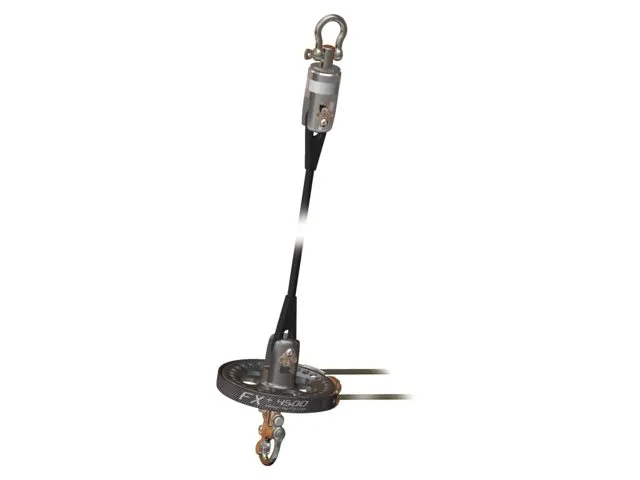
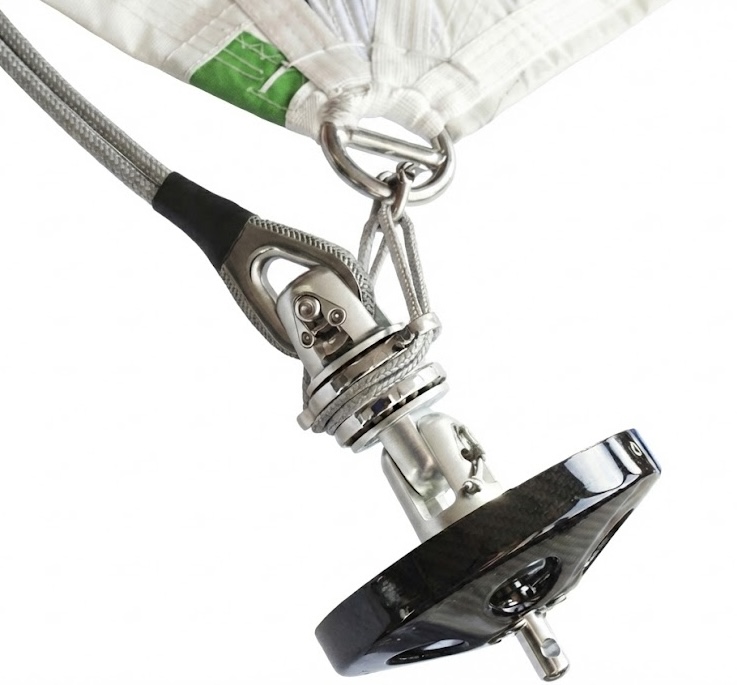
The Facnor FX+ Code 0 Furler is a flying sail furler - it doesn't run on a forestay, it furls a sail that hangs from a removable halyard and tack line. The monoblock drum and swivel are machined from a single piece of aluminium, which makes the FX+ noticeably stiffer and more precise than systems where drum and swivel are bolted together.
Four models cover most boats:
- FX+900 - up to 30m², boats 6-10.5m (SWL 0.9T)
- FX+1500 - up to 60m², boats 10.5-12m (SWL 1.5T)
- FX+2500 - up to 100m², boats 12-14m (SWL 2.5T)
- FX+4500 - up to 140m², boats 13-16m (SWL 4.5T)
Most cruising sailors on a 35-42 foot boat end up on the FX+1500 for a Code 0 around 40-55m². The FX+1500 handles up to 60m² at 1.5 tonnes safe working load, which covers most production cruiser Code 0 applications. One sizing trap: match the model to sail area, not just boat length. A light 35-footer with a 65m² Code 0 needs the FX+2500.
One installation detail that trips up first-timers: the furling line exit angle. The FX+ drum uses a U-shaped line channel. If the line exit angle is too steep - common when the furling line runs back to a cockpit block at an unfavourable angle - the line can occasionally jump out of the channel under load. Facnor's fix is a stainless steel line guide that closes the channel. Fit it from the start rather than discovering the problem offshore at night.
For pure gennaker top-down furling, the Facnor Fast FX+ Gennaker Furler covers larger sail areas with SWL from 900kg to 7000kg, suited to boats from 20 to 70 feet.
The Flatdeck: for sailors who want to forget about the furling line
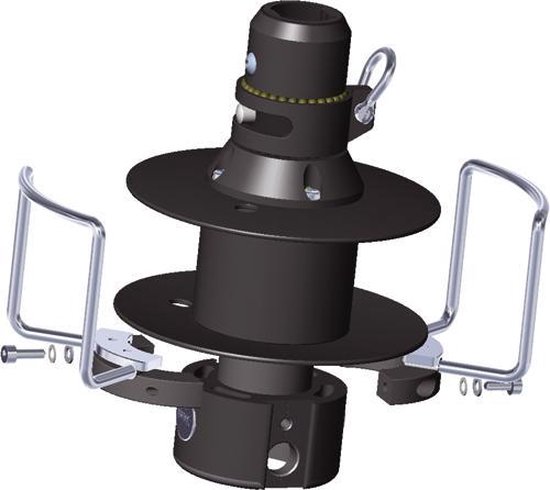
The Facnor Flatdeck is the most unusual system in the range. Instead of a round furling line, it uses a flat polyester belt - think seatbelt webbing - that coils onto the drum. This solves two persistent problems with conventional furlers: backlash and tack height.
On a standard furler, the reefing line builds up on the drum unevenly under load. The flat belt layers on cleanly, which means consistent power throughout the furl. At 123Furling, the sailors who use the Flatdeck most are racing crews and owners who single-hand their 40-45 footers in strong winds - the mechanical advantage from the wide drum diameter makes a real difference when the genoa is fully loaded in 20 knots.
The other advantage is the low tack position. A standard furler needs drum height to accommodate the coil. The Flatdeck drum is flat, so the tack fitting sits nearly at deck level. That gives you 10-15cm more usable luff on the same sail - a meaningful difference in sail power, and it has been proven over 4,500 miles of offshore racing and cruising by users who switched from conventional systems.
One thing to know: the flat webbing is harder on fairleads than a round line. If you run the belt through a plastic fairlead, you'll see wear within a season. Facnor makes stainless steel fairleads specifically for the Flatdeck - use them.
Installation without unstepping the mast takes around four hours. The Flatdeck comes in Cruising and Racing versions - the Racing version uses lighter components and tighter tolerances for boats where grams and centimetres matter.
Which system for your boat
If you have a standard cruising genoa or jib and want a reliable, DIY-friendly system: the LS. Telescopic fitting, no cutting, straightforward installation, fair price at €934.
If you're adding a Code 0 to a 35-45 footer: start with the FX+1500 and check it against your sail area. The FX+1500 handles up to 60m²; if your Code 0 is larger, move up to the FX+2500.
If you're racing or sailing shorthanded and want every watt of sail power with minimal effort at the cockpit: the Flatdeck at €2,013.70. The belt system and low tack position pay for themselves in boat speed and ease of handling.
If you're comparing Facnor against Seldén or Profurl: read our breakdowns of Seldén furling systems and Profurl furling systems - the three brands solve the same problems in quite different ways.
Not sure which Facnor model works with your forestay diameter, halyard length, and sail area? Use the product advisor or send your boat specs to info@123furling.com - we'll tell you which model fits before you order.