

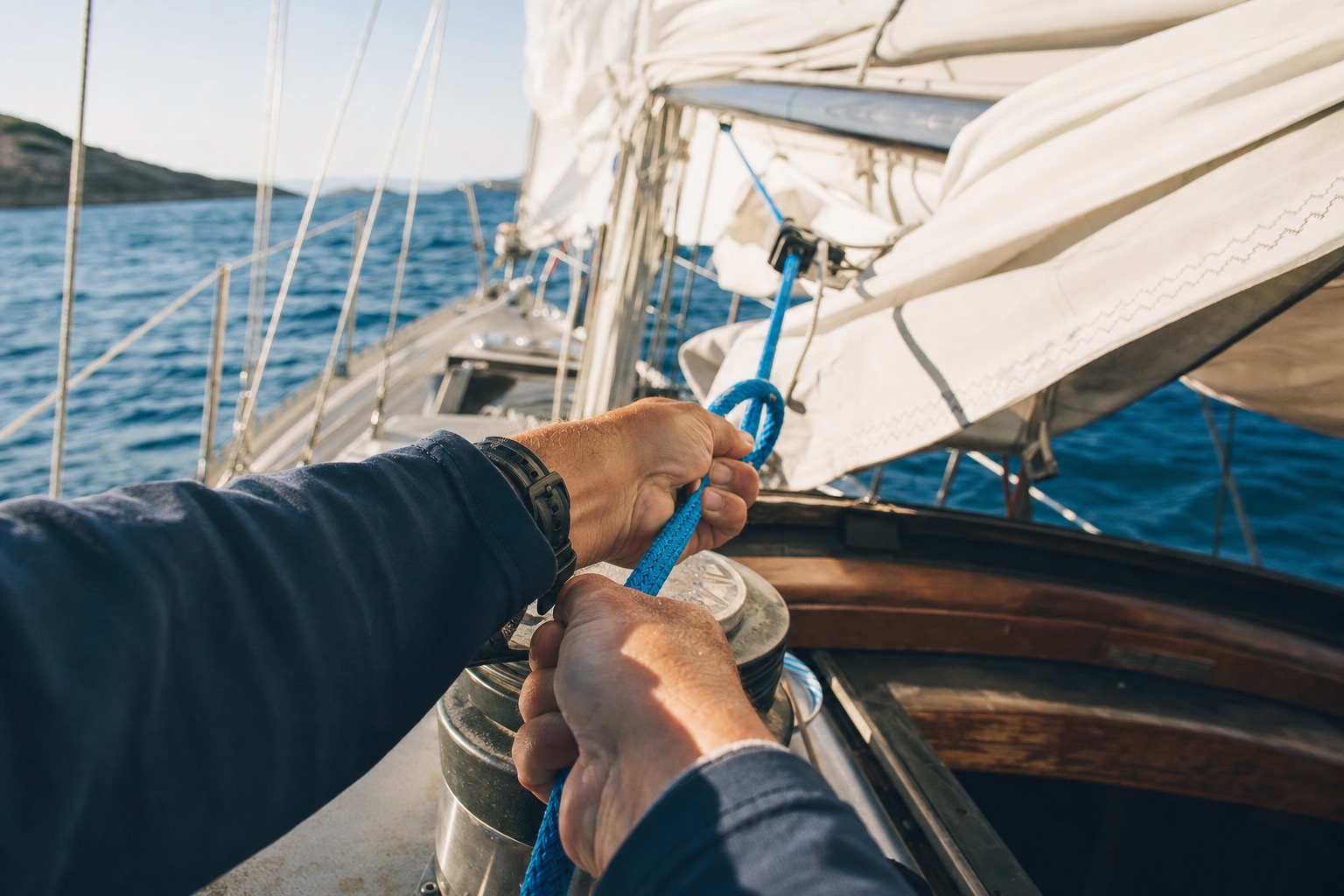
Most sailors change their furling line only when it breaks or jams. But choosing the wrong diameter for your drum creates problems long before failure: riding turns that lock up the furler in a breeze, a drum so overfull the last few wraps jump off the edges, or a line so thin your hands can't grip it in wet conditions.
Picking the right furling line takes about ten minutes if you know what to measure. Here's what actually matters.
Which diameter fits your drum
Your furler's drum has a specific line capacity - and this is where most mistakes happen. Too thin and the line develops riding turns (wraps crossing over each other, locking the drum). Too thick and you can't fit enough wraps to unfurl the sail completely when it's reefed.
The general rule: use the largest diameter that still fits your drum and reaches back to the cockpit comfortably. For most recreational furling systems, that breaks down like this:
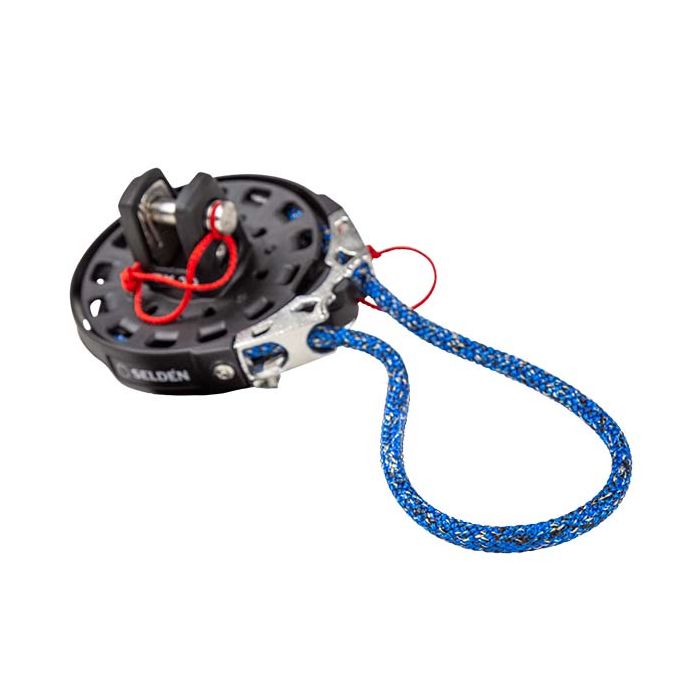
- Boats under 35 feet (10.5 m): 6-8mm is standard. Seldon Furlex 100 and 200 series drums are designed for 6mm line.
- Boats 35-45 feet (10.5-14 m): 8-10mm. Harken MKIV and Profurl C-System units in this range handle 8mm well.
- Boats over 45 feet (14 m): 10-12mm. The larger drum radius gives you the capacity, and you need the thicker line for grip and mechanical advantage.
Check your furler's installation manual - the maximum diameter is always listed. Using 8mm on a drum rated for 6mm seems harmless until the drum fills up halfway through a furl and you can't get the last six feet of sail in. If you're also working out which furler size suits your boat overall, our genoa furler sizing guide covers forestay diameter and luff length in detail.
At 123Furling, we stock the Endless Furling Line in O8mm, O10mm and O12mm specifically because those three sizes cover the vast majority of recreational yachts between 30 and 55 feet. If your system uses 6mm and you're struggling with grip, there's a practical fix: splice a thicker tail (8-10mm) onto the drum section. You get the capacity of 6mm where it matters and comfortable grip where your hands are.
How long does a furling line need to be
Harken's published formula for their MKIV systems says: boat length + foot of the largest genoa + 6 feet (1.8 m). That's a reasonable starting point for any single-line furling system.
For an endless spliced loop, the calculation changes. You need to measure the actual path the line takes: from the drum, forward through the fairlead or block, back to the cockpit, through the clutch, and back to the other side of the drum. Then add 15-20% for splice take-up and safety wraps.
The easiest method: route a piece of cheap messenger line through your entire system with the sail furled, mark where the ends meet at the drum, and measure. Add 10% and you're done.
One thing the drum capacity matters for: the drum should be about three-quarters full with the sail fully furled. Too little line and you lose mechanical advantage when furling in a heavy breeze. Too much and the last wraps creep over the drum edges.
Endless spliced loop or single line
The traditional setup is a single furling line: one end fixed to the drum, the other trailing back to the cockpit where it gets cleated or run through a clutch. It's simple, reliable, and easy to replace.
Endless spliced loops (a continuous loop that runs around the drum in both directions) solve one real problem: you never run out of line on the drum when reefing. Pull one side in and the other side feeds out automatically. This matters when you're doing multiple reefs in a blow and don't have enough tail left on the regular line to keep the drum turning.
The downside is that an endless loop requires precise length measurement for the splice, and you usually need two people to manage the slack side under load. For cruising boats where the genoa gets furled and unfurled at anchor or in calm conditions, the single line is almost always the better choice. For short-handed racing or offshore passages where you reef frequently in difficult conditions, an endless loop earns its complexity.
The Endless Furling Line from 123Furling comes pre-spliced, which eliminates the main installation headache of the continuous loop system.
Polyester, Dyneema or mixed construction
For furling lines, material choice comes down to one practical question: where do you need grip and where do you need low friction?
Polyester braid-on-braid is the standard for good reason. It grips winches and clutches reliably, it handles UV well, it stretches slightly under load (which absorbs shock), and it's affordable. Most sailors using 6-10mm polyester braid report five to eight years of service before replacement.
Dyneema-core with polyester cover is lighter and stronger for the same diameter, which means you can use a smaller size on a small drum while keeping adequate breaking strength. The downside is cost and the fact that pure Dyneema is notoriously slippery - experienced sailors report that Dyneema lines slip on winches even with seven wraps. The polyester outer cover solves most of that, but a 100% Dyneema line on a furling drum can produce riding turns and jump off the drum edge in ways that braided polyester does not.
For most cruising sailors with a genoa furler: stick with quality polyester braid. For a lightweight Code 0 furling line where drum capacity is critical and you're working with a small drum at the bow, a Dyneema-core line gives you the strength in a size that actually fits.
Signs the line needs replacing before it fails
The standard recommendation is to inspect the furling line annually and replace it every three to five years. That's a solid baseline, but the real indicators are in the line itself:
- Core fibers visible through the cover: replace immediately. The cover is the primary UV and abrasion protection.
- Flat spots or glazed sections: heat damage from the line slipping on a hot winch drum. The fibers have partially melted and lost strength.
- Stiffness in sections: UV degradation. A furling line that won't bend around the fairlead block is already compromised.
- Riding turns developing where they didn't before: the line has compressed and lost its round cross-section, causing irregular packing on the drum.
If you're replacing the line, this is also the moment to check the drum line guide, the exit block, and the first 30 cm of line at the cleat or clutch. That section typically wears five times faster than the rest.
Not sure which size fits your system?
Use the product advisor on 123furling.com to filter by boat length and furler brand, or send a message to info@123furling.com with your boat length, furler model, and the foot length of your genoa. We'll tell you which size fits.