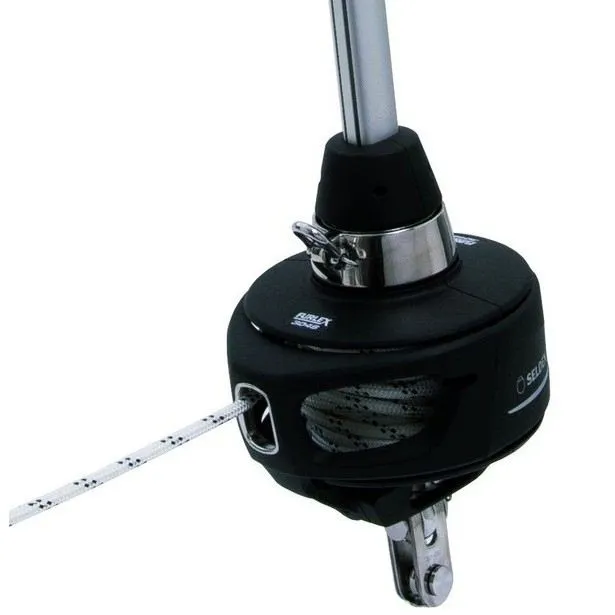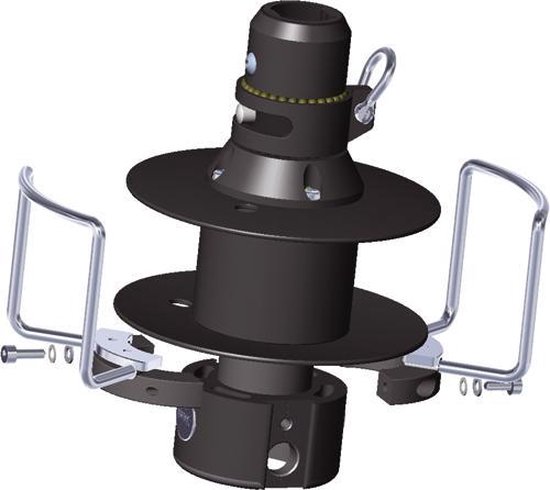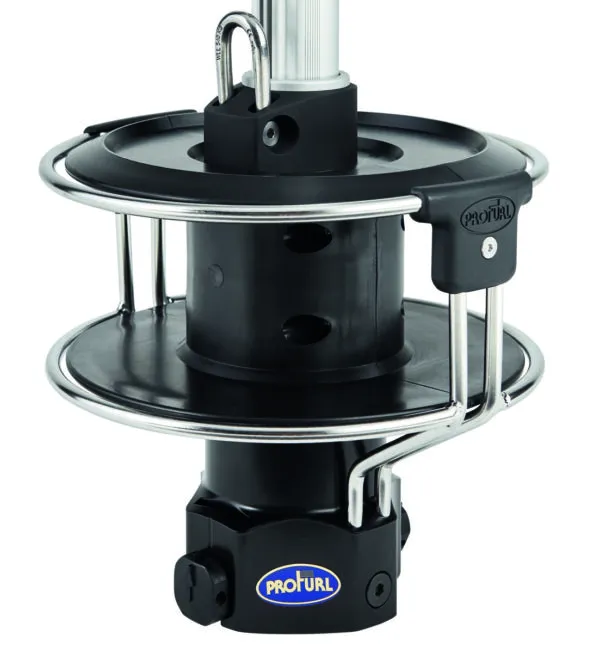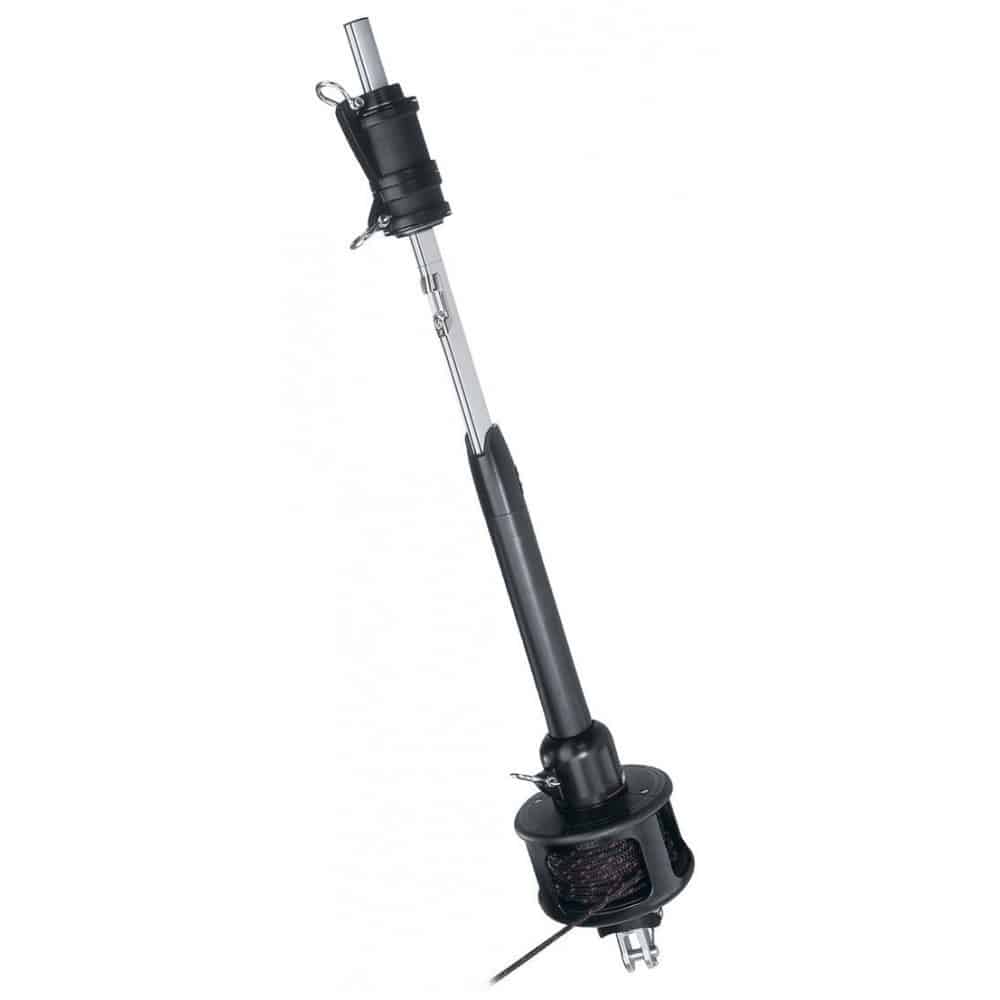


Before you order a genoa furler, you need two measurements right: forestay diameter and luff length. Get either wrong and you are looking at return shipping, a difficult retrofit, or a furler that jams when you need it most. At 123Furling we see this happen regularly - sailors order by boat length alone, then discover the drum will not fit their forestay terminal or the foil is 60cm too short.
This is not about brand preference. A Seldén Furlex 300S and a Harken MKIV Unit 2 can both work well on the same boat - but only if they are sized correctly for your specific forestay setup. Here is how to get the measurements right, and what each brand's sizing system actually means in practice.
The measurement most sailors get wrong
Forestay diameter. Not boat length, not sail area - forestay diameter is the critical number for choosing the right furler model.
The problem is that many sailors measure their existing furler foil, or estimate based on boat age and type, rather than measuring the actual wire. A Bavaria 40 from 2008 might have a 9mm forestay. The same model from 2015 might have 8mm. Charter boats get rewired differently. Secondhand boats get modified. You need to measure the wire, not guess from the hull.
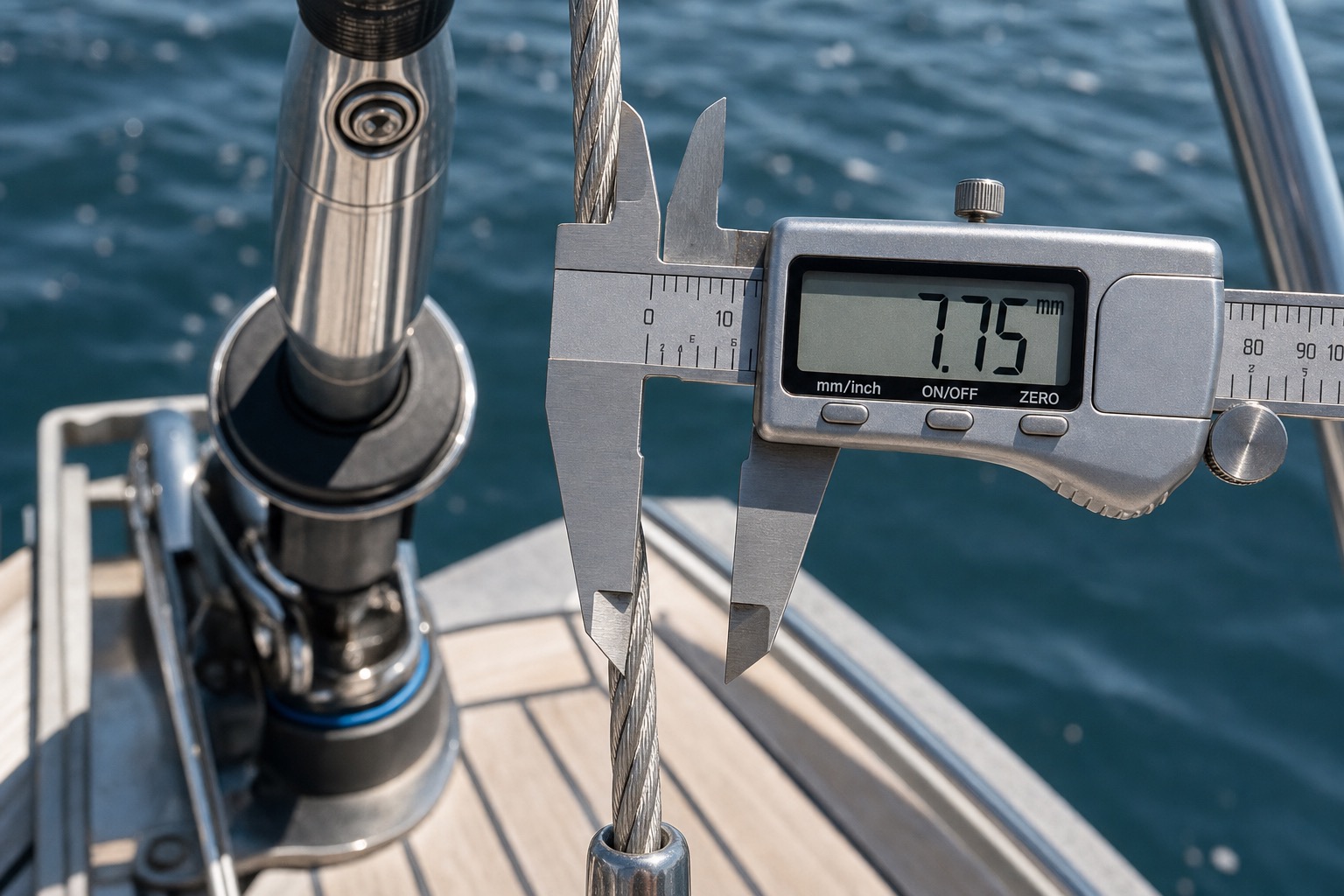
The correct method: use a set of digital calipers (available for under €20 at any hardware store) and measure the wire where it exits the terminal fitting at the bow. Do not measure through the foil, do not measure the terminal pin. The wire itself. Take three measurements at the same point, rotated slightly each time, and take the largest number.
Also measure the pin-to-pin forestay length while the mast is up and tuned to sailing tension. This gives you the luff length for your foil order. And write down your clevis pin diameter at both the bow fitting and the masthead - some brands require specific terminal adapters.
Seldén Furlex: what the numbers mean
Seldén Furlex models use a number-letter system that is straightforward once you know what you are looking at. The number refers to the maximum forestay diameter the unit handles:
- Furlex 50S: Ø4-5 mm wire, boats roughly 18-26 ft
- Furlex 100S: Ø4-6 mm wire, boats roughly 18-30 ft
- Furlex 200S: Ø6-8 mm wire - covers most 28-38 ft cruising boats
- Furlex 300S: Ø8 mm wire - typical for 38-45 ft boats
- Furlex 400S: Ø8+ mm wire - 45 ft and above
- Furlex 500S: Larger forestays, 55 ft and above
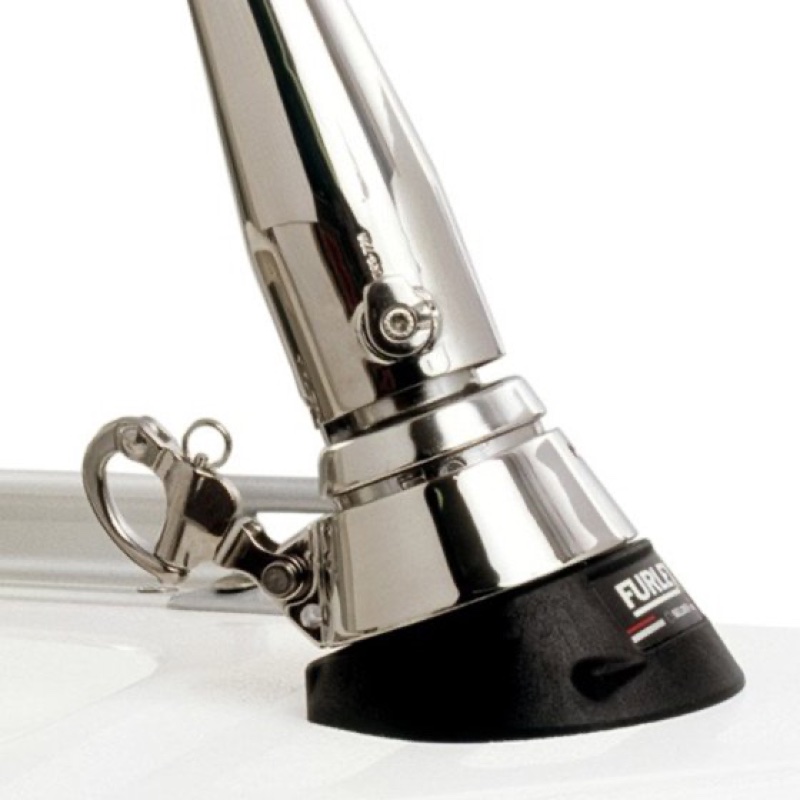
The "S" suffix indicates a swageless toggle at the bottom, which makes installation easier on most standard chainplates. There are also "TD" (Through Deck) variants like the Seldén Furlex Through Deck, which routes the lower toggle below deck for a cleaner installation. The sizing is the same - a 300S and a 300TD fit the same 8mm forestay.
Important: if your forestay is at the upper limit of a size range (say 7.9mm), go up one size. The bearings and drum are sized for the load at the top of the range, not just the diameter. Undersizing means premature bearing wear and a drum that fills too quickly, reducing mechanical advantage exactly when you need it in heavy weather.
Harken MKIV, Profurl C and Facnor LS: sizing compared
Where Seldén uses a number system, Harken MKIV uses units (0 through 5), Profurl uses the foil length as the model number, and Facnor uses the LS prefix with a size number. Here is how they compare on forestay diameter:
| Boat length | Forestay Ø | Seldén | Harken MKIV | Profurl C | Facnor LS |
|---|---|---|---|---|---|
| 26-32 ft | 6-7 mm | 100S / 200S | Unit 0 | C290 | LS-130 |
| 32-40 ft | 7-9 mm | 200S / 300S | Unit 1-2 | C320 / C350 | LS-165 |
| 40-48 ft | 9-11 mm | 300S / 400S | Unit 2-3 | C350 / C430 | LS-180 / LS-200 |
| 48 ft+ | 11 mm+ | 400S / 500S | Unit 3-4 | C430+ | LS-200+ |
These are starting points, not guarantees. A 38 ft boat with a tall fractional rig and a 10mm forestay fits the 40-48 ft column, not the 32-40 ft one. Sail area and forestay tension also influence the load on the furler bearings - a lightweight racing hull with a large overlapping genoa puts more load on a Harken MKIV Unit 1 than a heavy displacement cruiser at the same boat length.
If you are comparing the Profurl C-System against the Facnor LS for a mid-range 38ft cruiser, the key difference is in the bearing system: Profurl uses a plain bearing drum that is quiet and low-maintenance but has slightly higher friction; Facnor LS uses a ball bearing drum that turns more easily but needs periodic inspection. Neither is wrong for cruising - it depends whether you prioritize longevity (plain bearing) or ease of use (ball bearing).
Luff length: what it tells you and what it does not
Once you have the forestay diameter sorted, luff length determines how long your foil sections need to be. This is not the same as your forestay pin-to-pin length. The foil starts above your bow fitting (above the furler drum) and ends at the top swivel, which sits below the masthead fitting.
A rough rule: the foil is typically 90-95% of the forestay pin-to-pin length. For a 12m forestay, you would expect a foil around 11.0-11.4m. But measure precisely - some boats have longer terminals or deck blocks that change the calculation.
If your foil is too short relative to your genoa luff, the sail will not set properly - the luff bags between the drum and where the foil starts, and you get wrinkles at the bottom when rolled. If the foil is too long, the top swivel sits too close to the masthead and the halyard angle becomes too shallow, which leads directly to the most frustrating furler failure: halyard wrap.
The halyard wrap problem - and how sizing causes it
Halyard wrap happens when the angle between the genoa halyard and the forestay is too flat. Instead of pulling the sail up cleanly, the halyard sits close to the foil and winds around it as the sail rolls up. In moderate conditions you might not notice until the sail jams halfway furled. In a squall, it locks the furler completely.
The most common cause is not lazy crew or bad halyard routing - it is a foil that is too long for the actual stay length, pushing the top swivel too close to the masthead sheave. If your halyard exits the masthead at less than about 15-20 degrees from the foil, wrap becomes likely.
The fix is a short wire pennant between the top of the foil and the sail head - effectively extending the foil without changing the hardware. But if you are ordering a new furler, get the foil length right from the start. The 123Furling team always asks for both the forestay length and masthead geometry before recommending a foil specification.
Not sure which size you need?
Use the product advisor on 123furling.com - it asks for forestay diameter, boat length, and rig type and narrows down the compatible models. Or send your measurements directly to info@123furling.com. We compare Seldén, Harken, Profurl and Facnor sizing side by side and confirm which units fit your specific setup before you order.
The full brand comparison between these four furlers is covered in our article on Seldén Furlex vs Harken MKIV vs Profurl vs Facnor. Read it after you have confirmed your forestay diameter - otherwise you are comparing models that may not even fit your boat.