


Roll a genoa past a certain point and something counterintuitive happens: the sail doesn't get flatter and easier to handle, it gets fuller. The leading edge bulges, the draft creeps forward, and the boat heels more than it did with the full sail up. Most sailors discover this the hard way, in 25 knots, wondering why reefing the genoa made things worse instead of better.
At 123Furling we get this question constantly from owners who assume a furling genoa reefs the way a mainsail does, evenly and predictably. It doesn't. Here's what actually happens when you roll up a genoa, how far you can take it before the shape genuinely falls apart, and when reefing isn't even the right move.
Why a rolled-up genoa gets fuller, not flatter
A cruising genoa is cut with the most draft in the middle third of the sail, between roughly 30% and 60% of the way up the luff. That shape is what gives you drive upwind. The problem is that when you roll the sail around the foil, the luff (the flattest, straightest part of the sail) wraps around the same diameter drum and stay everywhere, while the belly of the sail, the fullest part, has to compress into that same rolled cylinder.
The result: at 20-25% furled, the middle of the sail is still contributing shape, but the roll is no longer even. The draft moves forward toward the luff, the sail gets a hard, rounded leading edge, and the boat starts to heel and round up more than it did fully unrolled, not less. This is the opposite of what most sailors expect from "reefing," and it's the single biggest reason a partially furled genoa in 25 knots feels worse than a full genoa in 20.
The 20-25% rule most sailors don't know
Sailmakers cutting a genoa specifically for roller reefing (not just roller furling) build in reef marks, usually at 10% and 20% of foot length, because that's the range where a well-cut sail still holds a usable shape. Push a standard, non-reef-cut genoa past roughly 25%, and the draft distortion gets bad enough that most sailors are better off changing down to a smaller headsail or a storm jib than fighting a badly shaped, partially rolled 130% genoa.
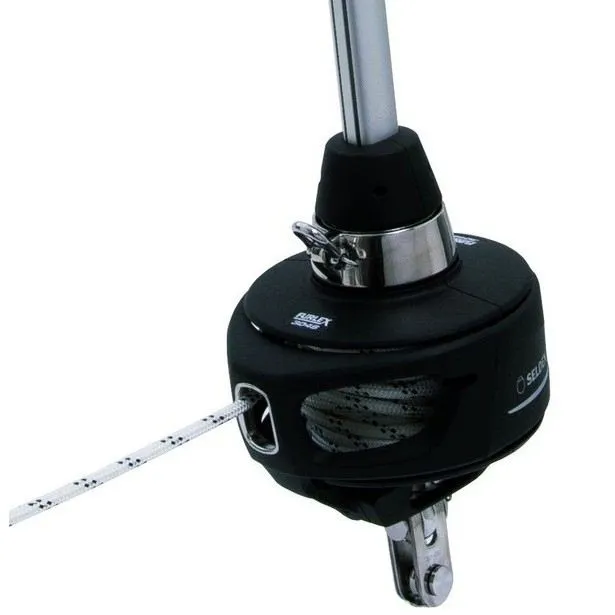
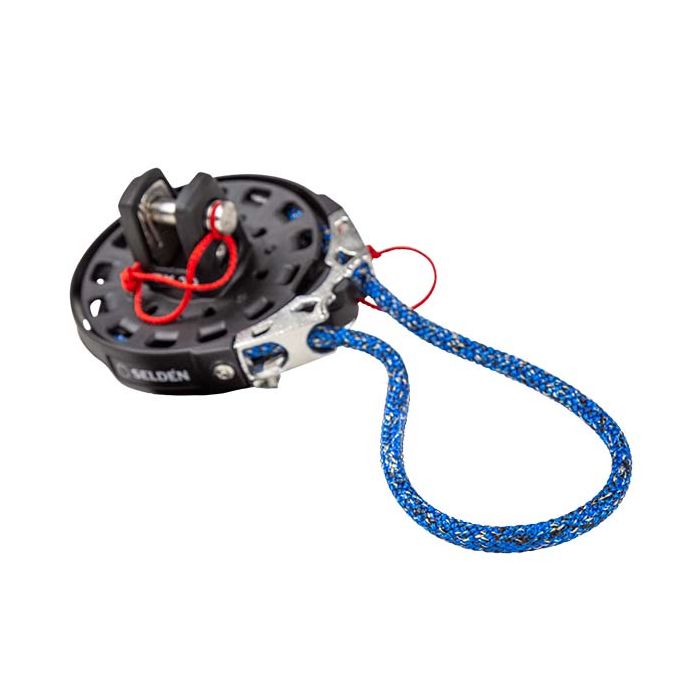
On the 30-45 foot boats we see most often at 123Furling, this 20-25% ceiling holds up consistently regardless of brand. A Seldén Furlex handles the load of a partially furled genoa in a blow just fine mechanically, the drum and swivel aren't the limit here. The sail is.
Foam luff pads: worth it or not
A foam luff pad is a tapered strip of closed-cell foam sewn into the luff tape, thicker in the middle third where the sail has the most draft. When you furl, the extra bulk forces more cloth to wrap around that section rather than the flat top and bottom, which keeps the rolled shape flatter and pushes the draft back where it belongs, instead of dumping it all forward at the luff.
It's genuinely useful on boats that reef the genoa often, offshore cruisers and anyone with an overlapping 130-150% genoa on a boat that gets overpowered in the 18-25 knot range. Racing sailors tend to skip it because the added bulk at the luff disturbs airflow and makes telltales harder to read at full hoist, a real cost when a few tenths of a knot matter. For a cruising boat that furls three or four times a season in a breeze, that trade barely registers.
Watch your telltales, not the sail's silhouette
Once you're partially furled, the standard telltale position (about 15-20% back from the luff) often sits in dead air, shadowed by the rolled bulge or caught in separated flow coming off that fat leading edge. A sail set up specifically for reefing usually carries a second, higher row of telltales further back so you have a usable reference even at 20% furled. If your genoa only has one row and it stalls the moment you roll in a few turns, that's the sail telling you it wasn't cut for this, not you doing it wrong.
When reefing the genoa is the wrong move entirely
There's a point, and most experienced cruisers put it somewhere around 18-20 knots true, where easing the sheet and cranking the backstay does more for boat balance than rolling in the genoa. A partially furled genoa with a distorted, fuller shape actually increases heel and weather helm compared to depowering the same sail with sheet and backstay tension. If you're still overpowered after that, dropping to a smaller headsail (or, on a cutter rig, going to the staysail) gets you a properly shaped sail instead of a badly compromised big one.
This matters more the bigger your genoa is relative to the boat. A 150% overlapping genoa reefed to 25% is still carrying a lot of cloth with a badly distorted shape. A 105-110% working jib in the same wind needs almost no reefing at all, which is one more reason getting the furler and sail sized correctly for your boat in the first place saves you from fighting this problem at all.
The mechanical side: what your furling gear needs to handle it
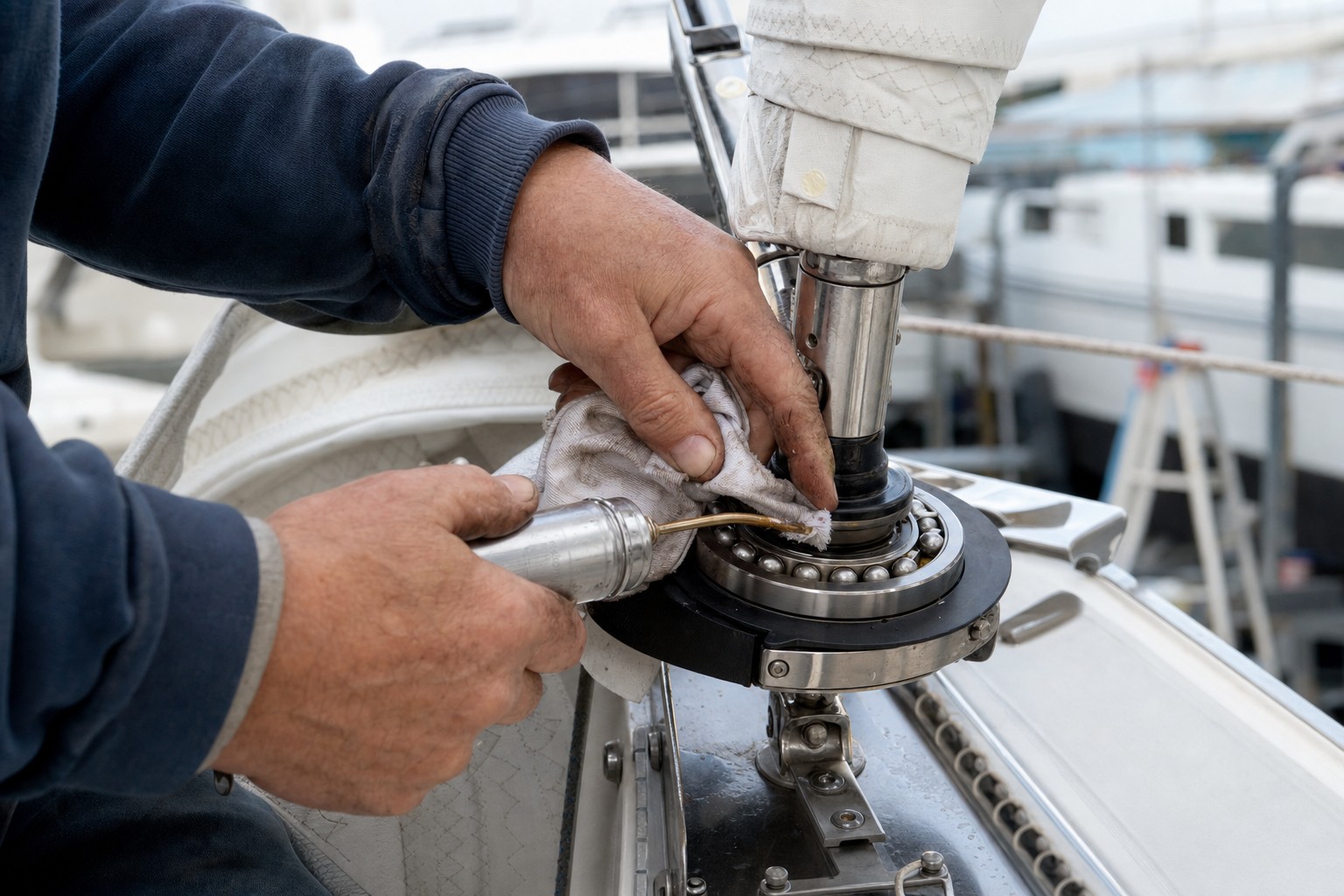
Rolling and unrolling repeatedly in a breeze puts real load through the whole system, not just the sail. The furling line takes the brunt of it, especially if you're winching rather than hand-hauling, which most sailors end up doing once true wind is over 18 knots on anything larger than about 10 meters. Ease the halyard slightly before you winch the furling line hard; too much tension on a jammed roll is one of the more common ways sailors end up with a halyard wrapped around the top of the foil, which is a very different (and worse) problem than a badly shaped reef.
Check the line itself too. A furling line that's starting to fuzz or flatten under load is more likely to slip or jam exactly when you're loading it hardest, mid-reef in a building breeze. If yours is showing wear, it's worth reading through the signs that it's due for replacement before you're relying on it offshore.
What we tell owners at 123Furling
If you're cruising and reef the genoa occasionally in a blow, don't expect miracles past 20-25% on a standard sail. That's not your furler underperforming, it's sail geometry. If you're reefing regularly, either because you sail somewhere consistently breezy or you've got a big overlapping genoa on a boat that gets overpowered easily, a foam luff pad and dedicated reef marks from your sailmaker will get you a genuinely usable shape out to that same 20-25%, instead of a flogging, distorted mess at 15%.
Not sure whether your current setup needs that upgrade, or whether your furler and sail are matched to your boat in the first place? Use our product advisor or send the details to info@123furling.com and we'll tell you straight whether the fix is the sail, the furler, or just your reefing technique.