

The line looked fine on Friday. Not fraying, no visible damage, still handled a full furl and unfurl before you tied off for the weekend. Sunday afternoon, halfway through easing the genoa out in 15 knots, it jammed hard against the drum and stayed there until someone went forward with a winch handle and a lot of patience. Nothing about that line looked worn from the cockpit. The problem was never on the surface.
The wear signs that actually predict a jam
Fraying gets all the attention because it is easy to see from a distance. It is also the least useful indicator. By the time a furling line is visibly fraying along its length, it has usually already caused smaller problems you dismissed as bad luck: a furl that did not sit tight, a line that jumped a wrap on the drum, a winch that suddenly needed more turns than usual.
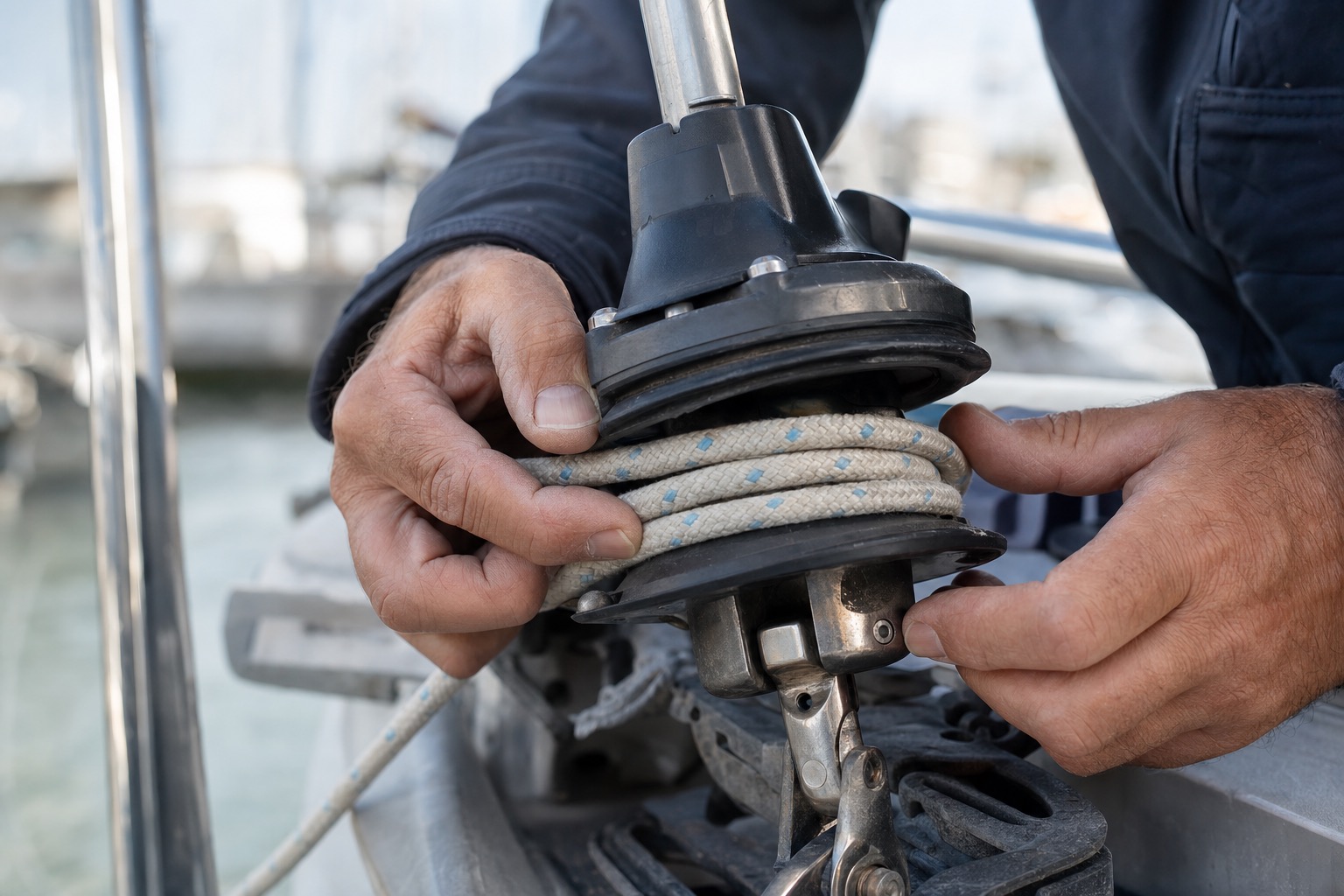
The signs that actually matter sit closer to the drum, where the line does most of its work:
- Glazing or flat spots at the point where the line first wraps the drum. This is heat damage from friction, not abrasion, and it shows up as a shiny, slightly melted-looking patch rather than fuzz. Once a section is glazed, it stops gripping the drum groove properly and starts to slip under load.
- Core showing through the cover, almost always at the drum contact zone rather than along the open run of line. The cover takes the wear first; when you can see white or grey core fibre through a worn patch of cover, the line has lost a meaningful share of its strength right at the point that carries the most load.
- Stiffness that was not there a season ago. A furling line should still flex easily by hand. A line that has gone stiff or slightly crunchy, even without visible fraying, is telling you the fibres inside have started to break down from UV or salt crystallisation.
- Knots or hard lumps forming near the drum end after repeated furls. This usually means the line is no longer laying flat in the drum groove, which is often a sizing problem rather than a wear problem (more on that below).
Run your hand along the last two metres before the drum every few weeks. That short section does more work than the rest of the line combined, and it is where problems show up first.
Why polyester and Dyneema furling lines wear on completely different schedules
Braided polyester is still the standard choice for most furling lines, and for good reason: it holds up to UV well, grips a winch properly, and a quality double-braid line will run three to five seasons of regular cruising use before it needs replacing, longer if it lives under a cockpit locker between passages rather than coiled on deck in the sun.
Dyneema-cored lines are a different story. The core itself is extremely UV-sensitive, and even with a protective polyester cover, manufacturers generally recommend planning replacement within five to ten years of UV exposure regardless of how the line has been loaded. If you have gone Dyneema for a lighter, lower-stretch furling line on a Code 0 or gennaker system, treat that clock as separate from your genoa furling line, and shorter if the boat spends summers somewhere with strong, consistent sun rather than moderate cruising grounds.
At 123Furling we see the two get mixed up constantly: sailors who replace a Dyneema-cored line on the same five-year schedule as their old polyester line, when it should have come off two years earlier, or sailors who pull a perfectly good polyester line because they assumed it needed the same short interval as Dyneema. The material inside the cover determines the clock, not the brand or the price you paid for it.
The jam that looks like a drum problem but is a diameter problem
A furling line that keeps riding up over itself on the drum, or one that suddenly needs far more force to pull than it used to, often gets blamed on the drum bearings or the furler itself. Before you strip the drum down, measure the line.
Every drum is cut for a specific line diameter range. Too thin, and the line wedges down into the groove and binds instead of laying in smooth, even wraps. Too thick, and it cannot seat properly, so each new wrap rides up over the one before it, an override that gets worse every time you furl until the line jams solid. A line that has swelled slightly from water absorption, or one that was sized generously "to be safe" when it was fitted, can cause exactly this problem without a single visible sign of wear.
This is also where the block leading the furling line back to the cockpit matters more than most sailors realise. A block that is even slightly out of fair with the drum introduces a side-load that wears one edge of the line faster than the rest and can pull it off-centre on the drum on every furl. We cover which block belongs where on our furling line lead block guide, and it is worth checking before you assume a jam is purely a line problem.
The de-coring trick riggers use when a line is a hair too fat for the drum
If a line is otherwise in good condition but is just slightly oversized for the drum it is on, riggers have a fix that does not show up in manufacturer manuals: removing part of the core from the section that actually sits on the drum. Working from about a third of the way along the line, the outer cover is opened, the inner core is drawn out and cut away, and the hollow cover is left to lie flatter against the drum, increasing the drum's effective capacity and reducing the risk of an override.
It works, but it is a real trade-off. A typical polyester braid-on-braid line loses roughly half its rated breaking strength once the core is removed from a section, so this only makes sense on the wraps closest to the drum where load is spread across many turns of line rather than carried by a single point, and never on a line that is already showing wear elsewhere. If you are not confident doing this yourself, a rigger can de-core a line in a few minutes, and it is worth asking about before ordering a full replacement for a line that is otherwise sound.
Waiting a season too long costs more than the line
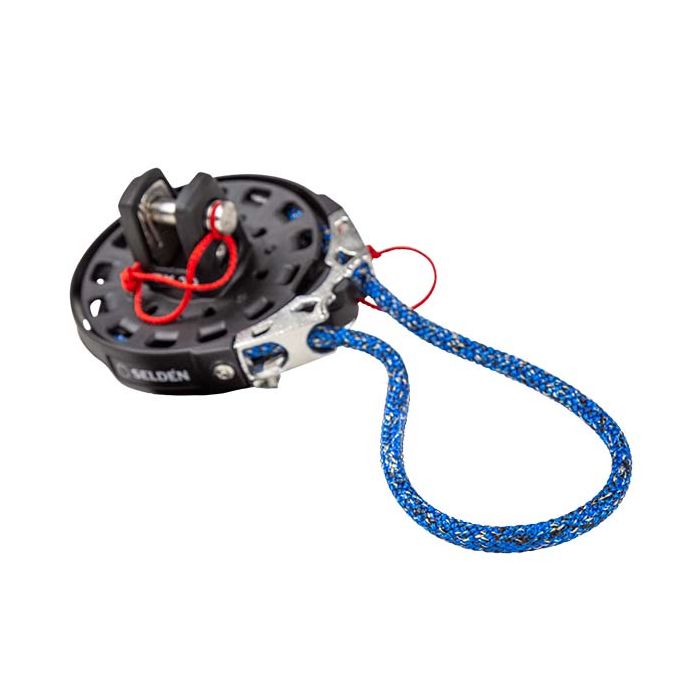
A furling line failing at the drum rarely fails quietly. It jams mid-furl in building wind, or it lets go entirely and the sail flogs itself against the spreaders and shrouds until someone gets it under control. Compared to that, a replacement line is cheap: a spliced, ready-to-fit endless furling line for a Code 0 or gennaker system runs from around 50 euros depending on diameter and length, delivered pre-spliced so there is no splicing work at the dock.
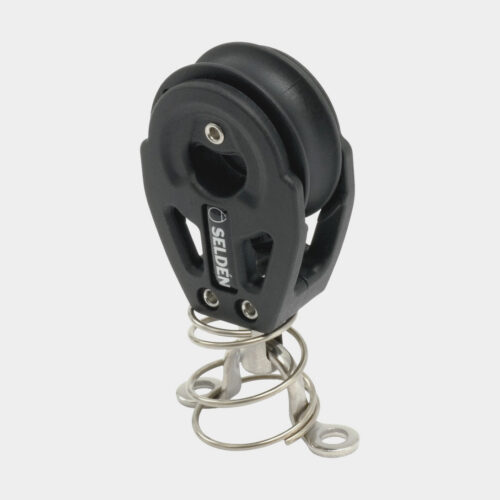
If you are replacing the line anyway, it is also the moment to check the lead block it runs through. A worn or misaligned block, like the Seldén BBB 30 single block commonly used on furling line runs, will chew through a brand new line just as fast as it did the old one. For the diameter, length and material questions on the line itself, our guide on choosing the right furling line covers the sizing decision in more depth.
Not sure whether what you are looking at is normal wear or a line that needs to come off this season? Send a photo of the drum contact section to info@123furling.com and we will tell you straight whether it is worth another season.