

The furling line goes slack, the drum barely turns, and the genoa stalls half-rolled with the sheet still under load. Most sailors reach for the furler first: check the line, check the drum, check the exit block. Nine times out of ten the real problem sits two or three metres higher, in the gap between the halyard sheave and the top of the foil, where the halyard has wrapped itself around the extrusion above the swivel.
What's happening in the gap above the swivel
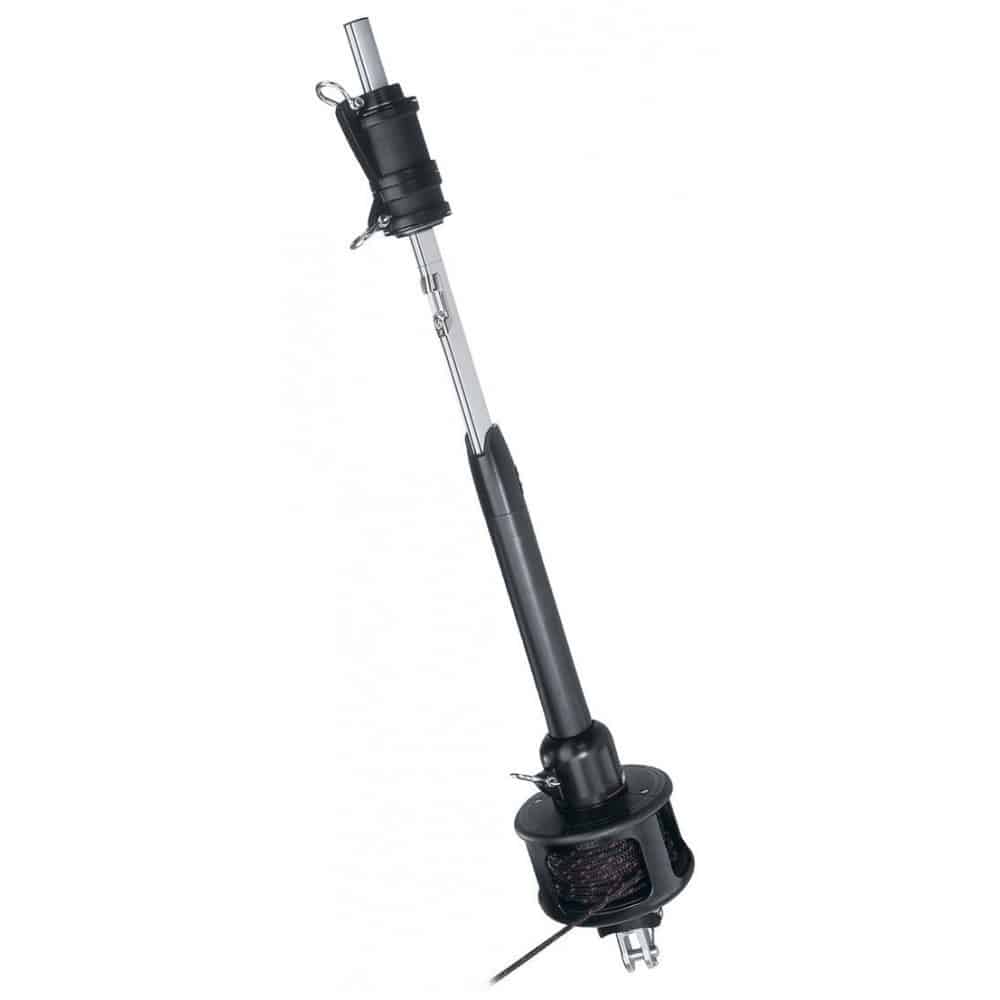
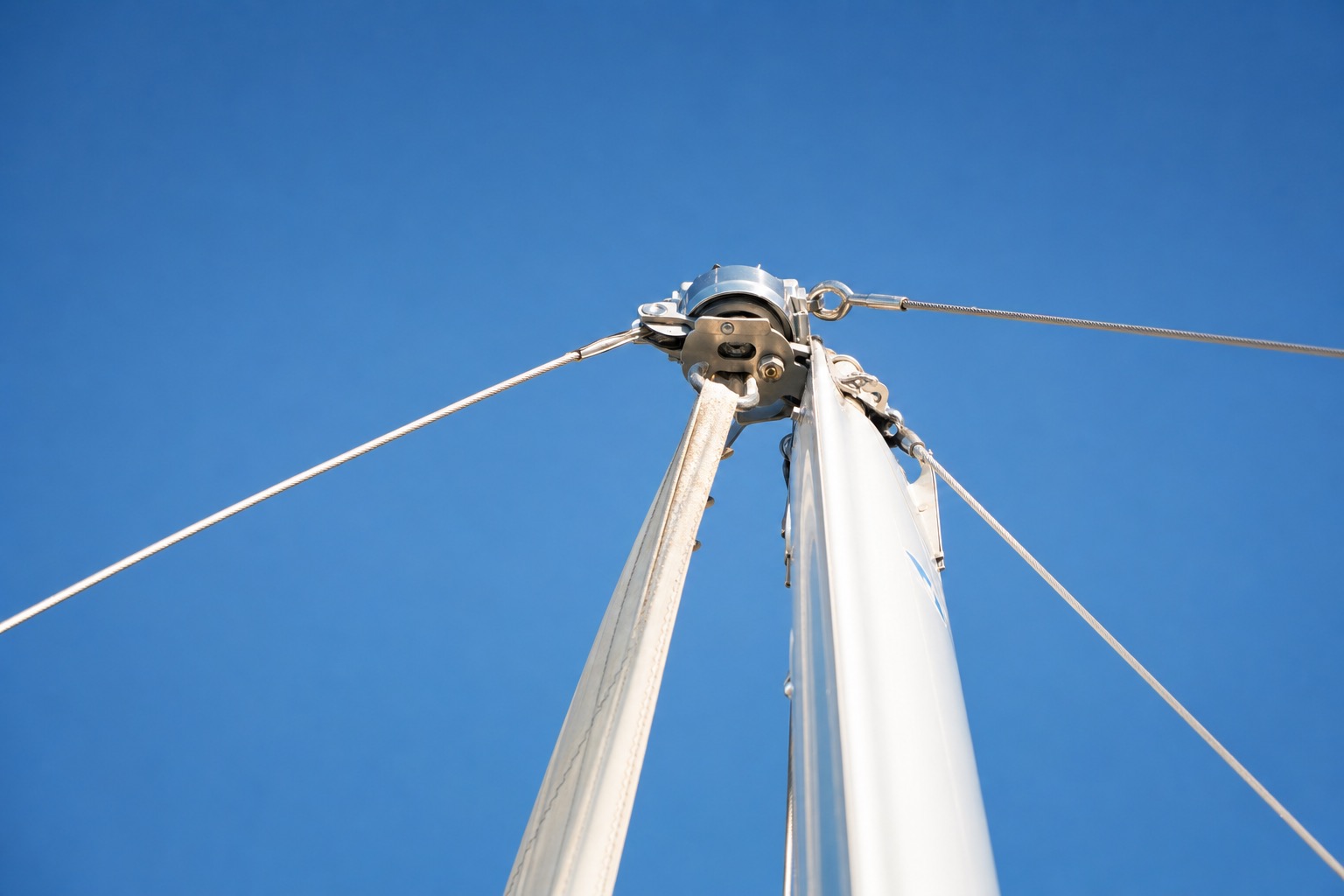
Every furling genoa has a small stretch of exposed foil between the masthead sheave and the top swivel. That gap exists on purpose, it lets the swivel travel up and down slightly as the sail stretches and the rig works. The problem is that the halyard also passes through that gap on its way down to the sail, and if the angle between the halyard and the foil is too shallow, the halyard doesn't fall cleanly to the swivel. It drifts sideways, catches against the rotating foil, and on the next furl or unfurl it gets pulled around the extrusion. One wrap doesn't sound dramatic. Three or four wraps, and the halyard is welded to the foil under load, the swivel can't turn, and the sail is jammed exactly when you need it to come in.
The three things that actually cause it
Halyard wrap is not random bad luck. It comes down to three factors, usually in combination.
Lead angle. Manufacturers want to see at least 7 to 10 degrees between the halyard and the forestay where the halyard exits the mast. Masthead rigs are the usual culprits here, because the sheave sits close to the forestay attachment and the angle is naturally shallow. If you swapped to a genoa with a shorter luff than the sail it replaced, the swivel now sits lower and the angle gets even shallower, a detail sailmakers rarely flag when they cut a new sail.
Worn or dirty swivel bearings. A swivel that doesn't spin freely fights the halyard instead of letting it settle straight down. If your furler has felt increasingly stiff at the top over the past season or two, that's often the same bearing wear that also causes the furler to stick or jam lower down, just showing up as wrap instead.
Halyard tension. Too loose and the halyard has slack to drift sideways into the gap. Keep it snug, not maximum tension, snug, every time you hoist, and check it again after the sail has stretched in the first hour of sailing.
How Furlex, Harken, Profurl and Facnor each deal with it
Every major system takes a different approach to keeping the halyard away from the foil, and it's worth knowing which one you have.
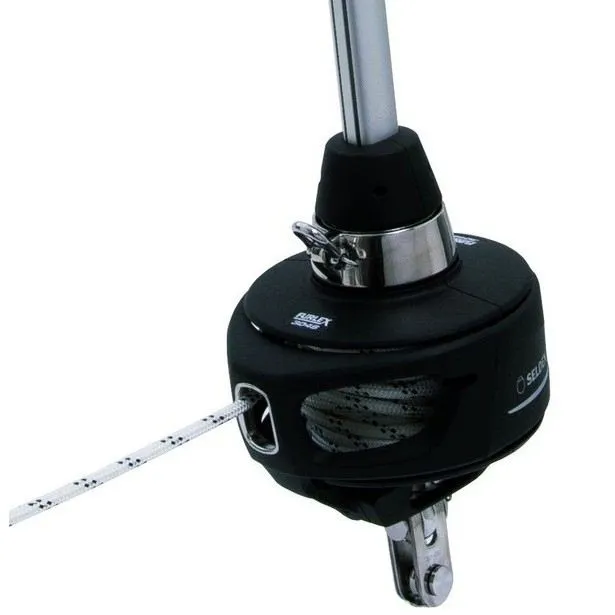
Seldén Furlex ships with a halyard restrainer as standard in the kit. It's a small deflector that mounts on the mast a short distance below the halyard exit and pushes the halyard down and out at the correct angle before it reaches the foil. If you own a Seldén Furlex and it's still wrapping, check that the restrainer is actually installed and correctly positioned, not every boat that changed hands still has one.
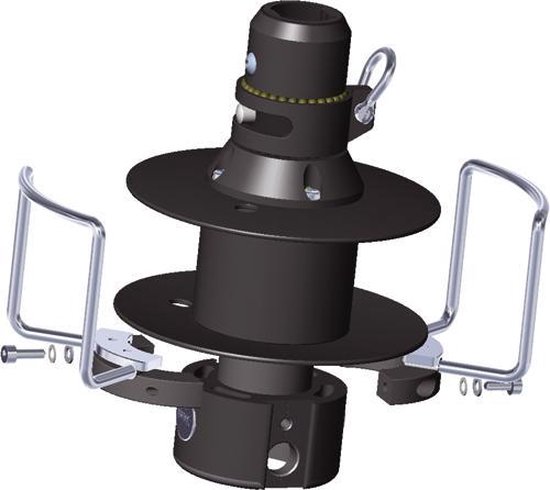
Harken MKIV systems don't include a restrainer in the base kit, it's sold separately as an accessory. On a Harken MKIV System, that's the first thing to add if you're getting occasional wraps, well before assuming the swivel bearings need replacing.
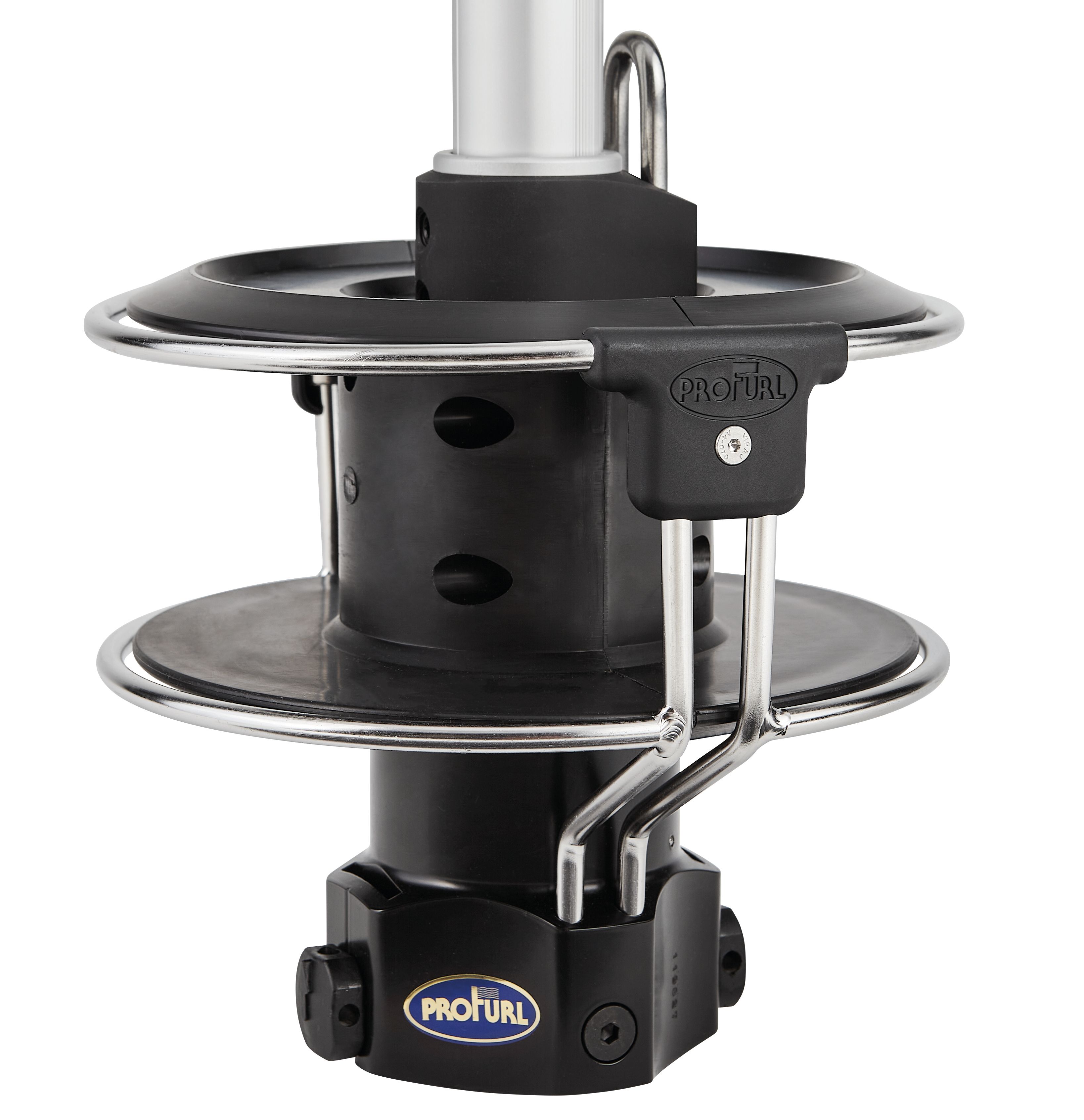
Profurl mounts a black plastic wrap preventer directly onto the forestay wire, just above the top swivel. It has to be clamped tightly. A loose or slipped wrap preventer on a Profurl R-System is a common, easy-to-miss cause of a wrap that "just started happening" after a rig tune.
Facnor takes a different approach entirely: a rotating disc sits at the top of the foil extrusion, wide enough that the halyard can't get between the foil and the forestay in the first place. On a Facnor LS System, if the disc is missing or damaged, that's usually the reason wraps started.
At 123Furling, the pattern we see most often is a system that came with the right hardware from the factory, but the restrainer or wrap preventer got left off during a re-rig, a mast unstepping, or a rigger swap and nobody put it back.
Checking your own setup this weekend
Hoist the sail fully and look up at the gap between the sheave and the top swivel. You want to see the halyard running down at a clear angle toward the mast, roughly a hand's width off the foil, not falling straight down parallel to it. If you can't tell from deck level, a phone photo zoomed in afterwards usually settles it. While you're up there, or having someone winch you up, check that at least a couple of centimetres of foil stays visible above the swivel at full hoist. If the swivel is riding right up against the sheave box, there's no room for the halyard to clear the foil at all.
If the angle looks tight and you don't already have a restrainer or wrap preventer fitted, that's a low-cost accessory to add before your next passage, far cheaper than a rigger's call-out to free a wrapped halyard at the dock. On 123furling.com you can check which restrainer or preventer part fits your specific system, or send your furler model to info@123furling.com and we'll confirm the right part.
If it wraps anyway, what not to do
Don't winch the furling line harder to force it through. A wrapped halyard under winch load transmits straight through to the forestay and, in the worst case, to the rig itself, that's how furler jams turn into dismastings. Ease the sheet, ease the furling line, and try alternating gentle tension on both to let the wrap unwind itself, which works more often than sailors expect. If it's genuinely stuck, drop the main to slow the boat, motor dead downwind to blanket and depower the headsail, and if it still won't clear, that's a job for someone to go aloft in harness, not for more winch handle.
A halyard that wraps once will usually wrap again under the same conditions. If you've had it happen twice, don't wait for a third time mid-passage. Compare the four systems' hardware differences in our furling system comparison, or use the product advisor on 123furling.com if you're weighing a swivel or restrainer upgrade against a full furler replacement.