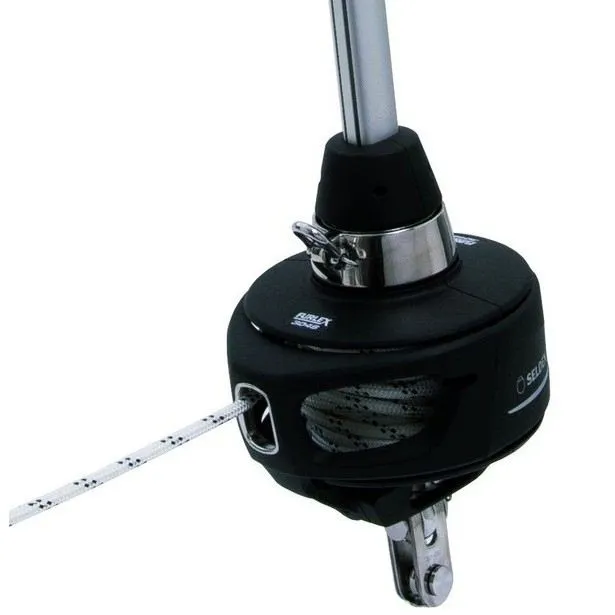


Ask five Furlex owners what size they have and you will get five different two- or three-digit codes: 104S, 204S, 304S, 404S, sometimes with a TD or an E tacked on. It looks confusing until you realize the numbers are not marketing, they are load classes. Seldén sizes the Furlex range by what the forestay and the sail actually put on the bearings, not by how long your boat happens to be on paper.
At 123Furling we get a version of the same question from owners of boats between 25 and 60 feet almost every week: "I have got a 36-footer, do I need the 204S or the 304S?" The honest answer is that boat length is the least reliable number in that sentence.
What the S-number actually tells you
The current 4th-generation range runs 104S, 204S, 304S and 404S, each built around a forestay diameter window rather than a boat length:
- 104S: roughly 22 to 30ft boats, Ø4-6mm forestay, max forestay length around 8.1m with a 4mm wire
- 204S: roughly 28 to 40ft boats, Ø6-8mm forestay, max forestay length around 10.5m with a 6mm wire, rated to 3000N (about 300kg) load
- 304S: roughly 35 to 45ft boats, Ø8-10mm forestay, rated to 5000N (about 500kg) load
- 404S: roughly 40 to 60ft boats, Ø12-14mm forestay, the heavy-duty option for bluewater displacement hulls
The jump from the 200 to the 300 series is not cosmetic. The drum grows from around 186mm to 216mm, the foil section grows from 31x21mm to 39x27mm, and the load distributor that spreads furling force across the bearings is a different part entirely. You are not buying a bigger badge, you are buying a physically stronger unit, and that shows up directly in the load rating.
Why forestay diameter beats boat length when sizes overlap
Every size band overlaps the next by several feet, and that is where owners get it wrong in both directions. A rigger on the YBW forum worked through exactly this with a Contest 36 ketch owner deciding between the 208S and 308S: Seldén rates the 208S to about 7.5 tonnes on a masthead rig, but up to 8.5-9 tonnes on a fractional rig, because a fractional or ketch-rigged boat carries a smaller foretriangle and less load per square metre of sail than a masthead sloop of the same displacement. The ketch, despite weighing more than the stated masthead limit, still worked fine on the smaller unit because the actual forestay load was lower than the number on the spec sheet suggested.
The lesson: match the furler to your forestay diameter and your rig's real foretriangle load, not to LOA. If your rigger has already quoted a forestay diameter, start there. If you do not know it yet, measure the existing wire or check your rigging plan before ordering. A furler sized one class too small binds under load and wears its bearings out early; one sized too large adds weight aloft and makes light-air furling stiffer than it needs to be.
If you would rather work from sail area and displacement than forestay diameter alone, our product advisor walks through your rig details and narrows the shortlist for you.
On-deck or through-deck: only two sizes exist
Here is something that catches out a lot of buyers: through-deck Furlex only comes in two sizes, the 204TD and 304TD. There is no 104TD and no 404TD. If you sail a 26-footer or a 55-footer and want the drum hidden below deck for a longer luff and a tidier bow, you are working within that 204/304 window whether you like it or not, or you are staying on-deck with the standard manual Furlex.
For boats that do fall in the 28-45ft range, through-deck buys real luff length: the sail tacks at deck level instead of on top of a drum sitting 15-20cm above it, which on a 35-footer can be the difference between a genoa that reaches the spreaders and one that falls just short. The trade-off is cost and a more involved installation, since the lower bearing unit sits through a hole in the deck rather than bolted on top of it.
One thing that comes up repeatedly on forums like CruisersForum and YBW: a Furlex that suddenly feels stiff to furl is rarely a bearing problem. It is usually halyard tension. Owners who ease the halyard slightly before rolling report the drum turns noticeably easier, because an over-tight halyard puts lateral load on the swivel bearings that they were never designed to carry. Worth trying before you assume the unit needs a service.
When manual is not enough: the case for electric
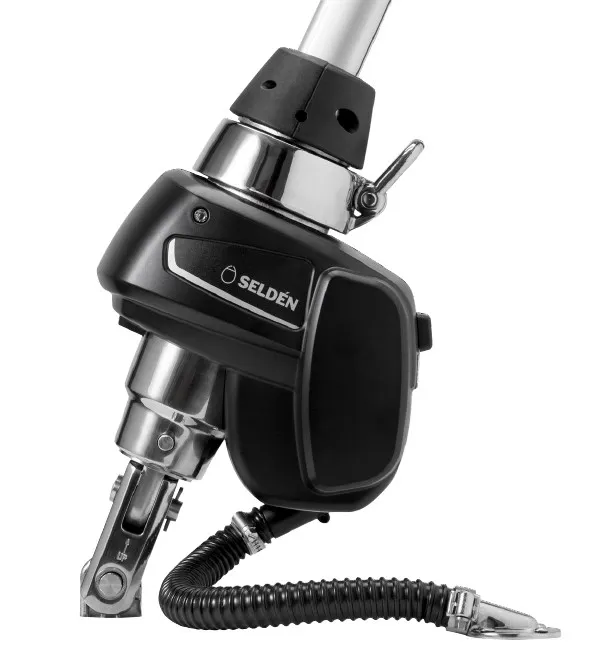
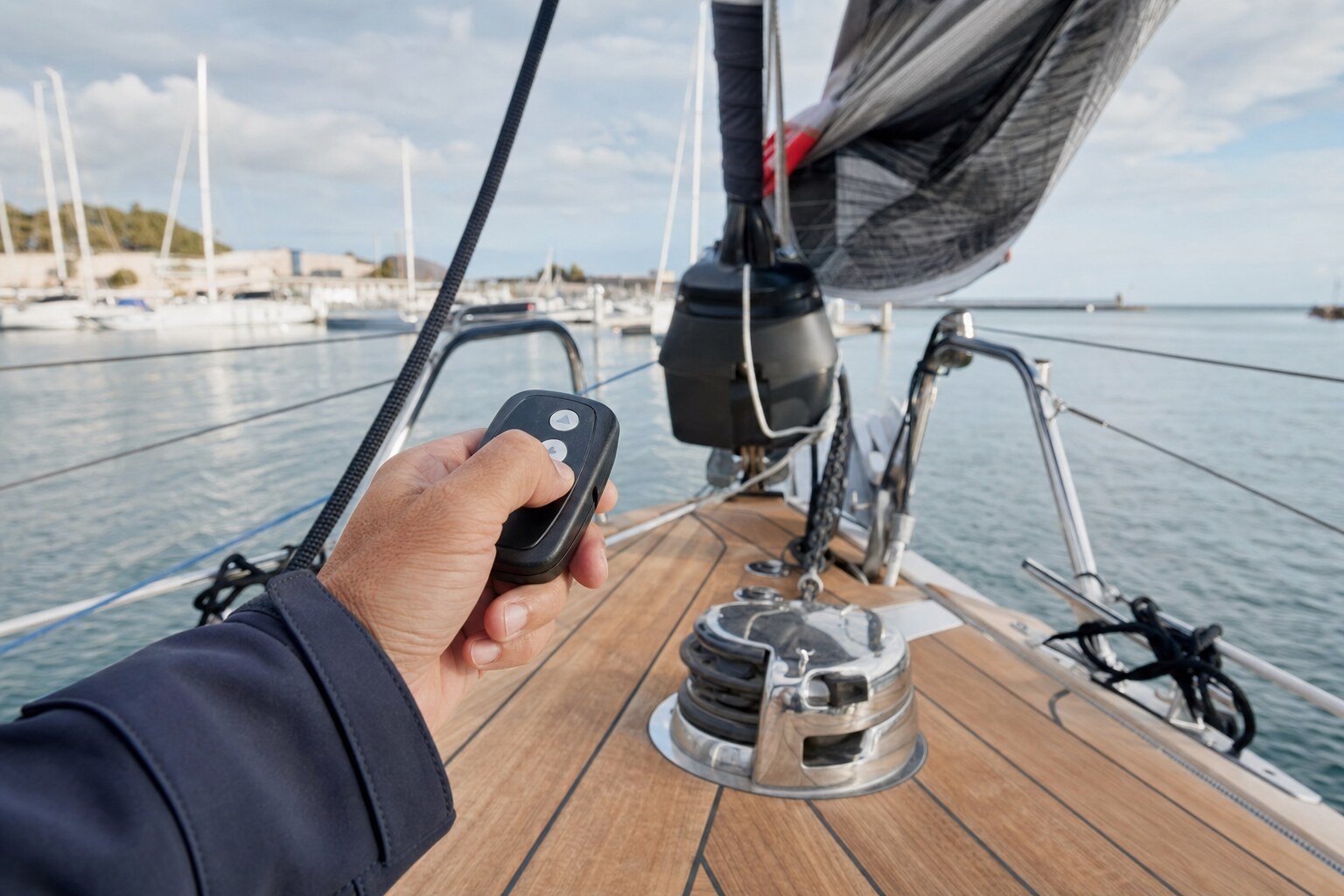
The Furlex Electric range mirrors the manual sizing almost exactly: the 204E delivers 60Nm of torque, the 304E delivers 90Nm, and the 404E tops out at 135Nm, all driven by a 42V brushless motor through a self-locking worm gear so the sail cannot unroll itself if power is lost. A full genoa furls in 25-30 seconds drawing 10-25 amps, and every Furlex Electric ships with an emergency line-driver as standard, so a flat battery does not mean a stuck sail.
At 123Furling, we see a consistent pattern in customer conversations: owners under about 35 feet almost never need electric, a 204S furls comfortably by hand even in a breeze. Past 40 feet, especially with a genoa over 40m² or a shorthanded crew, the case for electric gets strong fast, less because the manual system cannot do the job, and more because winching in a stiff line at the rail in 20 knots gets old after the second season. If you already own a manual Furlex and are weighing the upgrade, we have written a separate breakdown of what converting to electric actually costs, and if you are choosing specifically between the 204E and 304E, that comparison is covered in detail in our 204E vs 304E guide.
What getting the size right actually costs
On 123furling.com, the manual on-deck Furlex starts around €800 for a 104S configuration and runs up to roughly €8,650 for a fully specified 404S kit with the longer forestay and heavier terminals. The through-deck version starts higher, from about €2,850 up to around €5,750, since you are limited to the 204TD/304TD window but paying for the below-deck bearing housing either way. Electric starts at roughly €3,440 for a 204E and reaches about €7,880 for a 404E, and through-deck electric runs from around €4,100 up to €9,420.
Buying one size too small to save a few hundred euros is the expensive mistake. A 204S pushed past its load rating wears its ball races out in two or three seasons instead of ten, and by the time the drum feels rough or the sail will not roll evenly, you are replacing bearings on a system that should have had another decade in it. Sizing right the first time, even if it means the 304S instead of the 204S, is cheaper over the life of the boat.
Not sure which forestay diameter your boat actually needs? Send your rig details to info@123furling.com or run them through the product advisor, and we will confirm the right Furlex before you order.