

Adding a furler to the inner forestay on a cutter rig looks like a simple upgrade on paper: buy a small furling unit, bolt it to the stay, done. Then you tack for the first time and the genoa sheet catches on the furled staysail, or the halyard starts slapping against the headstay halyard in a crossed pattern nobody warned you about. Riggers rarely spell this out because every cutter is rigged slightly differently. Here's what actually trips people up, based on what cutter owners report once the unit is already bolted on.
How far apart the two stays actually need to be
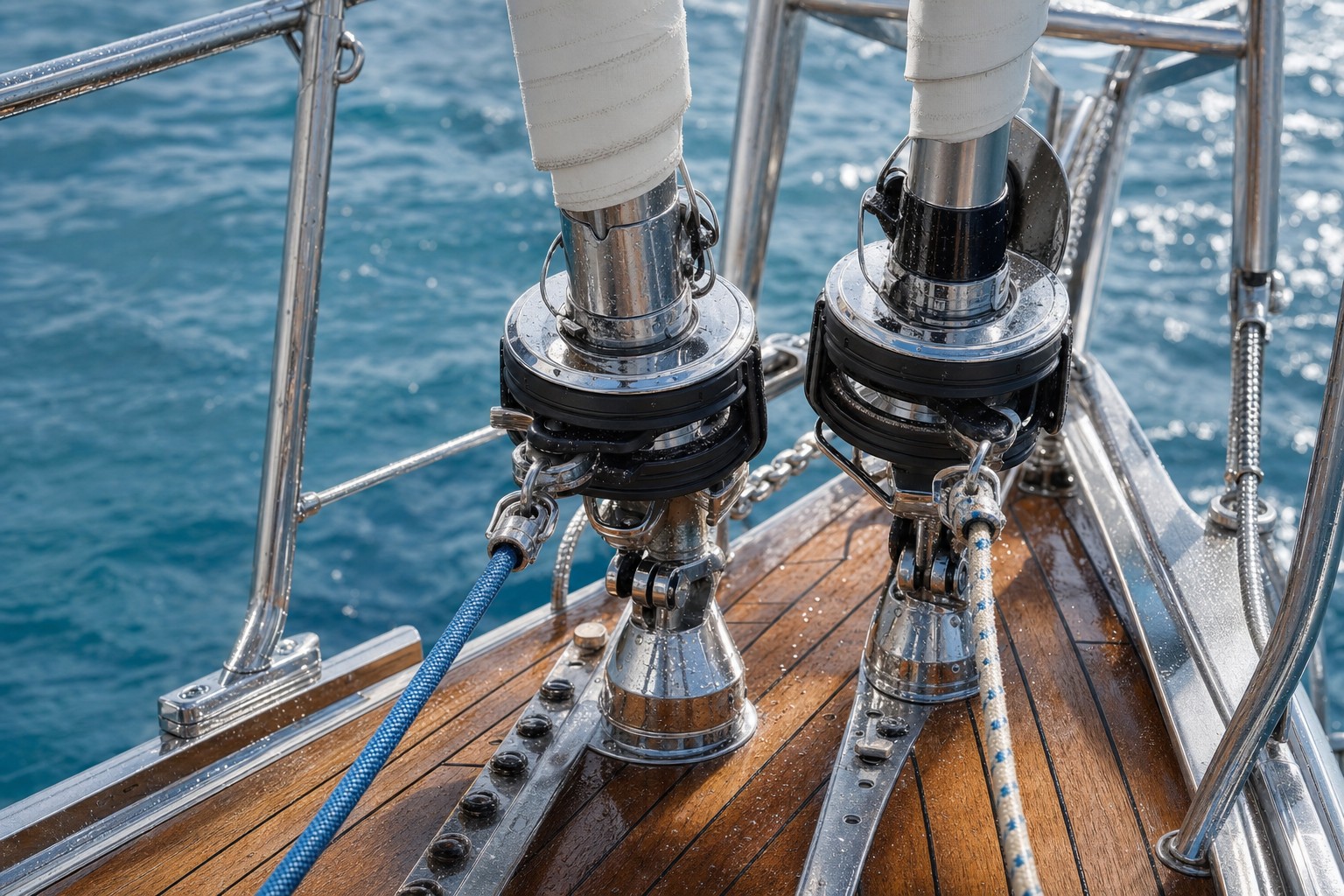
There's no universal formula for this, and any rigger worth hiring will tell you the same thing: the structural load path (chainplate position, mast tang, running backstay geometry) decides where the inner stay terminates, not a rule of thumb. That said, a few real numbers help you sanity-check a proposal. Sailors who've retrofitted a second furler behind an existing genoa furler report mounting the new drum roughly 20 to 25cm (8 to 10 inches) aft of the first one, measured at deck level. The wider "solent stay" convention many cutter conversions use puts the inner stay about a foot aft of the headstay at the deck, running near-parallel to it and terminating at the mast not far below the top, rather than well down the panel where a true cutter staysail stay usually lands.
At 123Furling we get asked this every season by owners converting a sloop to a cutter or adding a removable inner stay: measure the furler unit you're actually buying, not a spec sheet number, because drum diameter and lower bearing height vary between a Seldén Furlex and a Facnor or Profurl equivalent, and that's what determines whether your genoa sheet clears the new hardware on a tack.
Where the drum fights with your anchor or bow roller
This one gets missed constantly because nobody test-fits an inner-stay furler against a deployed anchor. On a Twister Class boat, an owner had to measure the swept radius of the anchor shank as it came up over the bow roller and mount the drum high enough to clear it, then discovered no manufacturer sold an extension piece for that exact gap. The fix was a custom extension machined from 25mm 316 stainless bar. Before you order a furler for the inner stay, walk your anchor up and down over the roller with a tape measure in hand and check where the drum will actually sit, not where the brochure photo shows it.
Halyard wrap gets worse with two stays this close
Halyard wrap around the top of a furler foil is already one of the most common furling failures, and putting a second stay close to the first makes it more likely, not less. Two problems compound: the staysail halyard needs a steep enough lead angle (aim for at least 7 to 15 degrees between halyard and stay) to avoid wrapping the swivel, and with two headstays a few decimetres apart, the genoa and staysail halyards can start rubbing against each other in a blow, which chafes both and distracts from noticing an actual wrap starting. We cover the mechanics of preventing and fixing this failure in more depth in our halyard wrap guide, which applies just as much to a staysail furler as to a genoa unit.
The tacking problem the brochure doesn't mention
This is the complaint that shows up in almost every cutter-rig forum thread once someone actually sails the boat: the genoa or yankee clew catches on the furled staysail during a tack, because the sail has to pass a second stay it didn't have before. There's no single fix, but experienced cutter sailors converge on three approaches depending on conditions. Furl the staysail completely before a series of tacks in confined water. Let the genoa back against the staysail for a beat and sheet it home once it clears, which works fine short-handed once you're used to the delay. Or, in genuinely short-tacking conditions like a narrow channel, just strike the staysail and stow it rather than fighting it on every tack. None of this is a hardware problem. It's a rig you now sail slightly differently, and it's worth practising in open water before you need it in a crowded anchorage entrance.
Furling line jamming on a small drum
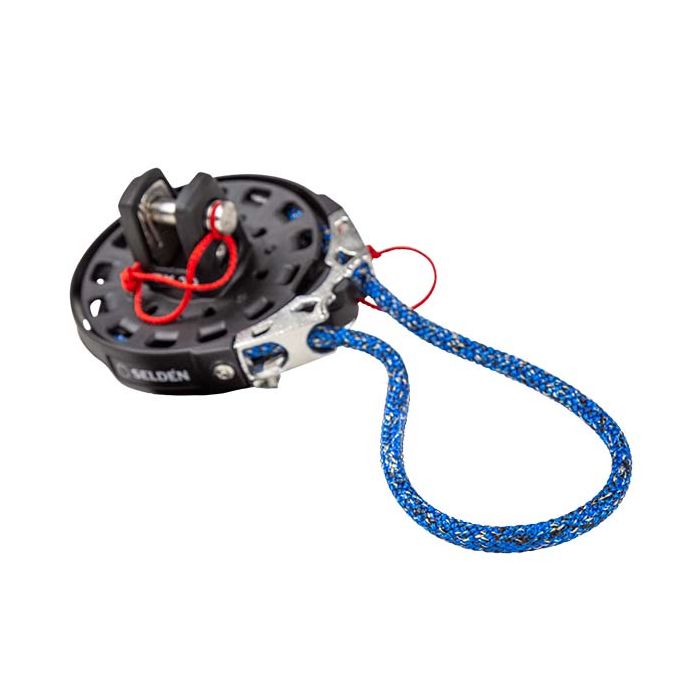
Smaller staysail furlers jam more easily than a genoa furler's drum simply because there's less room for the line to spool cleanly. The classic symptom is the furling line bunching at the top of the drum instead of laying flat, and it's almost always a lead angle problem rather than a defective unit: too little halyard tension lets the sail (and the load on the drum) shift, too much sheet tension pulls the line off its natural lay. Adding halyard tension, easing the sheet slightly during the last few turns, and confirming the head swivel spins freely under load solves it in most cases. Getting the furling line diameter right for the drum size also matters more on a small unit than a large one; our guide to choosing furling line diameter and material and our breakdown of which lead block goes where both apply directly here.
Furl it, or keep it on hanks for a storm jib
If the inner stay is there specifically for a storm jib, think carefully before furling it permanently. Forum consensus among offshore sailors is fairly consistent: a hank-on storm jib gets rigged fresh every time you actually need it, with a sail built for exactly that load, and there's nothing to jam or wrap when it matters most. A furled staysail sacrifices some heavy-air shape compared to a hanked sail unless you specify a padded luff and stiffer cloth when you order it, and it adds one more piece of rotating hardware exposed on the foredeck in the conditions where you're least keen to be up there fixing something. Plenty of cutter owners run both: a furler for the everyday working staysail in 15 to 25 knots, and a hanked storm jib kept below for anything worse.
Which furler actually fits a small staysail
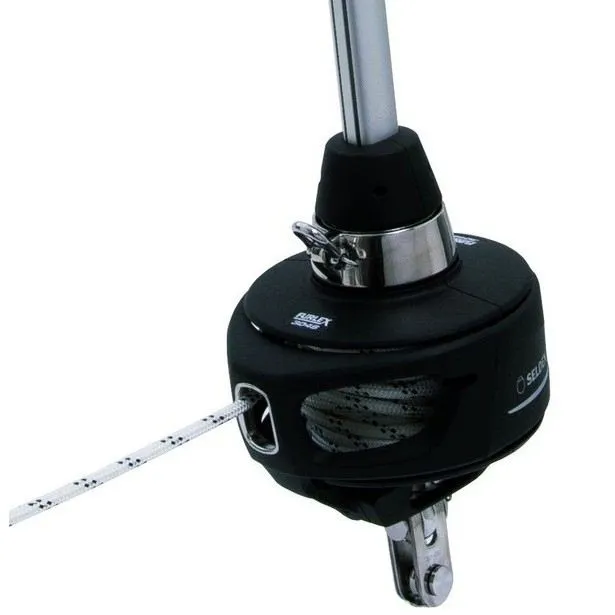
Facnor, Profurl and Harken all build dedicated small/structural ranges for exactly this job (Facnor's STG/STB/FLT/STK line, Profurl's ProAm, and Harken's separate staysail furling system built around 4 to 6mm line), but none of those are stocked as staysail-specific units in the 123Furling catalogue right now. The practical in-stock option for a manual inner-stay furler is the Seldén Furlex at €799.80, the smallest and most affordable structural furler we carry. It doesn't need the higher SWL rating you'd size for a genoa on the main headstay, and its stainless ball-bearing drum and "free turn" halyard function work the same way at staysail scale as they do on a full-size genoa. Pair it with the right diameter furling line for the smaller drum rather than reusing whatever's left over from the genoa furler; that mismatch is behind a good number of the jamming complaints above.
Not sure whether your cutter actually needs a furler on the inner stay, or whether hank-on still makes more sense for your sailing area? Use our product advisor with your stay spacing and typical conditions, or email info@123furling.com and we'll tell you what actually fits.