

The first warm Saturday of the season, you pull the genoa out of the sail bag, shackle on the halyard, and start hauling. Three feet up the mast, the luff tape stops dead. You haul harder. Nothing. Somewhere on the dock, a neighbour mutters that it "happens every year." It does, and it's almost never the furler that's actually broken.
It's usually the prefeeder, not the foil
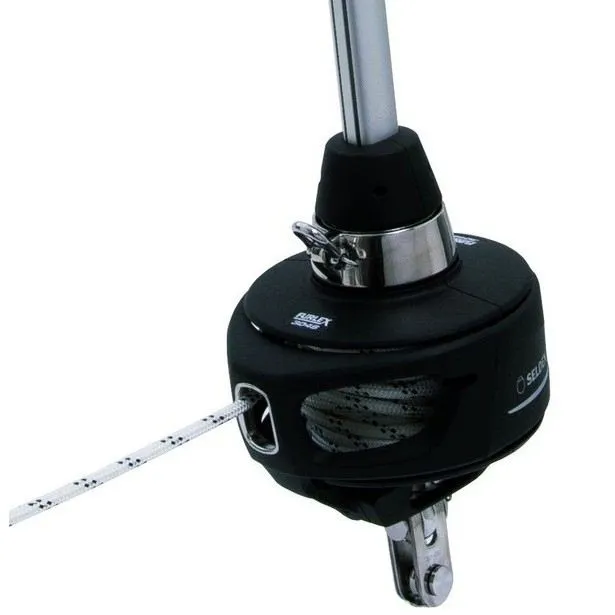
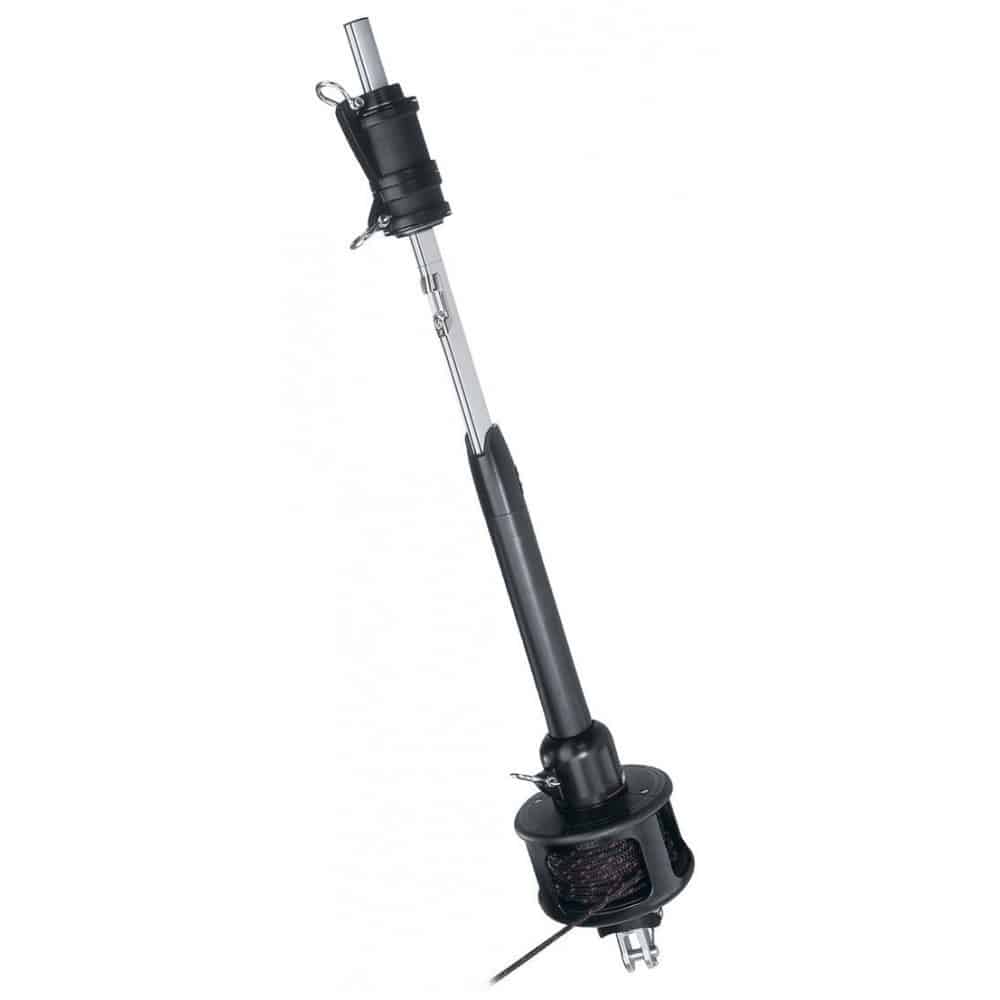
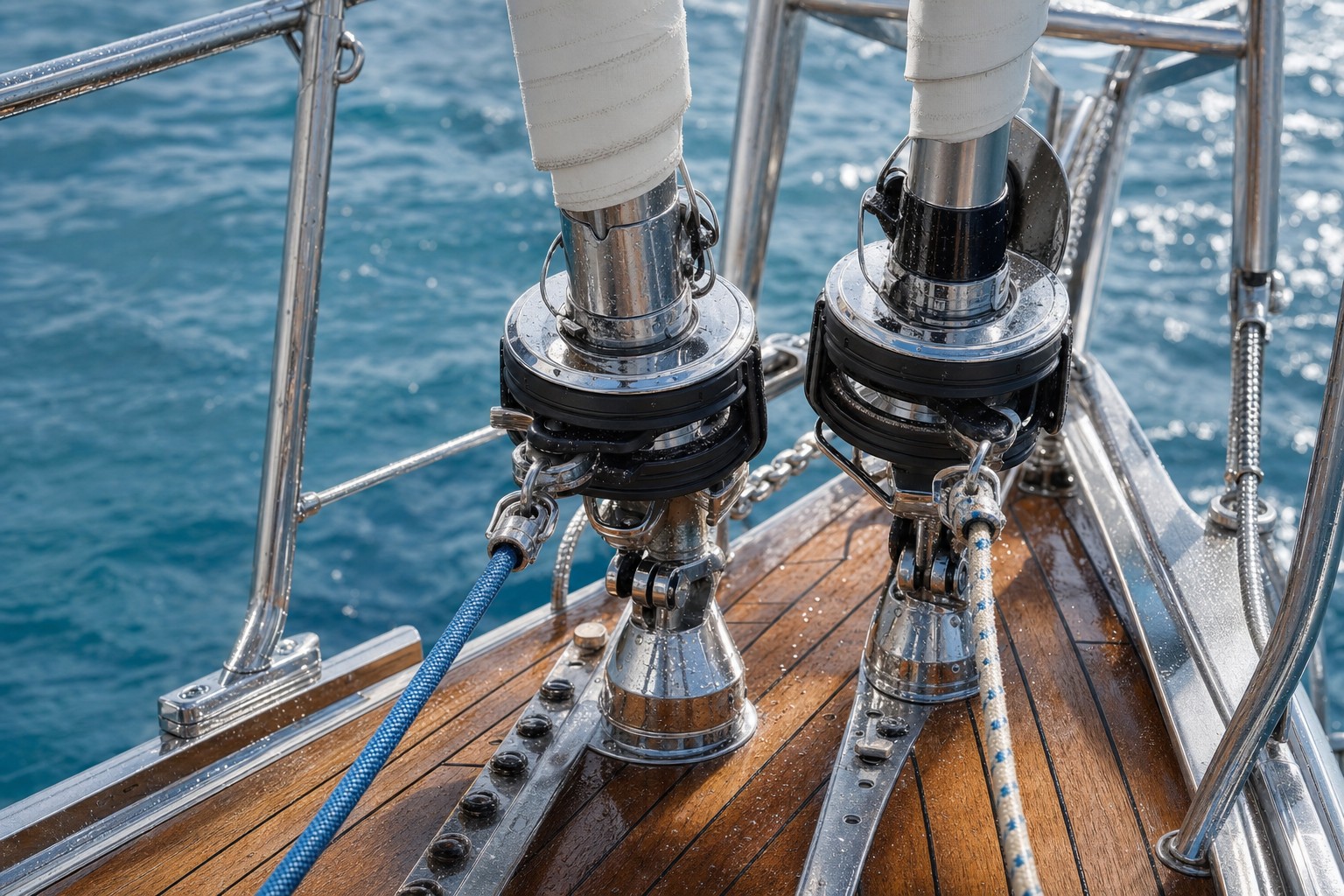
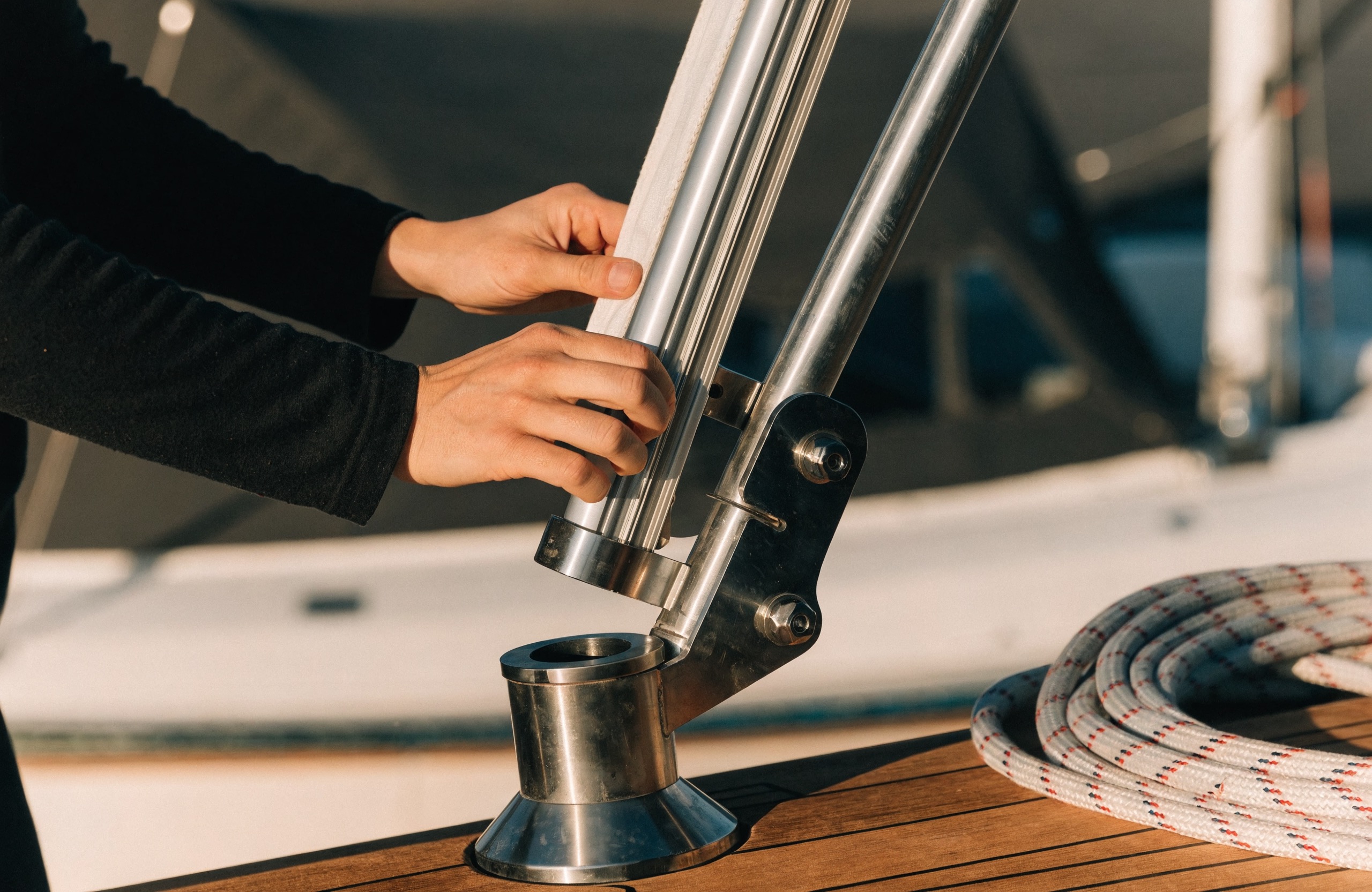
Most genoa jams during hoisting happen at one specific spot: the prefeeder, the small fitting mounted just above the drum that aligns the luff tape before it enters the groove in the foil. Seldén ships a prefeeder as standard on every Furlex kit. Facnor sells a separate pre-feeder for the LX and RX ranges that bolts onto the bottom section. Harken's MKIV uses a stainless steel feeder ring rather than a full-length open groove, which is stiffer to thread but less prone to snagging once you know the angle it wants.
If your sail stops right at deck level, the tape isn't jammed inside the foil, it's hitting the feeder at the wrong angle. Ease the halyard a few inches, straighten the sail directly in front of the foil rather than off to one side, and try again slowly. Most "stuck furler" calls turn out to be this ten-second fix.
Why last year's sail suddenly doesn't fit
If you've just bought a secondhand genoa, or had a new one made without specifying your exact furler, the luff tape itself may be the problem. Tape width isn't universal. Seldén, Harken, Facnor and Profurl each cut their grooves to slightly different tolerances, and a tape sized for one foil is not guaranteed to slide freely through another, even though both look like similar plastic tape at a glance. A loft that fits a used sail to your boat should always cut back the tack and check the tape against your actual foil, not just against the forestay length.
At 123Furling we get this question constantly from customers who've bought a secondhand boat: the previous owner's furler and the new genoa simply weren't matched. If you're replacing a furling system rather than a sail, our product advisor checks compatibility against your existing sail dimensions before you buy.
The two-person trick that saves you a rigger call
Feeding a genoa single-handed works right up until it doesn't. With two people, one on the halyard winch and one at the tack feeding the luff tape by hand, you catch a snag the moment it happens instead of three winch turns later when the tape has already folded over on itself inside the groove. The person on the winch should stop the instant they feel resistance, not power through it. That single habit prevents most torn luff tapes.
Sailing solo, tie a short loop of webbing around the tape roughly halfway up the first metre of luff and clip it loosely to the forestay or a lifeline stanchion to keep the sail close to the foil while you climb back to the mast and haul. Some racing lofts sew this loop in as standard for exactly this reason. A simpler single-handed fix some sailmakers build in: an incomplete ring tied below the tack with a length of cord, so the luff naturally lines up with the feed slot before you start hauling. Ask your sailmaker if this is worth adding the next time the sail is off the boat for service.
Flush the groove before you blame the sail
A foil that sat outside all winter collects salt, dust and a fine layer of grit inside the groove, and that alone is enough to stop a perfectly good sail from feeding. Before the first hoist of the season, run through this five-minute check:
- Flush the full length of the groove with fresh water, working from the top down
- Wipe the groove dry with an offcut of luff tape or a clean cloth
- Apply a light coat of MacLube or silicone lubricant to the luff tape itself, not the groove
- Check the furling line drum turns freely before you start hauling on the halyard
- Confirm the UV strip faces the correct side, since a twisted sail binds a different tape edge than the one that was fitted last season
Skip anything oil-based. It attracts more dust than it repels and leaves a residue that makes the next flush harder.
When halyard tension makes it worse, not better
An overtensioned halyard pulls the swivel and sail head hard against the top of the foil before the tack has even reached the drum, which can twist the luff tape just enough to bind lower down. Hoist with light tension, get the sail all the way up, attach the tack, and only then take up final halyard tension until the wrinkles disappear. If your furler has been fighting you on hoists for more than one season, it's worth checking the halyard lead angle at the masthead too. A shallow lead angle causes both feeding resistance and the halyard wraps we cover in our guide to halyard wrap, so a fix there often solves both problems at once.
Getting up the mast if it still won't budge
If the sail is genuinely jammed part way up, inside the foil rather than at the feeder, do not winch through it. Forcing a bound luff tape can crease or tear the sail and, in the worst case, distort the foil section itself. Lower the sail fully, inspect the groove at the point where it stopped, and check for a burr, a kinked joint between foil sections, or a section of tape that's peeling. On a boat over about 35 feet this is usually a job for a bosun's chair and a second person on the halyard, not something to force from the deck.
The 123Furling team sees this most often on secondhand boats, where the new owner inherits a furler and a genoa that were never actually matched to begin with.
Between Seldén, Harken, Facnor and Profurl, feeder design differs enough that a fix on one brand doesn't always translate to another. If you're rigging a new genoa furler and want to compare how each system handles feeding and prefeeders, our Seldén Furlex and Harken MKIV System product pages list the standard fittings included with each kit. If you're installing the system itself rather than just hoisting a sail, our DIY installation guide covers the parts of that job worth doing yourself and the parts worth leaving to a rigger.
Still stuck after flushing the groove, checking the tape size and trying the two-person technique? Send us the brand, model and what you're seeing at info@123furling.com and we'll help you figure out whether it's a feeder problem or a sail problem before you book a rigger.