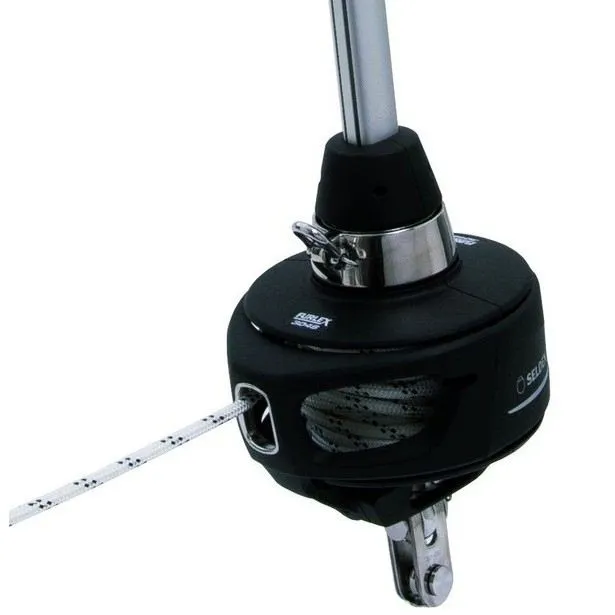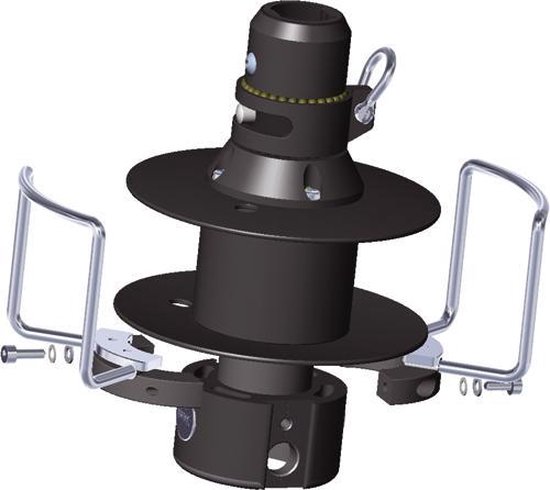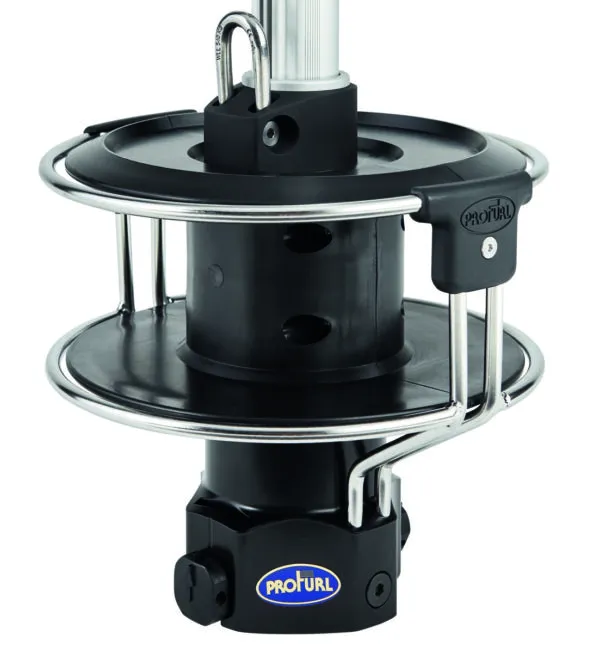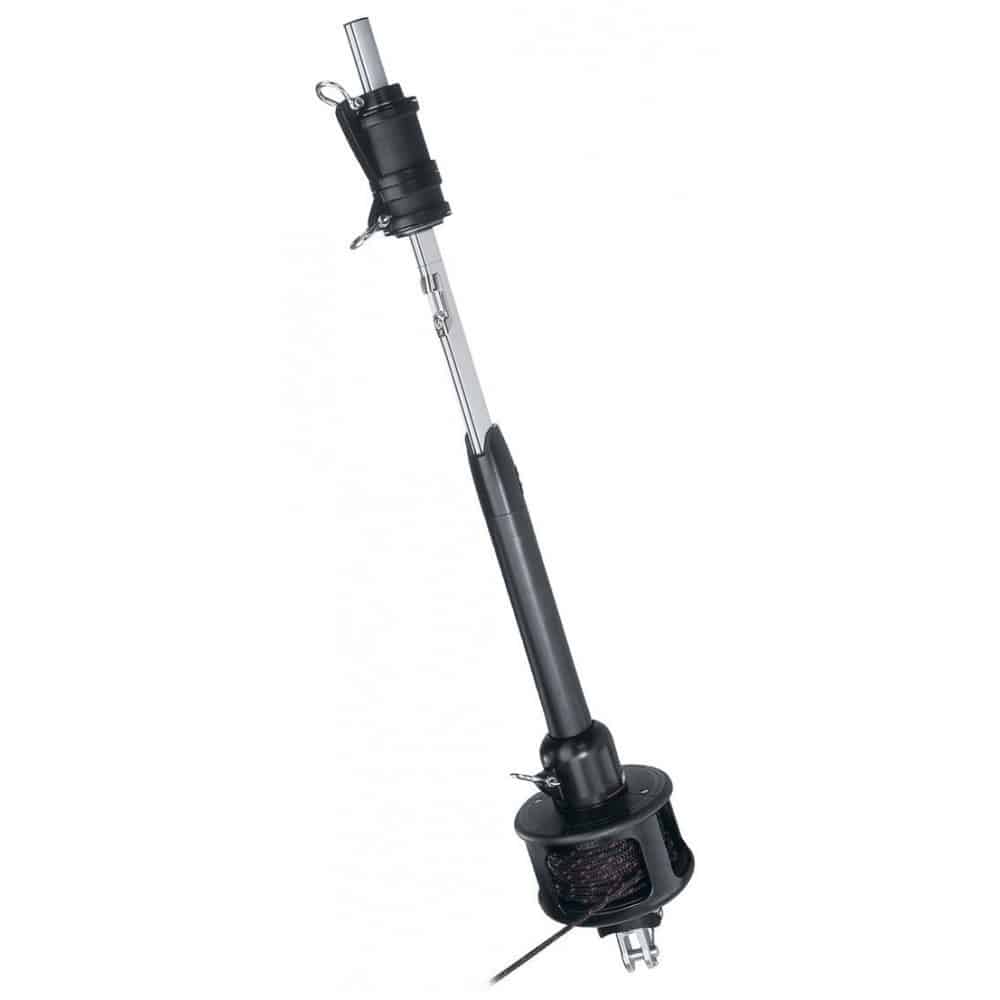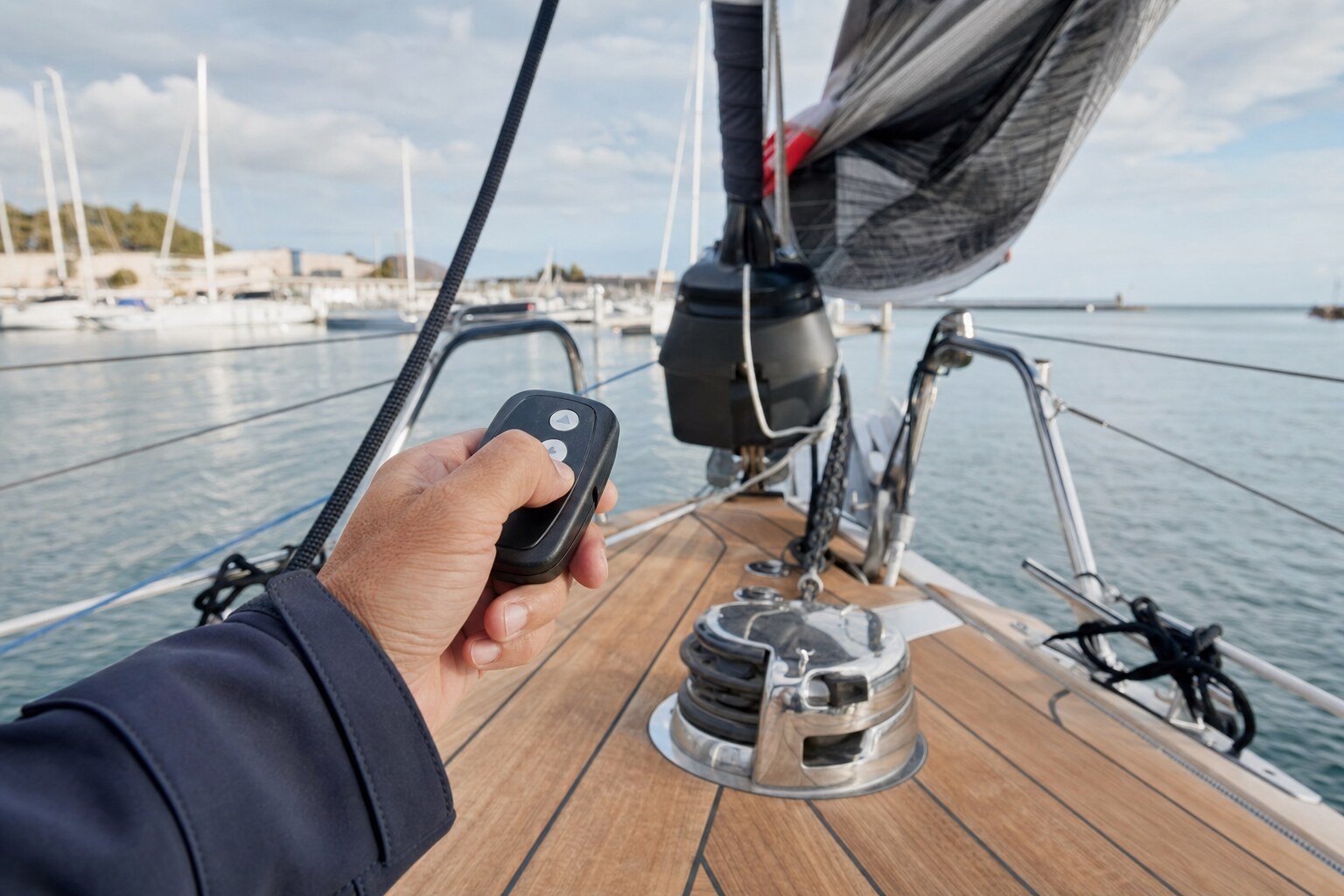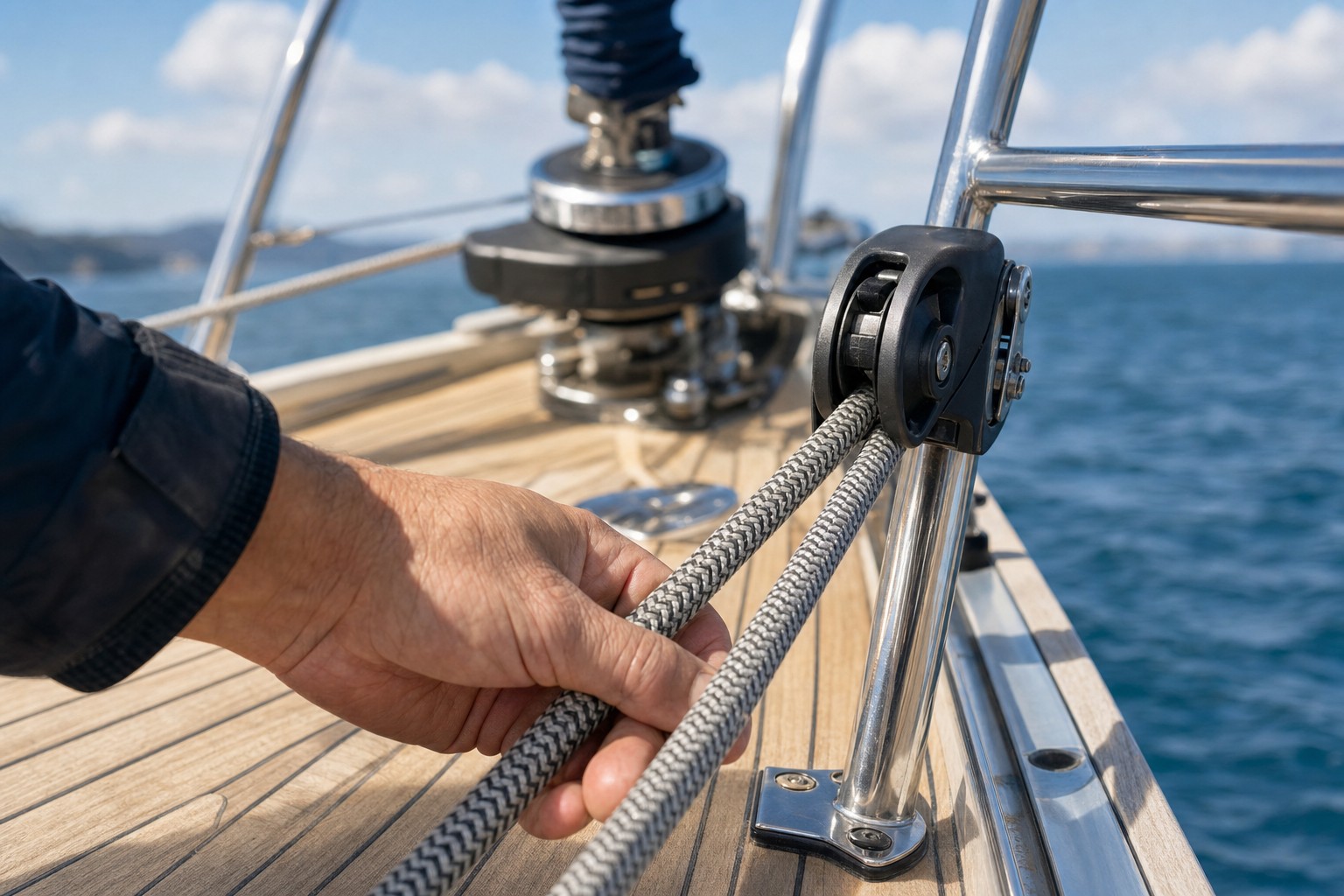


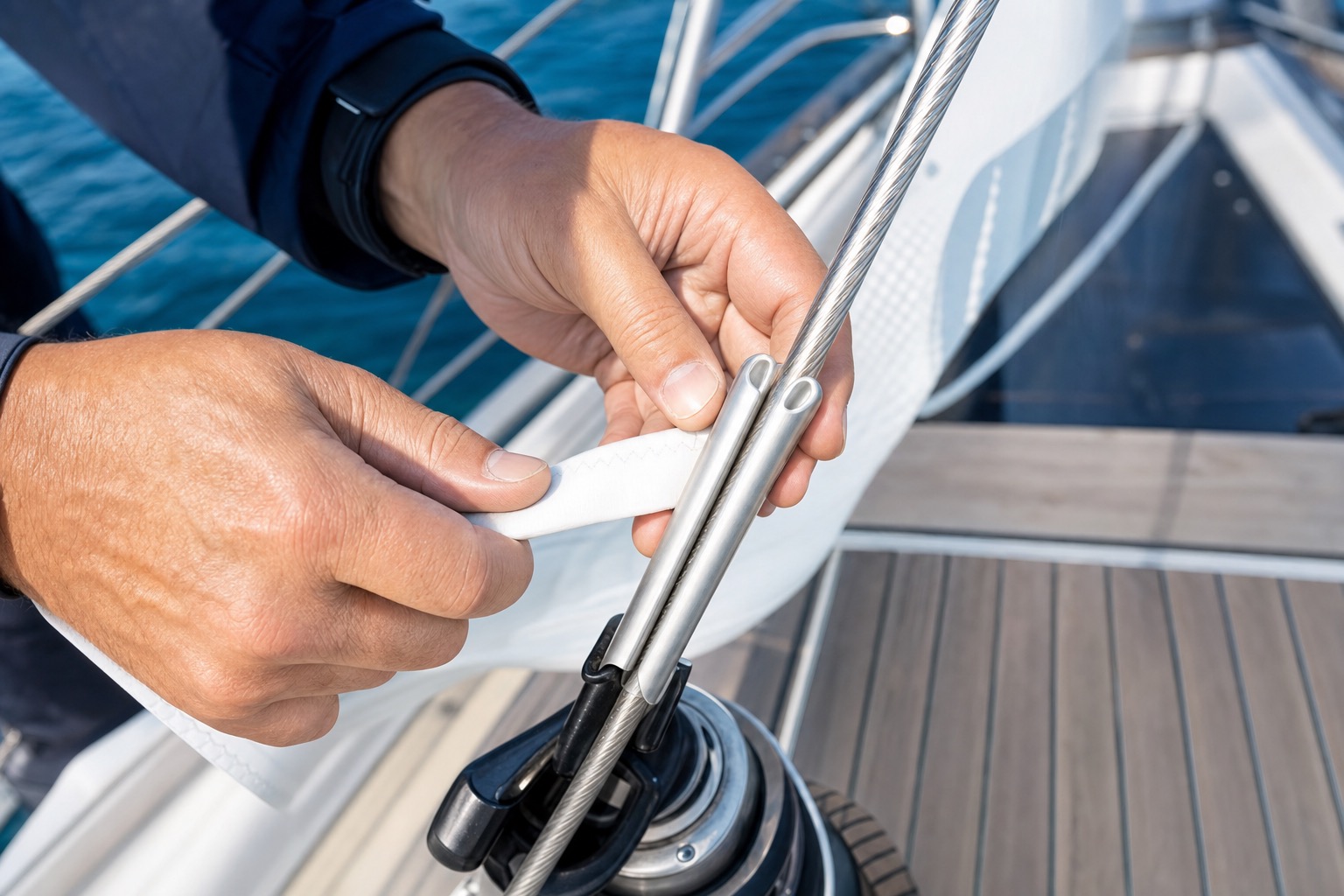
Ask a sailmaker to cut you a new genoa for a furling system and the first real question they ask usually isn't sail area or cloth weight. It's "foam luff or rope?" A lot of sailors answer that on instinct, or copy whatever the old sail had, and never find out it was actually the wrong call for their setup.
The luff tape is the part that slides into the groove of your furling foil and holds the whole sail to the forestay. Get the wrong type, or the wrong size, and you end up with a sail that won't hoist smoothly, furls into a lumpy roll, or binds halfway up the foil on a breezy Saturday when you least want to be fighting with it.
What the luff tape actually has to fit
Inside every furling foil, whether it's a Seldén Furlex, a Harken MKIV, a Profurl C-System or a Facnor LS, there's a groove sized to accept a specific tape diameter. Sailmakers size luff tape in "luff numbers": a #5 tape uses a roughly 4 mm core rope, a #6 uses a 4.8 mm core. Once that core is wrapped in Dacron cloth for the sail's luff pocket, the finished tape usually measures out at 5 to 5.5 mm.
The rule sailmakers work to is simple: the finished tape should sit about 1 mm smaller than the groove opening. Too tight and the sail won't slide, too loose and it flogs inside the foil and chafes. Older Furlex units, for example, often have a foil slot machined to roughly 6 mm, which means a 5 mm luff tape is the safe upper limit, not a 5.5 mm one that might barely fit a newer, slightly wider foil.
This is the detail that gets missed constantly: the groove size isn't fixed per brand, it's fixed per model and sometimes per production year. Two Furlex units that look identical from the cockpit can have different foil tolerances depending on when they were made. At 123Furling we tell customers ordering a replacement sail to give their sailmaker the exact furler model, not just "I have a Seldén," because "Seldén" alone doesn't tell anyone what the groove actually measures.
Foam luff or rope tape: what you're actually trading off
A foam luff is a shaped foam insert sewn into the luff pocket, tapering thicker toward the leading edge. When you partially furl the genoa to reef in a blow, that foam fills out the roll and keeps the reefed sail reasonably flat instead of baggy and full of wind-catching wrinkles. That's the entire reason it exists: better shape when the sail is rolled down to 50-70% of its full size.
The trade-off shows up when the sail is fully unrolled. The foam adds bulk right where airflow needs to be clean over the luff, and on a fully open genoa that bulk creates turbulence you wouldn't get with a plain rope luff. Racers who mostly fly the sail flat out and rarely partial-furl often skip foam for exactly this reason. Cruisers who reef down regularly on a passage, especially anyone sailing a boat over 35 feet where reefing the genoa is a normal part of managing the boat in a blow, usually find the foam pays for itself.
There's a second trade-off that doesn't get talked about enough on the spec sheet: foam luffs can trap moisture. Enclosed inside Dacron cloth on a boat that lives on a mooring or in a marina slip, a foam core that never fully dries can start to smell or, worse, break down over several seasons. Some experienced sailmakers actively steer cruising customers who sail in humid climates back toward a well-cut rope luff for this reason alone, even though it costs them a bit of reefed shape.
Why "same brand" doesn't mean "same fit"
All four major furling brands use a double-groove elliptical or near-elliptical foil these days: Seldén Furlex, Harken MKIV, Profurl C-System and Facnor LS all run a similar concept, a double groove that lets you fly a second headsail or swap sails without dropping the furled one. But similar concept doesn't mean interchangeable dimensions.
Harken's MKIV and MKIV Ocean units, for instance, share a family name but the Ocean version's foil sections are built to a heavier offshore spec, and the groove tolerances aren't identical across every unit size in the range. Profurl's C-System uses anodised aluminium double-groove foils that are dimensionally close to Furlex but not guaranteed to accept the same tape without checking. If you're replacing a furler and keeping the old sail, or replacing a sail and keeping the old furler, this is exactly where a mismatch bites you: the new part fits the boat but not the old part it's supposed to work with.
The practical fix costs nothing and takes five minutes: before you order anything, measure your own foil groove with calipers or a set of feeler gauges at the base of the foil, where it's easiest to reach, and write that number down along with the exact model and, if you can find it, the approximate age of the unit. Send that to your sailmaker instead of a brand name.
What actually goes wrong when the fit is off
A luff tape cut too small for the groove isn't usually the dramatic failure. It flogs slightly at the head and tack, chafes over a season or two, and eventually you replace the sail sooner than you should have. The more disruptive failure is a luff tape cut too tight, or a luff built too short for the foil.
A shortened luff, whether from foam bulk or a sailmaker cutting slightly conservative, can stop the top swivel from being hoisted all the way to within an inch or two of the masthead sheave. When that swivel sits low, the halyard has slack it shouldn't have, and that slack is one of the most common causes of halyard wrap around the top of the foil, the same jamming problem we covered when we looked at why furling genoas jam at the masthead. A tape that's slightly too tight in the groove creates the opposite problem: real friction hoisting the sail, which tempts people to force it, which is how luff tape webbing tears at the head.
If you've ever fought a new genoa halfway up the foil and reached for a can of dry lubricant like Sailkote to get it moving, that's usually the groove telling you the tolerance is wrong, not a technique problem. A properly matched tape slides up dry, every time, with light hand tension on the halyard.
Ordering a new sail for an existing furler, or a new furler under an existing sail, is one of the few places in this hobby where a five-minute measurement genuinely prevents a season of frustration. Not sure which luff tape spec your furler actually takes, or whether your current sail is even matched to the unit correctly? Send the model and, if you have it, the foil measurement to info@123furling.com and we'll tell you what to order.