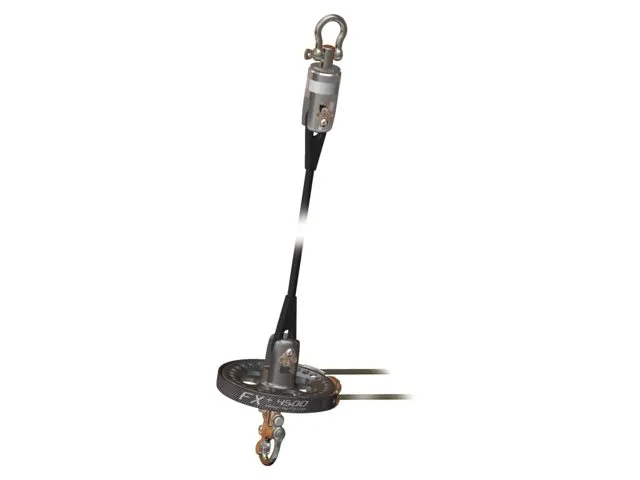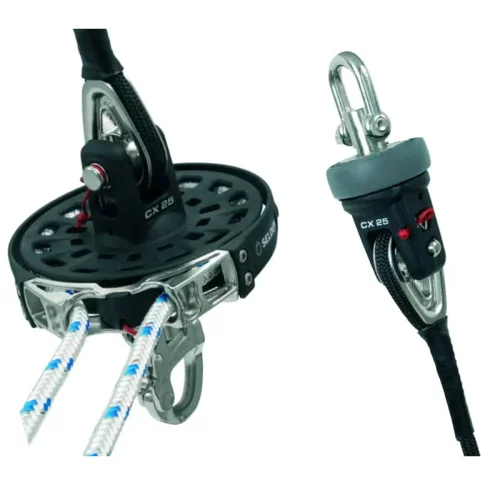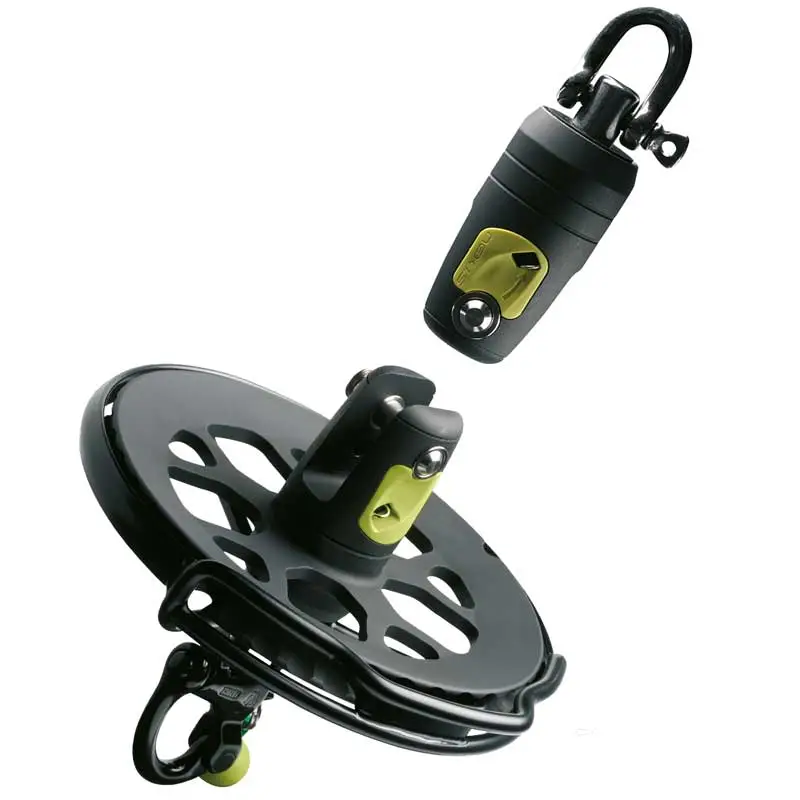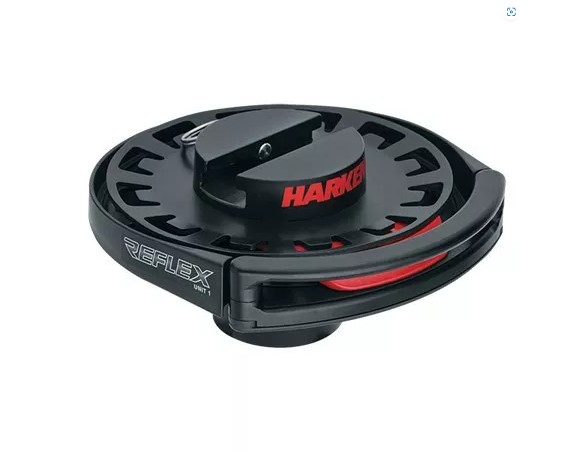



Order a genoa furler and the sizing question is straightforward: measure your forestay diameter, measure your luff length, done. Order a code 0 furler and that logic falls apart. There's no fixed forestay to bolt onto since a code 0 lives on a continuous-line drum that clips to a removable anti-torsion cable, so manufacturers can't size it by rig dimension. They size it by load instead: a Safe Working Load (SWL) or Maximum Working Load (MWL) rating in kilograms, paired with a maximum sail area. Get that rating wrong and you either overpay for a drum your rig will never load up, or you buy a furler that's working at its limit every time you unroll the sail.
At 123Furling we get more sizing questions about code 0 furlers than any other product category, mostly because the four major brands each publish their own SWL tables and none of them make it easy to compare across brands. Here's how the sizing actually works, and what the numbers mean for your boat.
Why code 0 furlers are rated by load, not by rig dimension
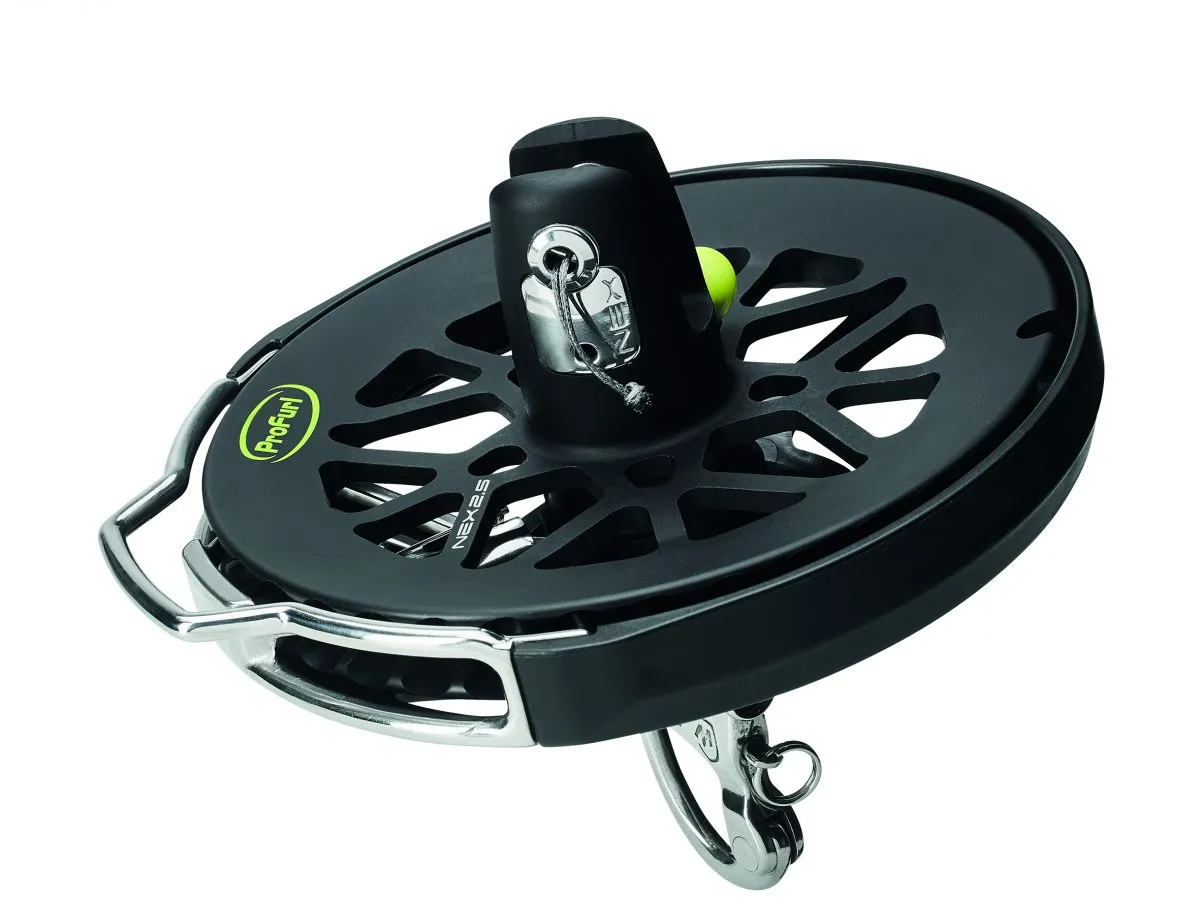
A genoa furler bolts to your forestay and stays there permanently, so its size is dictated by your standing rigging - wire or rod diameter, headstay length. A code 0 furler is a different animal. The drum sits at deck level (often on a bowsprit or tack fitting) and the anti-torsion cable running up to the head swivel is part of the sail's own furling package, not your rigging. That means the furler has to be rated for the load the sail itself generates under sheet tension, independent of what your forestay can handle.
This is also why code 0 furlers come in far more size steps than genoa furlers. Facnor's FX+ range alone spans four models between 30m² and 140m², and Profurl's NEX V2 line runs seven models up to 350m². Genoa furlers rarely need that many steps because forestay diameter clusters into a handful of standard sizes. Sail area and load do not.
How much load a code 0 actually puts on the furler
Sailors on Sailing Anarchy have worked through this with real numbers. One calculation for an 84m² code 0 in 15 knots of apparent wind put the sheet load at roughly 400kg using Harken's sheet load calculator, and a separate aerodynamic side-force calculation for the same sail landed close to 475kg. That works out to somewhere around 5 to 7kg of load per square metre of sail area in a solid 15-knot breeze, before you add any margin for gusts, an accidental broach, or a crew member grinding harder than the conditions call for.
Manufacturers build that margin in deliberately. The same forum thread noted that a typical recommended SWL for a code 0 furler on a 60-foot boat runs around 6,000kg, well beyond what the sail generates in a moderate breeze but accounting for the load spikes that happen in real sailing. That's the number you're really buying when you pick an SWL rating: not the everyday load, but the load the furler needs to survive on a bad day.
Same SWL rating, different sail area: the four brands compared
Here's where cross-brand comparison actually matters, and it's the question our 123Furling advisors field most often about code 0 systems. Take the roughly 2.5-tonne SWL tier, the size that fits most cruisers between about 34 and 42 feet, and the four brands do not agree on how much sail area that rating buys you:
- Seldén CX-25 - MWL 2,500kg, max 115m², anti-torsion cable Ø12mm, from €1,444.23
- Facnor FX+2500 - MWL 2,500kg, max 100m², anti-torsion cable Ø12mm, from €1,690
- Harken Reflex Unit 2 - MWL 2.5T, max 84m², boats 9-12m, from €1,350
- Profurl NEX2.5V2 - MWL 2,500kg, max 80m², anti-torsion cable Ø12mm, from €1,831.52
That's a 35m² spread on the same nominal load rating. If your sailmaker cuts you an 84m² code 0, the Harken Reflex Unit 2 is running at its absolute ceiling while the Seldén CX-25 has more than 25% headroom left. Neither furler is "wrong" - Harken's Reflex torsion cable is built to different tolerances than Seldén's AT-cable, which is exactly why the ratings differ - but if you compare furlers on SWL alone without checking the matching sail area, you can end up sizing tighter than you intended.
The cable diameter step that catches people out
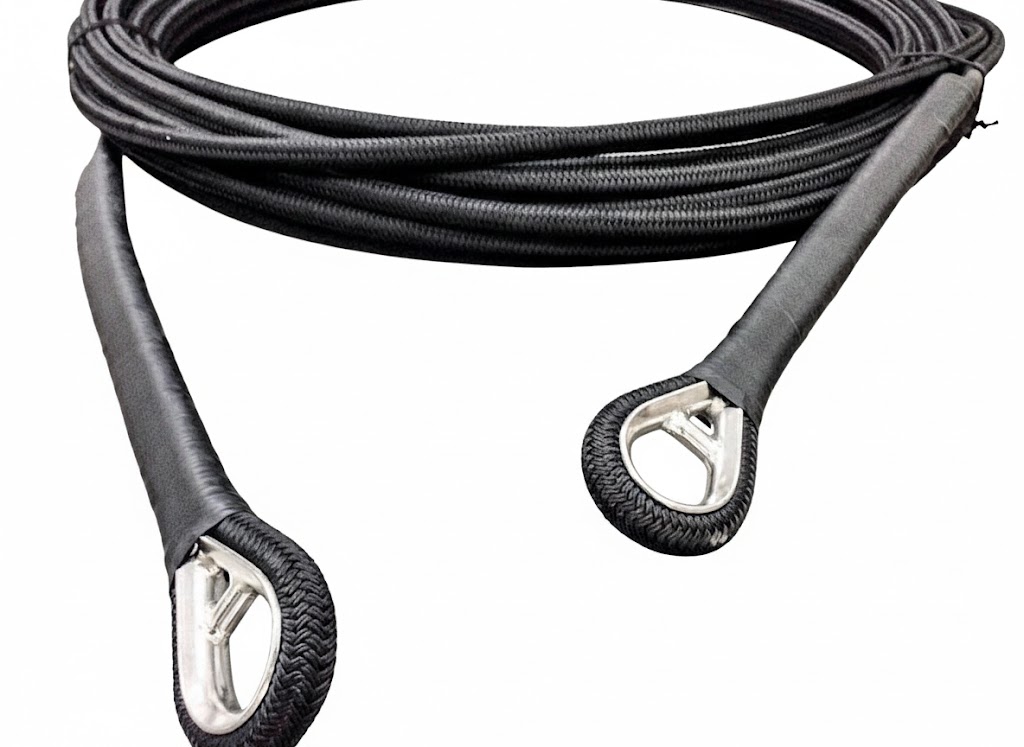
The anti-torsion cable itself scales with the furler, and it doesn't scale in a straight line. Across Facnor's FX+ range and Seldén's CX range, the cable steps from 8mm to 10mm to 12mm to 14mm as the model size goes up. Profurl's NEX range follows a similar path until the 4.0 model, where it jumps straight from 12mm to 16mm, skipping a step the other brands include. A sailor on Sailing Anarchy described exactly this kind of mismatch on a 48-footer: a furling problem traced back to a 13mm cable that should have been at least 16mm for the load it was carrying.
This matters most when you're upgrading an existing code 0 to a bigger sail, or replacing a worn anti-torsion cable and reusing the old diameter out of habit. Always match the cable to the furler manufacturer's rated diameter for your specific model, not to whatever cable came off the boat. We cover this in more detail in our guide on when you actually need an anti-torsion line and when you don't, including how to check whether your current cable matches your furler's rating.
Matching the furler to your boat in practice
As a rough starting point: boats around 30-34 feet with a code 0 under roughly 60m² sit comfortably in the smallest tier from any brand (Facnor FX+900, Seldén CX-10, Profurl NEX0.9V2, Harken Unit 1). Boats in the 34-42 foot range with 80-115m² sails land in the 1.5 to 2.5-tonne tier, where the brand differences above start to matter. Beyond 42 feet or 140m², you're into Facnor FX+4500, Seldén CX-45 or Profurl NEX4.0V2 territory, and cable diameter becomes a structural question rather than a formality.
If you sail short-handed, it's also worth looking at Profurl's V2R ratchet models, like the NEX2.5V2R, which adds a FurlAssist ratchet that locks the drum mid-furl so you can release the furling line without the sail unrolling again. It costs roughly €140 more than the standard NEX2.5V2 at the same size, a small premium for not needing a second pair of hands on the foredeck. For a full feature-by-feature look at how the four brands differ beyond sizing, our Code 0 furler brand comparison covers construction, bearings and ease of use.
Still not sure which SWL tier fits your boat and sail plan? Send your forestay length, boat length and approximate code 0 area to info@123furling.com or run it through our product advisor, and we'll match it against the actual sail area limits above rather than the boat-length rule of thumb alone.