

Ask four furler owners how often they service their gear and you'll get four different answers, and they might all be correct. The bearings inside a Seldén Furlex, a Harken MKIV, a Profurl C-System and a Facnor LS System are different enough that what one manufacturer asks you to do every year, another tells you never to touch at all. Treat all four the same way and you either waste an afternoon greasing something that doesn't need it, or leave a unit that's quietly grinding itself to pieces under the genoa.
Why "maintenance-free" doesn't mean the same thing twice
Every genoa furler has two sets of bearings that matter: the halyard swivel at the top and the drum bearing at the bottom, both letting the foil and sail spin freely around the forestay. How those bearings are built decides whether you're supposed to grease them, flush them, leave them alone, or replace them outright when they fail. Stainless steel bearings need lubrication or they gall. Torlon bearings need none, but they're not immune to salt. Sealed bearings need nothing until the seal itself gives out. Guess wrong about which type sits under your deck and you'll either dry out a bearing that needed grease, or pump grease into a system that's designed to keep it out. At 123Furling we get this question constantly from owners who bought a boat secondhand and have no idea which furler generation they've inherited, so the brand is always the first thing to check before you touch a grease gun.
Seldén Furlex: the five-minute job most owners skip
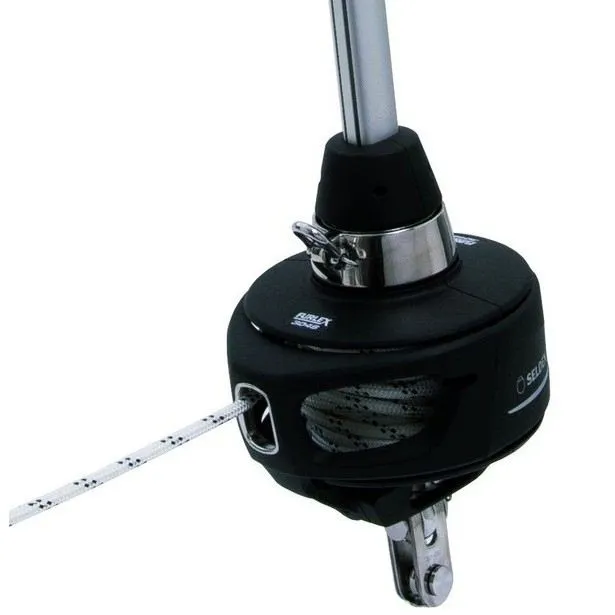
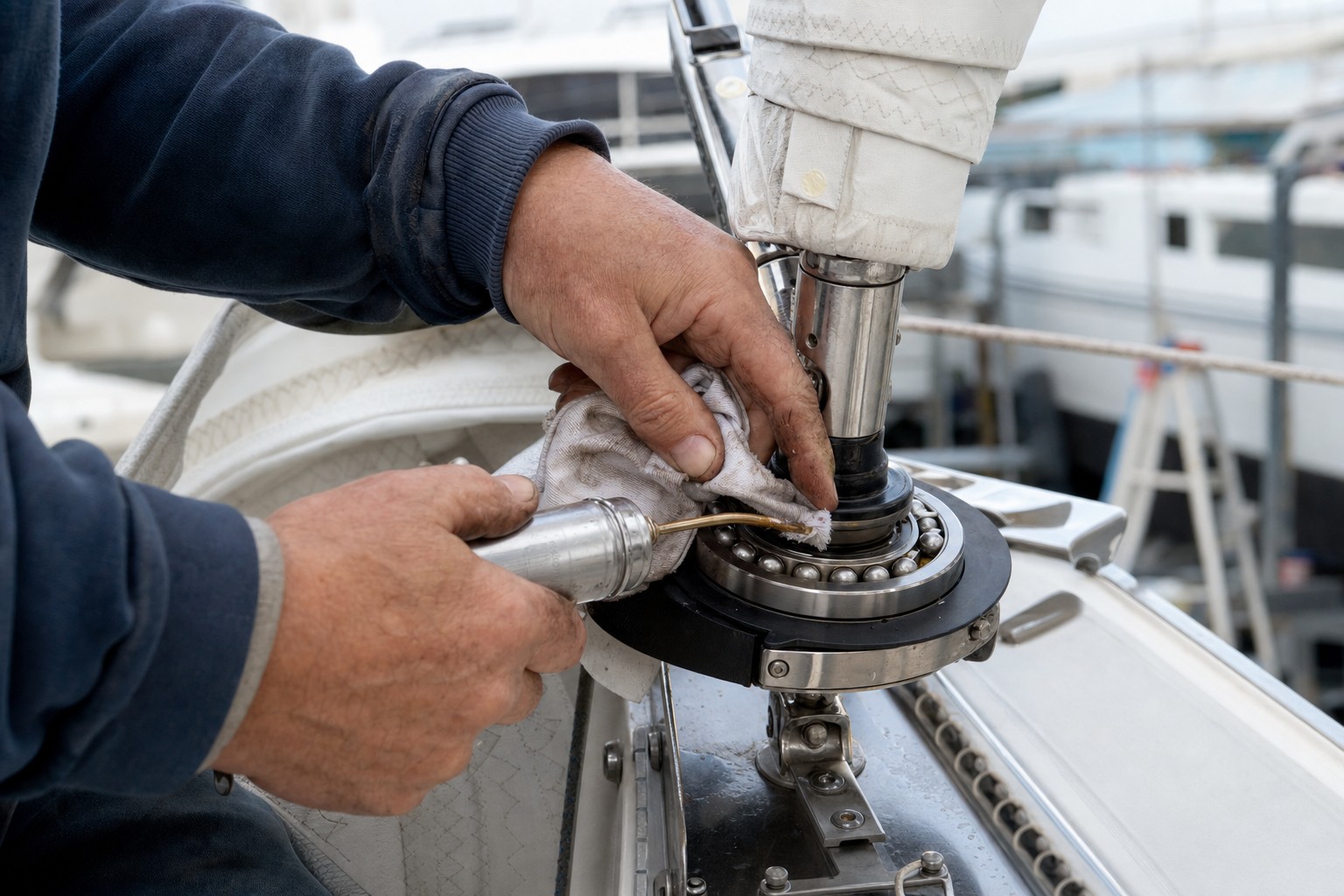
Furlex uses stainless steel ball bearings, plus roller bearings in the current generation units, running in a semi-open race against Seldén's own water-resistant grease. That open design is why Furlex needs annual attention: the manuals for the 204S and 304S ask you to confirm every rotating part still turns freely and top up the grease through the access slots if it feels dry, a job that takes under five minutes without removing the drum. On the hydraulic H-series and the electric Furlex, the job is more involved, injecting grease into the ball race gaps at the halyard swivel and the tack ring, and Seldén caps normal use at a full strip-and-reseal by a dealer every five years, sooner for a charter boat or a circumnavigation. Skip the yearly five minutes and the first symptom is stiffness at the start of the season, well before anything actually breaks. Use Seldén's own grease rather than a generic marine grease, since it's formulated to stay in place in a semi-open race instead of washing out the first time it rains. Our Seldén Furlex page lists which grease and spares fit which generation, and if you're not sure whether your unit needs the S-series routine or the more involved H-series job, that's the first thing to confirm.
Harken MKIV: nothing to grease, everything to rinse
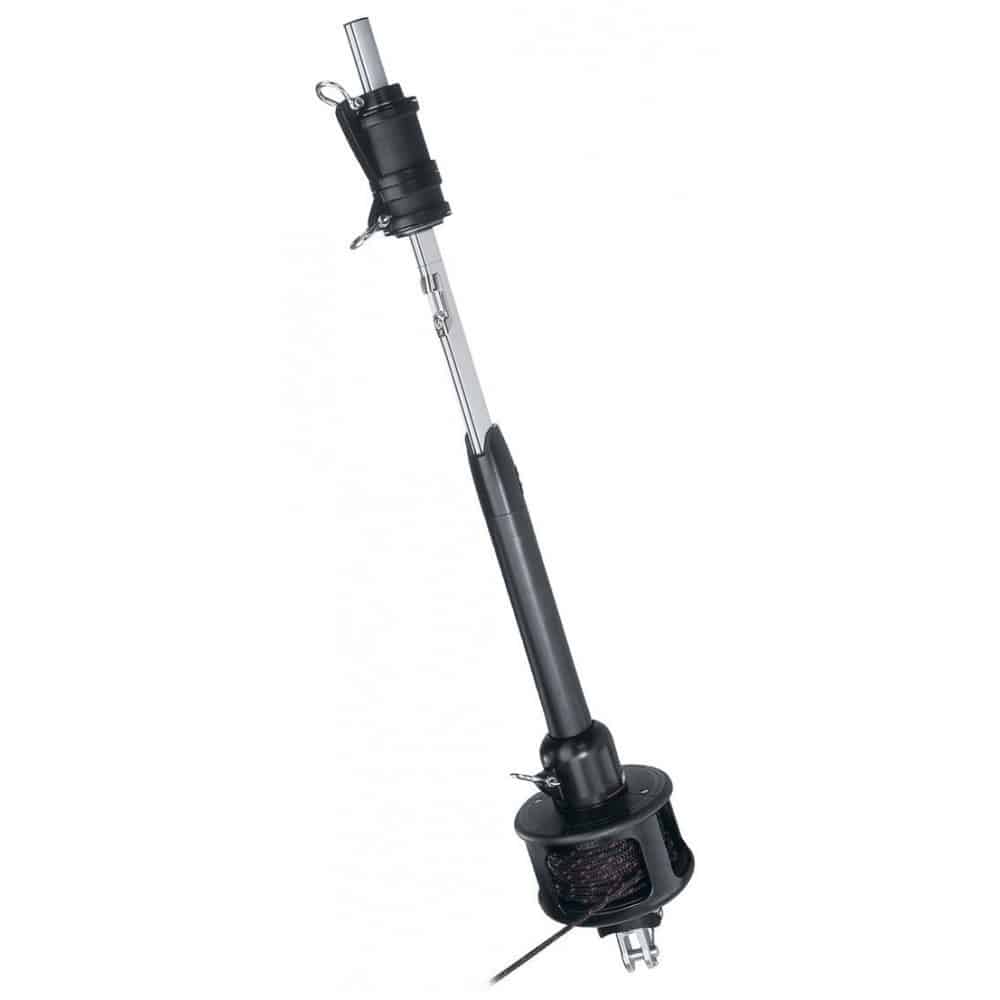
Harken's MKIV Units 0 through 3 run on Torlon ball bearings, a wear-resistant engineering polymer that doesn't want lubrication at all. Adding grease to a Torlon race doesn't help it and actually attracts more salt and grit into the bearing. What actually kills an MKIV early isn't dry bearings, it's salt crystallisation: crystals form inside the race as spray evaporates, and those crystals grind the Torlon balls the same way sandpaper would. Harken's own service guidance asks for a soap-and-fresh-water flush twice a year, and pulling the furling line off the drum (note which way it's wound first) for a more thorough rinse at the end of the season. That's the entire routine, no grease gun involved. If your Harken MKIV starts feeling gritty despite regular rinsing, that's a sign salt has already reached the bearings, not a sign it needs oil.
Profurl: sealed for ten years, until the seal fails
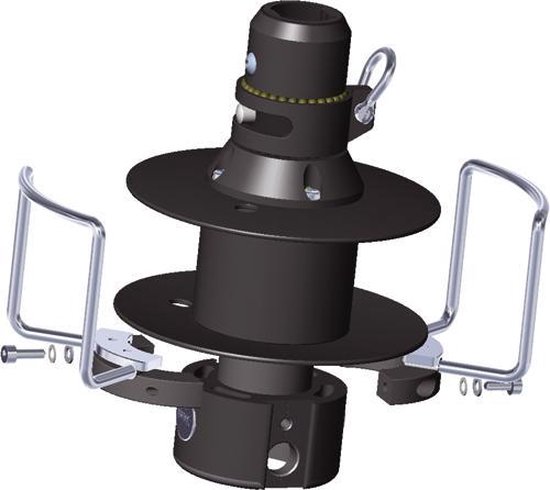
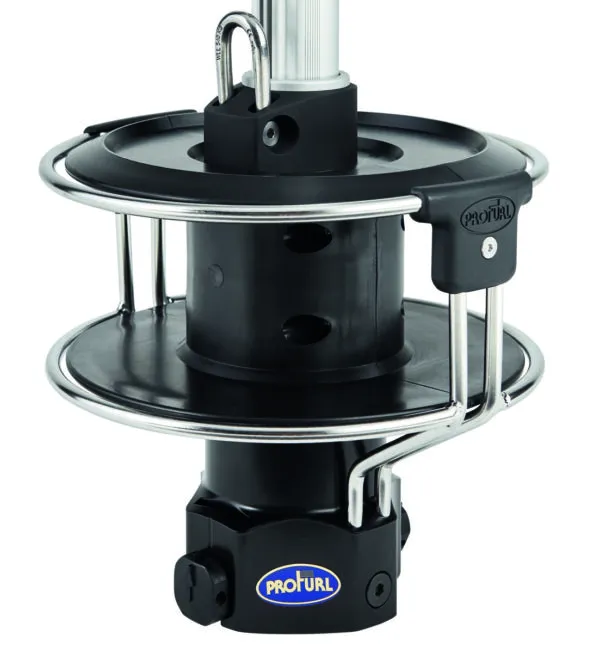
Profurl's C-System and R-System take a third approach entirely: carbon steel ball bearings sealed permanently inside a grease bath behind a double-lip seal, backed by a 10-year warranty. In normal use there's genuinely nothing to do, and several owners who tried to open a Profurl swivel to re-grease it found there's no practical way to put it back together once it's apart, the seal isn't designed to be serviced by the owner. The catch is that the entire design depends on that seal staying intact. Any crack or hardening in the lip seal lets water in, and because the bearings sit hidden inside a sealed housing, you won't see the rust forming until the unit is already stiff to turn. The actual maintenance task on a Profurl C-System isn't greasing, it's a yearly close look at the seal lips for cracking, particularly on a boat that lives under a hot sun where rubber ages faster.
Facnor: "maintenance-free" on paper, less so after five seasons
Facnor's official position for the LS, LX and RX ranges is that the self-lubricating polymer bearings need no maintenance beyond an occasional fresh water rinse. In practice, owners report LS swivels seizing up after four or five seasons with no accessible grease point and no published service procedure, and some have been told by Facnor that a locked swivel can only be opened by a dealer. A handful of determined owners have found a way in anyway, working grease into the top and bottom lip seals with a syringe each winter to keep salt out, against the official advice but apparently effective. If you're running a Facnor LS System, don't read "maintenance-free" as "never rinse it either." Salt is still the enemy, and the fresh-water flush Facnor does recommend in its own instructions is the one thing standing between you and a trip to the dealer.
The warning signs that mean stop and get it inspected
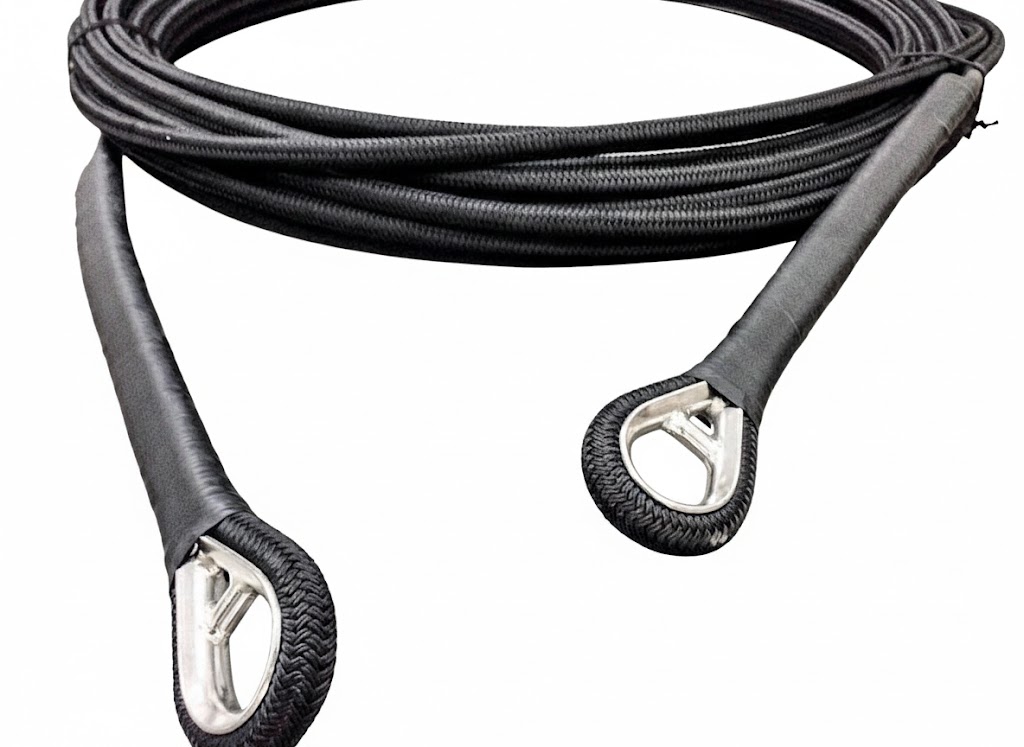
Across all four brands, a failing bearing announces itself the same way: furling that suddenly takes more effort than it did last season, a rough or gritty feel instead of a smooth spin, or an actual grinding noise as the drum turns. Don't try to winch through it. Forcing a furler with failed bearings puts the load onto the forestay itself instead of the bearing, and that's how sailors end up with a bent or cracked swivel housing instead of a simple bearing swap. A straightforward bearing replacement, parts only, tends to run somewhere around 80 to 100 euros if you can source the right size and do the swap yourself, versus several hundred euros for a dealer rebuild if the housing needs machining. We've written more about diagnosing that specific symptom in why your furler's top swivel gets stiff, and what it costs to fix. While the drum is off for any of these checks, it's also worth looking at the furling line and the anti-torsion line for chafe, since both sit right next to the bearings you're already inspecting and wear on a similar timeline, more on that in when to replace your furling line.
None of this needs to happen mid-season. Build it into the same afternoon you already spend on winterizing the rest of the rig, and the brand-specific five minutes (or the brand-specific "leave it alone") becomes routine instead of guesswork. On 123furling.com you can filter furlers and spares by brand, so you're not guessing which grease or bearing kit fits your setup. Not sure which bearing type is actually under your deck, or which grease or spare part fits your generation of furler? Use our product advisor or send the model and serial number to info@123furling.com and we'll tell you exactly what it needs.